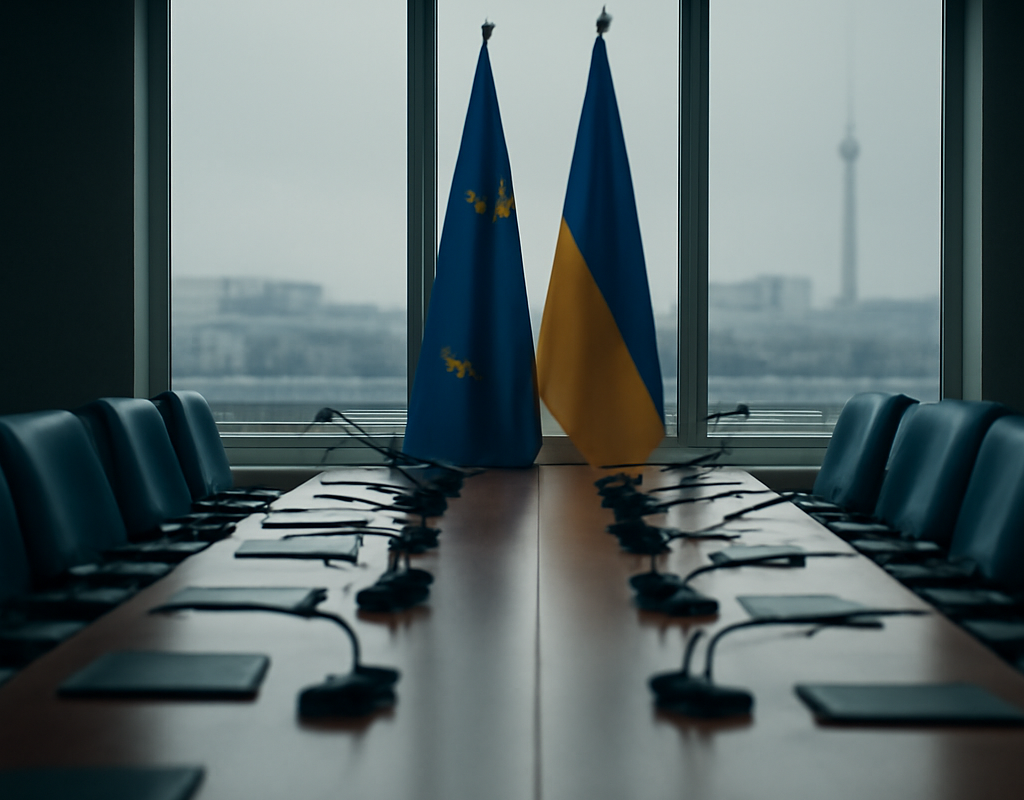
European leaders have signalled they are ready to negotiate with Russia on ending the war in Ukraine, but the Berlin summit exposed a wide gap between hopes for diplomacy and Moscow’s continuing demands. The Coalition of the Willing meeting brought together Ukraine’s allies, US representatives and senior European leaders as efforts continued to shape a possible peace process.
UK Prime Minister Andy Burnham said Europe had a “clear and consistent and united negotiating position”, while German Chancellor Friedrich Merz warned that Russia’s maximalist demands were unrealistic. Their comments amounted to a strong public statement of support for Kyiv’s involvement in any settlement.
Europe insists Ukraine must be central to negotiations
European leaders said they were prepared to discuss wider European security with Moscow, but only alongside serious negotiations on a peace agreement involving Ukraine. President Volodymyr Zelensky stressed that Russia had rejected every proposal put forward so far.
Mr Merz said the prospect of peace was improving because of US involvement, while making clear that any conditions would need to be acceptable to both Europe and Ukraine. That position reflects a central concern among Kyiv’s allies: a deal negotiated without Ukraine or imposed on it could leave the country vulnerable to another attack.
French President Emmanuel Macron also attended the Berlin summit. The meeting followed discussions involving US President Donald Trump’s envoys, including Jared Kushner, who said the US president wanted to reach an agreement with Russia with Europe at his side.
Russia sends mixed signals over European participation
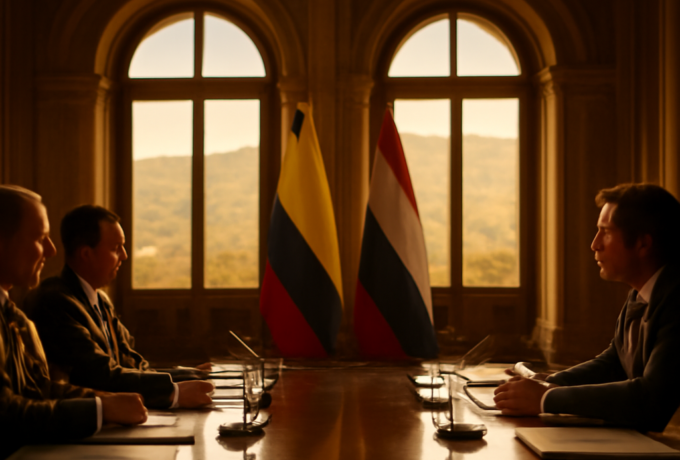
Russian President Vladimir Putin said Moscow was not opposed in principle to European involvement, but suggested that Russia first wanted to understand what European governments would contribute. He said diplomatic channels had been used to invite European representatives to Moscow to clarify their positions.
However, the Kremlin has also indicated that expanding the current negotiating format would require significant preparation. Kremlin aide Yury Ushakov said earlier in the week that much work remained before four-sided discussions could begin, suggesting that further rounds of talks might be needed first.
The conflicting messages have made it difficult to establish whether Moscow genuinely supports a broader peace process or is seeking to delay it. Russia has participated in several rounds of discussions over the past year, but its public demands concerning Ukrainian territory have not changed.
Security guarantees remain a major obstacle
Mr Kushner said Russia was now comfortable with security guarantees for Ukraine based on the principle behind Nato’s Article Five. That provision commits Nato members to treat an attack on one ally as an attack on all, although the precise response is determined by each member.
Mr Zelensky has long sought a guarantee with comparable force. Such an arrangement could theoretically be offered without Ukraine becoming a Nato member, an option Russia has consistently opposed. Yet there has been little public evidence that Moscow would accept a guarantee requiring outside powers to defend Ukraine if it were attacked again.
The difference between the optimistic assessment from the US envoys and the caution expressed by Ukraine and Europe was clear at the summit. Kyiv’s experience of rejected proposals and continued attacks has made its government wary of promises that are not backed by specific commitments.
Continued attacks undermine hopes of a breakthrough
Diplomatic activity has continued while Russia maintains its military campaign. Russian forces have targeted Ukraine’s energy infrastructure as winter approaches, and civilian casualties have continued to rise, according to the source report.
Several buildings in Kyiv’s historic centre were damaged by drone strikes while delegations were meeting in China and Germany. One person was killed in an attack on a residential building in the Podilskyi district. The Dutch and Austrian embassies and Saint Volodymyr’s Cathedral also reported damage.
Mr Putin later said Russia’s response to a Ukrainian strike on the Crimean Bridge would be “considerably more painful”. He also said he had discussed a possible ceasefire in certain areas but rejected it after the bridge attack.
Despite those warnings, the Russian president said Moscow was interested in ending the conflict and willing to compromise. Ukraine and European leaders, however, remain unconvinced that Russia’s actions match its statements.
What happens next in the Ukraine peace talks?
The immediate challenge is turning broad diplomatic support into an agreed negotiating framework. Several issues remain unresolved:
- Whether Russia will accept Europe as a full participant rather than a consulted party.
- What security guarantees Ukraine would receive after any peace agreement.
- How territorial disputes would be addressed.
- Whether a ceasefire could be established and monitored.
- How European security concerns would be included in a final settlement.
The Berlin summit showed that Europe wants a direct role in shaping the outcome, while Washington is attempting to bring Moscow closer to a deal. But continued attacks, uncompromising territorial demands and conflicting statements from Russian officials mean that negotiations remain at an early and uncertain stage.
The outlook for a settlement
European leaders’ willingness to negotiate represents a significant diplomatic position, but it is not evidence that a peace agreement is close. For talks to progress, Russia would need to accept Ukraine’s central role and demonstrate that its commitment to diplomacy extends beyond public statements.
The clearest takeaway is that Europe is ready to engage, but it is not prepared to trade away Ukraine’s security or sovereignty. Any lasting settlement will depend on whether Moscow, Kyiv, Europe and the United States can agree on terms that are both politically acceptable and capable of preventing a renewed conflict.