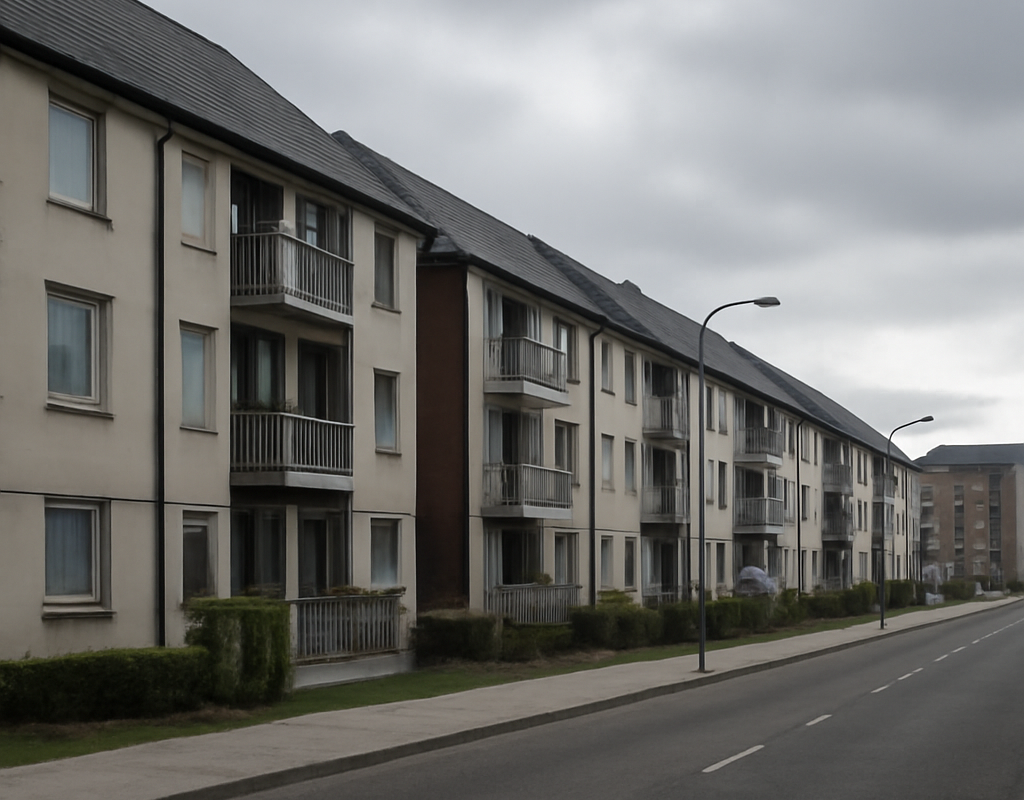
Dublin City Council has committed to reviewing its new social housing rent scheme next year, amid growing pressure from councillors to reverse increases introduced in April. The rent changes mean higher-earning households generally pay more, but tenants across all income levels have faced increases.
Dublin City Council promises review of social housing rents
The council’s revised differential rent system bases charges on tenants’ net household income. It replaced a system that had been in place for about 30 years and was introduced with the aim of making rent contributions more closely reflect household earnings.
According to figures presented by the council, average weekly rent is now €108, an increase of €22. For half of all tenancies, the rise was €14 or less per week.
However, a small group of households experienced much larger increases. About 2 per cent of tenants saw their rent rise by more than 50 per cent. The council said these households had average net incomes of €1,450 per week and more than one earner.
For this group, the average weekly rent is now €189.30, with the average increase standing at €71.70 per week.
Additional income earmarked for maintenance
Richard Whelan, a senior executive officer in the council’s housing division, told the finance committee that the previous system created a disparity between household earnings and rent contributions.
He said that under the former arrangements, households with more earners could pay a smaller proportion of their income in rent than households with lower or fewer incomes. The new scheme is expected to generate an additional €22.5 million this year, which the council says will be used to support housing maintenance.
Whelan described the revised system as being in its early stages and confirmed that Dublin City Council is committed to reviewing it next year. The review could provide an opportunity to assess how the charges are affecting different household types and whether the scheme is meeting its intended objectives.
Political pressure to reverse rent increases
Sinn Féin has proposed a motion for the council’s 2027 budget meeting calling for the rent increases to be reversed. The party has also suggested increasing business rates to replace the expected shortfall.
Councillor Daithí Doolan said the proposal would restore previous rent levels while supporting additional street cleaning and playground construction across Dublin city.
Councillors do not directly set the rent charges. They can, however, reject the annual local authority budget if they oppose its contents. Such a decision carries political and legal consequences, including the risk that councillors could be removed from office by the Minister for Local Government.
South Dublin rent changes face separate dispute
The debate in Dublin city comes as South Dublin County Council faces its own controversy over differential rents. The county council revised its scheme in July, increasing the base income charge from 10 per cent to as much as 12.5 per cent of net household income.
The changes have prompted legal action. People Before Profit councillor Jess Spear has brought a High Court case seeking to block the increases. The proceedings remain ongoing.
South Dublin County Council has allocated up to €300,000 in its budget to defend the judicial review proceedings and manage rent-account debt.
Councillors clash over consultation
There were heated exchanges during the county council’s annual budget meeting. People Before Profit councillor Kay Keane said a motion passed at an emergency meeting in June required engagement with tenants and tenants’ organisations before the increase was implemented.
Keane criticised the attendance of some councillors at that meeting, claiming the democratic process had been undermined. Other councillors rejected that account.
Sinn Féin councillor Louise Dunne said a monthly rent of €1,342 for a household comprising two adults and two children was higher than a mortgage payment. Independent councillor Madeleine Johansson argued that tenants and their representative organisations had not been properly consulted.
Committee chair Alan Edge disputed the claim that the issue had not been discussed, saying there had been significant debate about rents within the council. Fine Gael councillor Brian Lawlor accused Sinn Féin members of political grandstanding and argued that they had supported the previous budget before the increases came into effect.
What happens next for Dublin council tenants?
The immediate focus will be on the Dublin City Council budget process and the proposed motion to reverse the rent increases. The council’s planned review next year is also likely to be closely watched by tenants, councillors and housing organisations.
For tenants, the central issues are the size of individual rent increases, the connection between charges and household income, and whether additional revenue delivers visible improvements in housing maintenance. The South Dublin legal challenge may also influence the wider debate about how local authorities change differential rent schemes.
For now, the increases remain in place. Dublin City Council has not announced that it will suspend or reverse them, but its commitment to a review means the structure of social housing rents is likely to remain a significant issue in Ireland housing and local government discussions.
The key takeaway
Dublin City Council will review its new social housing rent scheme next year after average weekly rents rose to €108. Political opposition is mounting, while a separate High Court challenge continues over rent increases in South Dublin.