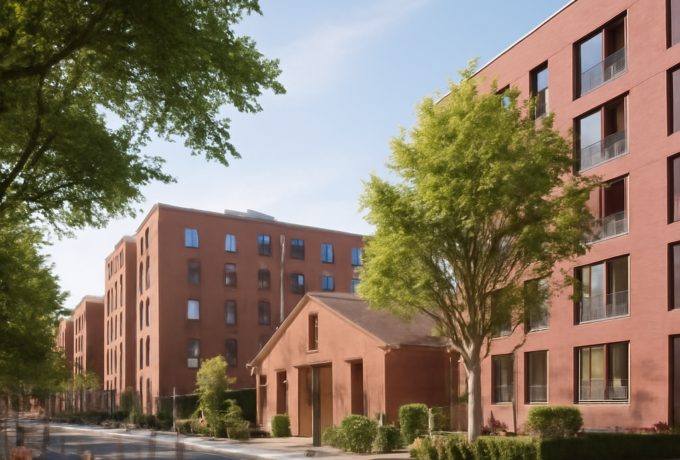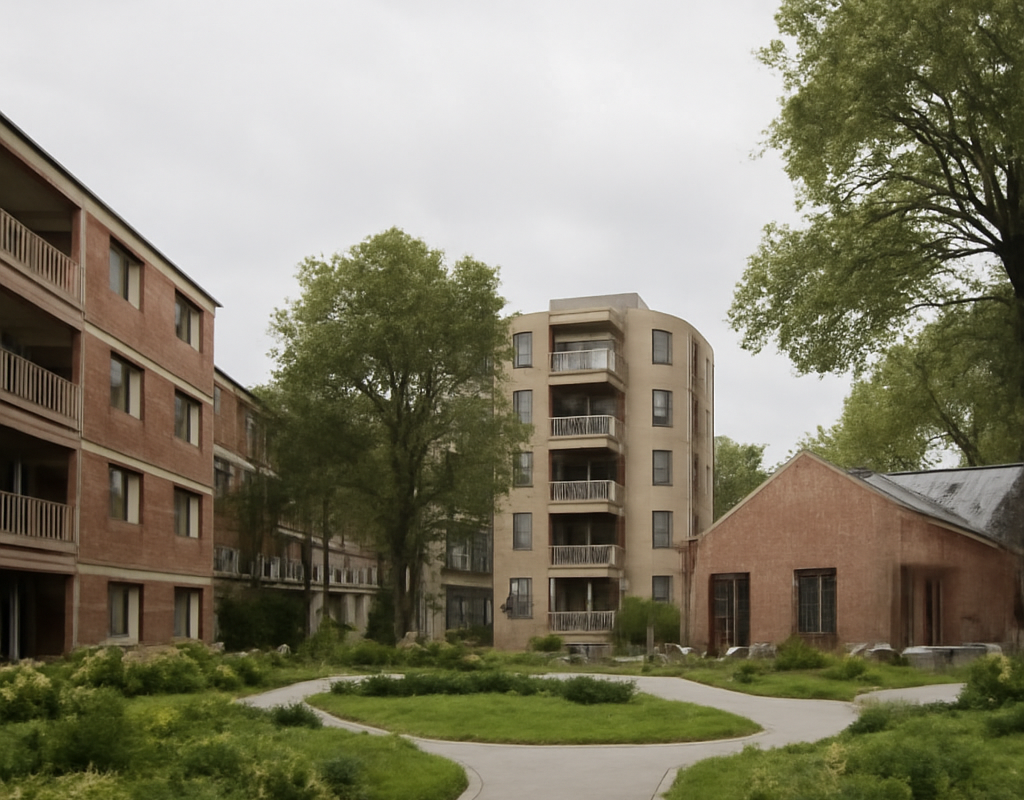
The Oliver Bond flats regeneration project in Dublin’s southwest inner city is set to move forward after €56 million in funding was allocated for the next phase. The revised plans will provide 103 homes and a community centre, following months of uncertainty after the Department of Housing halted the original scheme.
The announcement is a significant development for residents of the ageing complex, who have endured damp, mould, sewage problems and rat infestations over many years. It also comes as Ireland faces continued pressure on social housing supply and the wider housing system.
What the €56m Oliver Bond flats funding will deliver
The funding will support work across three blocks at the Oliver Bond complex and a separate apartment development on Bridgefoot Street.
- Three existing blocks will be retrofitted and amalgamated to create 54 homes.
- A new block at Bridgefoot Street will provide 49 apartments.
- A community centre is also included in the regeneration plans.
- The revised project will deliver 14 more homes than the previous Dublin City Council proposal.
The earlier plan involved combining 74 older flats to create 46 new homes. Under the revised proposal, the same three blocks will produce 54 homes, adding eight to that element of the scheme. The Bridgefoot Street development has also increased from 43 to 49 apartments.
Why the Oliver Bond regeneration was halted
The first phase of the project was stopped by the Department of Housing in April, more than six months before the new funding was confirmed. The department had previously approved the council’s plans in 2023, but later objected to the proposed reduction in the total number of homes.
Officials said they could not support such a substantial loss of housing capacity during a housing crisis. Negotiations between Dublin City Council and the department led to the revised approach, which retains more homes while continuing with the redevelopment of the existing blocks.
The Oliver Bond complex contains almost 400 flats across 16 housing blocks, many of which were built during the 1930s and 1940s. The long-term regeneration project is intended to address poor conditions while reshaping the site for future residents.
Construction timetable for Dublin project
Dublin City Council intends to lodge the planning application for the Bridgefoot Street block this month. Construction is expected to begin before the end of next year, with completion scheduled for the end of 2029.
The application for the amalgamation and retrofit of the three existing blocks is expected to be submitted next February. Work is currently projected to start in mid-2028 and finish during the early months of 2030.
These dates remain part of the proposed delivery programme and depend on the necessary planning and construction stages proceeding as planned.
Further phases of the master plan
The announced funding covers the immediate phase, but a wider master plan is still required for the remainder of the complex.
In a proposed second phase, three blocks containing 78 flats would be demolished and replaced with 109 new apartments. Construction for that phase is expected to begin in 2031 and finish in 2033.
Once those blocks are removed, 10 blocks would remain. It has not yet been decided whether all of them will be retrofitted and amalgamated or whether some will also be demolished and replaced. That decision is expected to follow completion of the wider master plan.
Residents call for momentum to be maintained
The regeneration process has been closely watched by residents, particularly after the project was paused earlier this year. Catherine Ardagh, a local Fianna Fáil TD and Minister of State at the Department of Justice, acknowledged that the process had not always been straightforward and that residents had waited a long time.
She said the priority now was to maintain momentum, continue work on the wider master plan and ensure that approved funding resulted in visible improvements.
Minister for Housing James Browne said he had visited the complex and listened to residents. He said those conversations reinforced the importance of progressing regeneration while keeping community voices central to the process.
Former chief justice Frank Clarke, who chairs the regeneration forum, also welcomed the funding. He said the forum hoped the progress made in recent months would continue through this phase and the full regeneration of Oliver Bond.
Gayle Cullen-Doyle, chair of the residents’ group and a resident of the complex for 45 years, has stressed the importance of maintaining that momentum. For people living with longstanding problems in the buildings, the key test will be whether the announcement leads to work on the ground.
What happens next at Oliver Bond
The immediate next steps are the planning applications for Bridgefoot Street and the three-block retrofit and amalgamation project. The council must then progress through the planning, procurement and construction stages before homes can be delivered.
The longer-term future of the remaining blocks will depend on the master plan. That process will need to balance the need for better-quality housing with the requirement to maintain or increase the number of homes available in Dublin’s inner city.
The €56 million allocation does not complete the Oliver Bond regeneration, but it provides a new route forward after the earlier scheme was halted. The clearest measure of success will be whether the revised timetable is maintained and residents see safer, healthier homes and community facilities delivered as promised.