Ukraine’s war with Russia has opened a new and dangerous front beneath the ground. Near Kupyansk in the north-eastern Kharkiv region, Ukrainian troops have spent seven months fighting through an old Soviet gas pipeline, using the narrow passage to avoid the drones and heavy weapons that dominate the battlefield above.
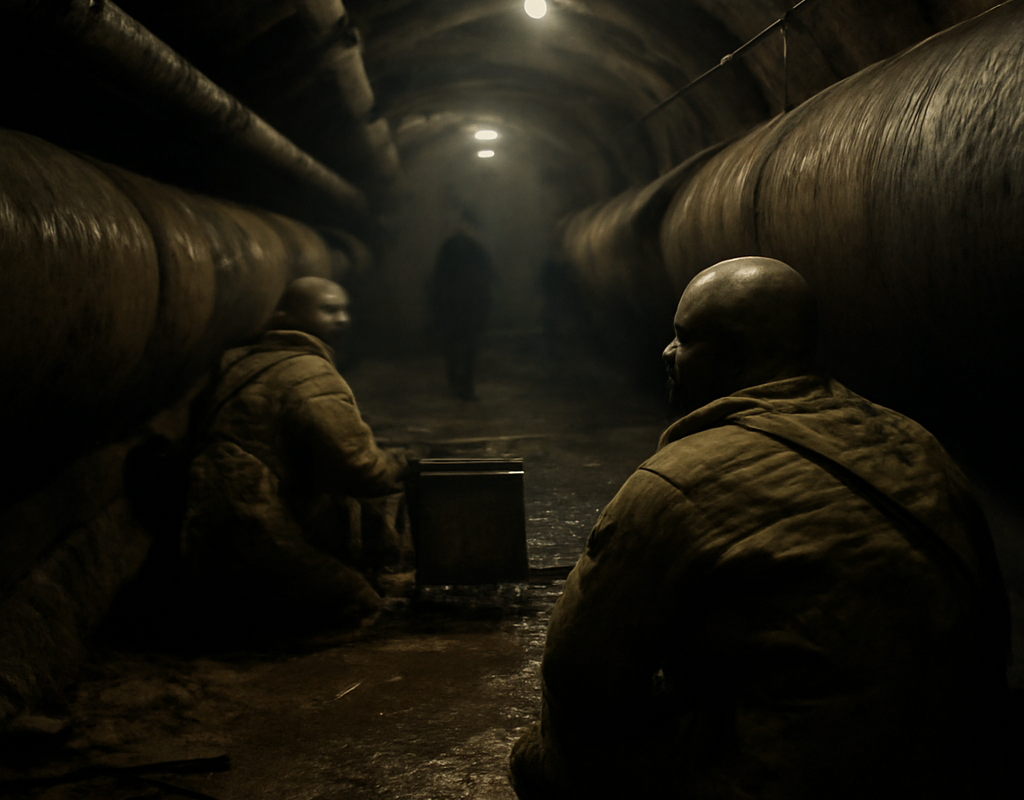
The operation shows how rapidly battlefield tactics are changing. With a pipeline only slightly more than a metre wide, soldiers must crawl or crouch for long stretches. Yet Ukrainian forces say the confined route offers protection from drones, artillery and glide bombs, which have made conventional movement across open terrain increasingly difficult.
Why Ukraine is fighting underground
The pipeline has become an unusual route into and around positions near Kupyansk. Both Russian and Ukrainian forces have created openings to the surface, cutting through the steel and digging access points where fighting and resupply can take place.
Ukrainian planner Zanuda described underground combat as the “only option” in areas where drones saturate the skies. Unlike an open battlefield, however, the tunnel leaves little room to manoeuvre. Troops can largely engage an opponent directly ahead, while darkness, poor air quality and the threat of booby traps add to the danger.
Russian troops were the first to use the pipeline to infiltrate nearby Kupyansk in September 2025, according to the report. Russia has previously used underground pipelines during fighting in Avdiivka and during operations connected with the Kursk region.
Operation Veles advances along the pipeline
Ukraine launched Operation Veles in April. Named after a Slavic god associated with the underworld, the mission has involved clearing debris, water, barricades and Russian positions from the pipe.
Ukrainian forces say they have advanced 15km along the route. They also claim the operation killed more than 100 Russian soldiers and resulted in 30 prisoners being captured. Those figures are Ukrainian military claims presented in the report and were not independently verified in the supplied material.
The work has been slow. Colombian volunteer Gecko said his group needed 30 days to clear just 500m. Soldiers faced heat, fear, contaminated air and the constant possibility of meeting enemy troops in an enclosed passage.
The “Kupyansk metro”
A specially designed electric cart carries troops, ammunition and supplies through the pipeline. Soldiers call it the “Kupyansk metro”, although the journey is far removed from any normal form of public transport.
The cart travels over welded sections of pipe and can break down. During one journey described in the report, troops spent about 40 minutes travelling underground with their heads lowered and legs crossed. The route leads to dug-outs where equipment and ammunition are stored and where soldiers coordinate movements between positions.
Life in a confined battlefield
For troops stationed inside the pipeline, the physical strain is severe. Soldiers spend much of their time on their knees, causing abrasions, while some have suffered panic attacks or difficulty breathing. Others remain underground for weeks or months, with only occasional visits to the surface.
One Ukrainian soldier, identified by the call sign Musician, had spent three months in the tunnel, leaving briefly to wash or use the toilet. Even close to the line of contact, he said the underground position felt safer.
Another soldier, Vovochka, said the pipe offered protection because drones could not fly inside it and artillery shells and glide bombs could not reach the tunnel in the same way. But the underground route is not immune from combat. Gunfire can ricochet off the steel walls, and Russian troops have built fortified positions and attempted to infiltrate Ukrainian-held sections.
A combined battle above and below ground
The pipeline operation has not replaced fighting on the surface or in the air. Ukrainian troops continue to use drones to target Russian movements, while command teams above ground maintain contact with soldiers inside the pipe.
Members of Ukraine’s 13th Khartiia Brigade of the National Guard took part in clearing the route. Their commander’s previous experience as a miner helped him understand the physical and psychological demands of underground operations. Hundreds of Colombian volunteers from the RUG 23rd Assault Regiment have also been involved.
The mission has provided Ukraine with a morale boost and helped it retake territory, but the report says it has not changed the overall course of the war. Clearing 15km has taken seven months, and Russian forces remain capable of defending and contesting positions inside the pipeline.
What the pipeline battle may mean for the war
Zanuda believes similar operations could become more common because former Soviet infrastructure crosses large parts of Ukraine. Oil, gas and ammonia pipelines once formed major transit routes across the region, creating potential underground corridors for future military operations.
That does not make underground warfare an easy alternative. It is slow, exhausting and highly exposed to close-range combat. The fighting near Kupyansk instead reflects a broader shift: when drones make movement above ground almost impossible, forces may look for protection below it.
The pipeline has given Ukrainian troops a route to advance and a temporary shield from some battlefield threats. But it remains a brutal and limited tactic rather than a decisive solution. The battle beneath Kharkiv demonstrates both the ingenuity of modern armies and the increasingly claustrophobic nature of the war in Ukraine.