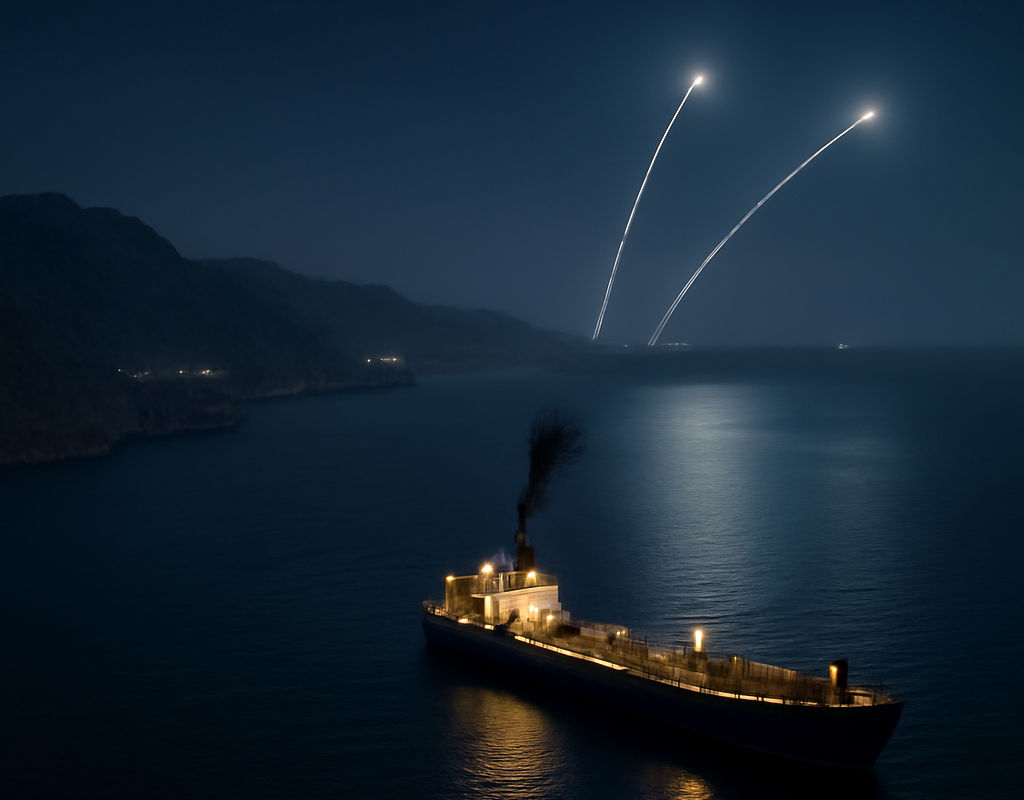
Kuwait and Bahrain say they intercepted Iranian aerial attacks overnight, as renewed strikes and a tanker incident raise fears that the nine-month conflict between Iran and the United States could intensify across the Gulf.
Kuwait’s military said its air-defence systems engaged drone threats aimed at Ali Al Salem Air Base, which hosts US forces. Authorities reported no casualties or damage. Iran’s army said the operation targeted US Patriot air-defence systems and drone and missile launch platforms at the base.
Iranian attacks reported in Kuwait and Bahrain
The attack was the first reported Iranian drone strike on Kuwait in more than two months. Kuwait’s foreign ministry condemned it as a violation of the country’s sovereignty and a threat to its security and stability.
Bahrain’s military said it had intercepted and destroyed several Iranian aerial attacks. The island state, home to the US Navy’s 5th Fleet, has reported four attacks in six days after a two-month period without similar incidents.
Qatar, which has helped mediate indirect negotiations between Washington and Tehran, described the attacks on neighbouring states as a dangerous escalation. Officials warned that further strikes could make efforts to contain the conflict more difficult.
Iran warns of a stronger response
Iranian army chief Maj Gen Amir Hatami said Iran was prepared to respond more forcefully if it faced further attacks. His warning came after the US military said its fighter jets had struck a missile launch site on Qeshm Island in the Strait of Hormuz.
US military officials said the Qeshm operation used precision munitions and was conducted in response to Iranian attacks on US personnel and assets. Iranian media reported explosions but cited a local official who said there was no damage to infrastructure.
Tanker attack adds to Strait of Hormuz concerns
The latest military exchanges coincided with a search-and-rescue operation after an attack on a tanker operated by Abu Dhabi National Oil Company, or Adnoc. The company said one crew member was missing, while the remaining crew were evacuated safely. Eleven people were receiving medical treatment.
The UK Maritime Trade Operations centre said the vessel was struck by an unidentified projectile about 13 nautical miles north of Khasab, on Oman’s Musandam Peninsula. The impact caused a fire, which was later extinguished.
Iran gave a different account, saying that two oil tankers and an LNG vessel had caught fire after striking naval mines while travelling along an authorised route. The competing explanations have not been independently resolved in the information available.
Why the waterway matters
The Strait of Hormuz is a crucial route for global energy supplies. Around one-fifth of worldwide oil and gas shipments usually passes through the waterway, making attacks on commercial shipping a major concern for governments, energy companies and maritime crews.
At least 25 seafarers have been killed in the wider region since the war began, according to the source report. Iranian missile and drone attacks, together with a US naval blockade of Iranian ports, have effectively disrupted normal traffic through the strait.
A preliminary US-Iran agreement reached in June was intended to end the conflict and reopen the waterway, but it collapsed within weeks after attacks on shipping resumed and the US blockade was reinstated.
Conflict continues to threaten regional stability
The conflict began after the US and Israel attacked Iran in late February. Iran subsequently launched missiles and drones at Israel and Gulf states hosting US military personnel and equipment. It has also attacked commercial vessels in and around the Strait of Hormuz.
In recent months, the US military has escorted tankers travelling through the waterway. Analysts cited in the report said crude oil exports from Gulf states had recovered to about 80% of their pre-war level, although the continuing attacks leave shipping routes exposed.
The latest incidents show how quickly the conflict can spread beyond direct exchanges between Iran, the US and Israel. Further attacks on Gulf bases or merchant vessels could place additional pressure on stalled diplomatic efforts and increase risks for crews navigating one of the world’s most important shipping corridors.
Key takeaway
The reported strikes in Kuwait and Bahrain, the US attack on Qeshm Island and the tanker incident near Oman mark a fresh period of tension. Until diplomatic negotiations regain momentum, the Gulf’s military bases and commercial shipping routes remain vulnerable to further escalation.