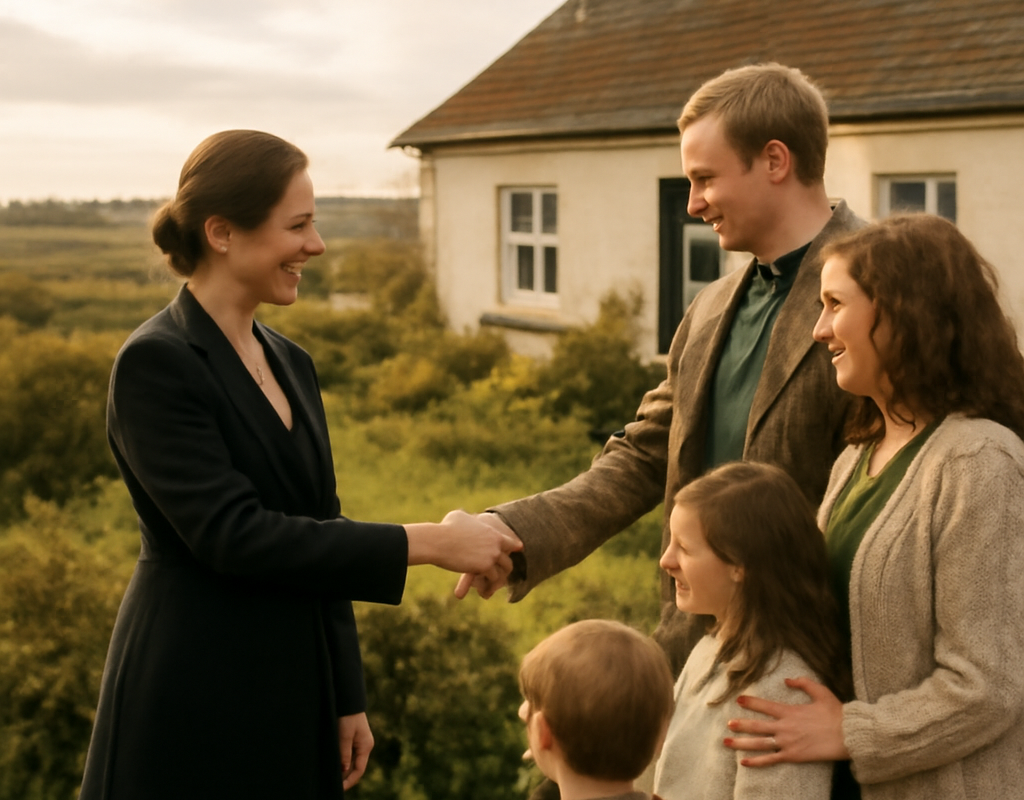
A former “Chernobyl kid” has returned to Co Tipperary to visit the Irish family who hosted her, during a trip to Ireland by Belarusian president-elect Sviatlana Tsikhanouskaya.
Tsikhanouskaya was among dozens of European leaders attending the European Political Community summit in Dublin last week. Her visit to the Deane family in Roscrea highlights a longstanding personal connection between Ireland and people affected by the Chernobyl disaster.
Former Chernobyl child visits Roscrea host family
The Belarusian opposition leader met members of the Deane family during her time in Co Tipperary. The family previously welcomed a child from Belarus through the international hosting programme associated with children affected by the 1986 nuclear disaster.
For many Irish families, hosting children from areas affected by Chernobyl became a practical way to offer support. The visits provided children with time away from regions dealing with the disaster’s long-term consequences, while creating enduring relationships with families across Ireland.
The Roscrea reunion took place as Tsikhanouskaya travelled in Ireland for the European Political Community gathering in Dublin. The summit brought together European political figures for discussions on shared challenges facing the continent.
Who is Sviatlana Tsikhanouskaya?
Sviatlana Tsikhanouskaya contested Belarus’s 2020 presidential election after her husband, Sergei Tikhanovsky, was jailed by the country’s authorities. She subsequently became the leading figure of Belarus’s democratic opposition.
Alexander Lukashenko has ruled Belarus since 1994. Tsikhanouskaya’s political campaign and subsequent international diplomacy have focused on democratic change in Belarus and support for people facing repression.
Her appearance in Ireland therefore combined a major international political engagement with a quieter meeting rooted in the personal ties built through humanitarian links between Belarus and Ireland.
Why the visit matters to Irish families
The Chernobyl hosting initiative connected families in Ireland with children from Belarus and other affected areas. While the programme was centred on holidays and recuperation, its impact often extended beyond the scheduled visits.
- Irish host families offered children a period of rest and support.
- Children experienced life in communities far from the areas affected by the Chernobyl disaster.
- Personal relationships formed through hosting often continued after the visits ended.
The Deane family’s meeting with Tsikhanouskaya reflects how those links can remain meaningful decades later. It also places a local Roscrea connection within a wider story involving Belarusian politics, European diplomacy and Ireland’s tradition of community-based humanitarian support.
European leaders gather in Dublin
The European Political Community summit in Dublin brought together leaders and representatives from across Europe. Tsikhanouskaya attended as Belarus’s president-elect and used the occasion to engage with European political figures.
Her visit to the Tipperary family was separate from the formal summit agenda, but it offered a personal dimension to her time in Ireland. The meeting connected current events in Belarus with an Irish hosting relationship created through the legacy of Chernobyl.
For readers following Ireland News and the latest Irish news, the story is a reminder that international developments can have deeply local connections. A visit by a prominent Belarusian political figure reached beyond Dublin and into a family home in Roscrea.
A personal connection behind the headlines
International politics can often appear distant, particularly when discussed through summits and diplomatic meetings. The reunion in Co Tipperary offers a more personal perspective: relationships created through a humanitarian programme can endure long after the original visits have ended.
Tsikhanouskaya’s meeting with the Deane family brought together several strands of the current European story—Belarus’s unresolved political situation, Ireland’s role in international engagement and the continuing memories of families involved in the Chernobyl hosting programme.
The key takeaway from the visit is simple: alongside the formal discussions held at the Dublin summit, important connections were being renewed in communities such as Roscrea. The former “Chernobyl kid” reunion shows how Ireland’s humanitarian links with Belarus continue to carry personal meaning.