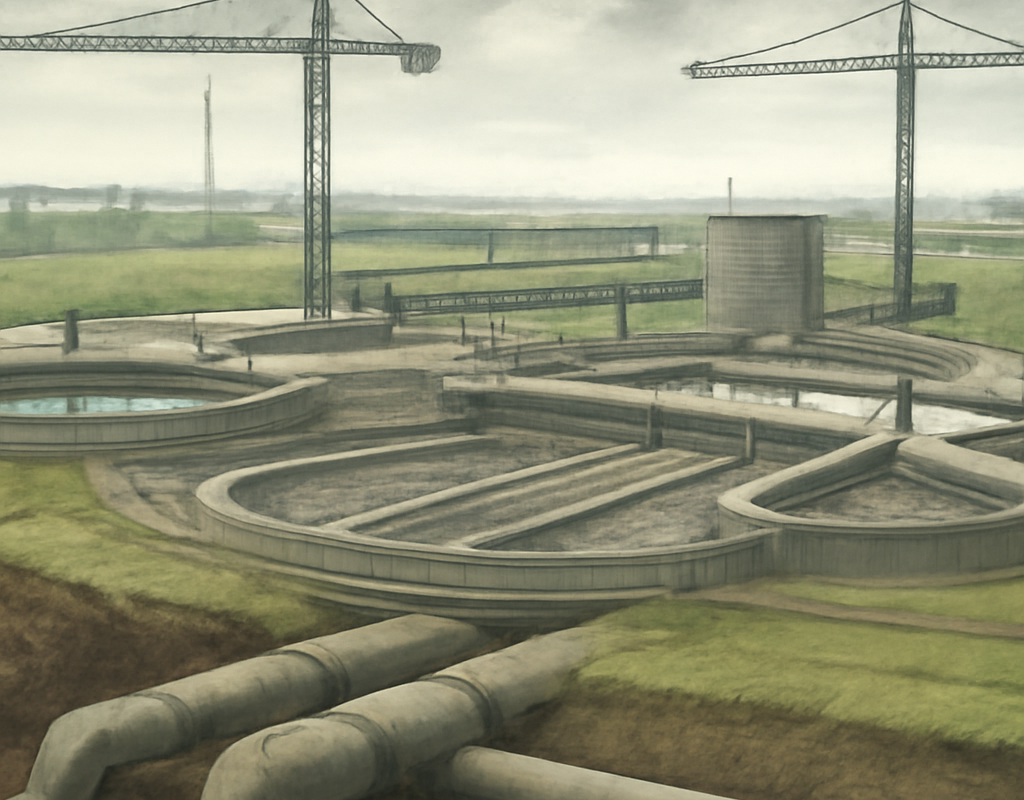
A major wastewater project for the Greater Dublin Area has officially begun, with the Greater Dublin Drainage project expected to provide capacity for up to 185,000 homes by the end of 2031. The scheme, based at Clonshaugh in north Dublin, is expected to cost between €1.9 billion and €2.3 billion.
The project is intended to support housing and population growth across north Dublin, south Meath and east Kildare, while reducing pressure on the existing Ringsend wastewater treatment plant. Taoiseach Micheál Martin turned the sod on the 30-hectare site on Monday, marking the start of a development first proposed around two decades ago.
Greater Dublin Drainage project: what is being built?
The Greater Dublin Drainage project will create a second substantial wastewater treatment facility for the region. Once operational, it is expected to support a population of approximately 500,000 people and provide essential infrastructure for new homes and economic activity.
The planned works include:
- A regional wastewater treatment facility at Clonshaugh
- A 14km orbital sewer linking Blanchardstown and Clonshaugh
- A pumping station at Abbotstown
- An 11km marine outfall pipe extending into the Irish Sea
- A biosolids and sludge hub at Kilshane
The marine outfall will discharge treated water approximately 6km from the shore. The treatment process and associated infrastructure are designed to provide additional wastewater capacity as development continues across the Greater Dublin Area.
Why Dublin needs additional wastewater capacity
Uisce Éireann said the project is needed because population growth has continued despite substantial investment in Ringsend. The utility has invested €600 million in the existing facility, increasing its capacity by 50 per cent, but much of that additional capacity has already been used.
Uisce Éireann chief executive Niall Gleeson said the region could not continue relying solely on the Ringsend plant or on routing additional wastewater southwards. The new facility is intended to create a more balanced network and allow infrastructure to keep pace with planned housing in north Dublin and neighbouring counties.
The need for the scheme was identified in studies dating back to 2005. Those studies highlighted both the expected increase in population and the need to reduce pressure on Ringsend.
Project cost and expected completion date
Uisce Éireann has provided a provisional final cost range of €1.9 billion to €2.3 billion. The main works are scheduled for completion by the end of 2031, meaning the project will have taken roughly 20 years to move from its initial proposal to delivery.
The long timetable reflects the scale and complexity of the development. The scheme faced objections and High Court challenges during the planning process, while its various planning, legal and regulatory requirements contributed to delays.
At the launch, Micheál Martin said the project showed the need for infrastructure to be delivered at a greater scale and speed as Ireland’s economy and population grow. He described the facility as largely invisible to most people once complete, but fundamental to housing and economic development.
Critical Infrastructure Act aims to accelerate delivery
Public Expenditure Minister Jack Chambers said the Critical Infrastructure Act 2026 had designated nine projects as critical infrastructure projects in July. The Greater Dublin Drainage scheme was among those selected.
According to Chambers, the project’s maritime area consent was completed in 75 days under the new approach. He said this was around five times faster than comparable wastewater infrastructure applications in the past.
The designation reflects the importance of wastewater capacity to Ireland’s housing programme. Homes cannot be occupied without suitable water and wastewater services, making treatment infrastructure a basic requirement for large-scale development.
Construction disruption and local concerns
While the project is expected to deliver long-term benefits, construction will create disruption for communities near the works. New treatment facilities can also raise concerns about traffic, construction activity and the effect on nearby residents.
Uisce Éireann acknowledged those concerns and said it would work to minimise local disruption during construction. The company also framed the development as a long-term investment in environmental protection, alongside the homes and industries it is intended to support.
The project’s impact will extend beyond the Clonshaugh site. The orbital sewer, pumping station, outfall and biosolids facilities will involve construction activity across several locations in north Dublin and surrounding areas.
What the project means for housing and development
The Greater Dublin Drainage project is not a housing development itself, but it is intended to remove a major infrastructure constraint on future construction. Its planned capacity could support up to 185,000 homes in north Dublin, south Meath and east Kildare.
That does not mean all of those homes will be built by 2031. Instead, the wastewater network will provide the capacity needed for development to proceed, subject to planning permission, transport links, utilities and other requirements.
The scheme also highlights the connection between Ireland’s housing shortage and its public infrastructure. As the Greater Dublin Area grows, investment in wastewater, water supply, roads and public transport will be needed alongside new homes.
The wider significance for Dublin
The Greater Dublin Area has grown significantly over recent decades, and the latest census recorded approximately two million residents in the region. The new drainage project is intended to give the area a second major wastewater treatment facility and reduce reliance on Ringsend.
Its success will depend on the construction programme remaining on schedule, the management of local disruption and the delivery of the connected sewer and treatment infrastructure. If completed as planned, the project will provide a long-term foundation for housing and economic growth across Dublin and parts of Meath and Kildare.
The key takeaway from this latest Dublin news is that wastewater capacity is central to Ireland’s housing plans. The Greater Dublin Drainage project is expected to serve up to 185,000 homes, but residents will not see its full benefit until the €2 billion-plus scheme is completed in 2031.