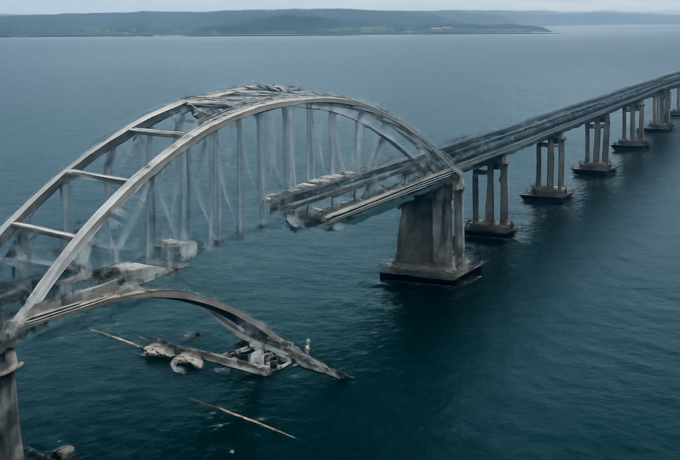
Russian strikes have damaged two major bridges across the Dnipro River in Kyiv, disrupting traffic through the Ukrainian capital as emergency crews assess the destruction. The attacks came as Ukraine reported a separate strike on the bridge linking Russia with occupied Crimea, where part of the crossing collapsed into the sea.
Kyiv bridge damage causes major disruption
The Pivnichnyi, or Northern, bridge was hit shortly before midnight on Monday after ballistic missile warnings sounded across Kyiv. A crater roughly eight metres wide was left near one end of the crossing, with broken asphalt and metal scattered around the impact site.
The bridge has been closed to normal traffic while firefighters and engineers examine the structure and clear debris. Emergency vehicles have continued to pass when needed, but most cars and lorries are being forced to use lengthy alternative routes.
People travelling between the two sides of Kyiv have been walking or cycling across the crossing, negotiating the damaged surface in heavy rain. The closure has created significant congestion on surrounding roads.
Southern bridge and metro services affected
The Pivdennyi, or Southern, bridge was also struck during the overnight attacks. Four missiles reportedly hit the crossing, temporarily suspending the metro service that runs across it.
By the afternoon, metro operations had resumed. Kyiv Mayor Vitali Klitschko also said road traffic in one direction was being partially restored, although disruption remained.
The bridges are vital links across the Dnipro, which divides Kyiv geographically. Damage to either crossing can quickly affect commuters, freight movements and emergency access across the city.
Residents describe a frightening night
People living near the Northern bridge said the explosions were loud enough to shake homes. Masha, who had moved with her family from an area near a power plant repeatedly hit by missiles, said she was in her kitchen when the attack began.
She described taking her child into the corridor for protection after fearing the blast would shatter the windows. Despite the danger, she said her family had learned to focus on surviving each day.
Other residents faced difficult journeys around the damaged crossing. A 67-year-old woman told BBC reporters that taxi fares for the detour were unaffordable, leaving her to walk through the debris to visit her son.
The accounts underline how attacks on infrastructure affect civilians beyond the immediate blast zone. Even when essential services resume, damaged roads and bridges can make ordinary journeys dangerous, expensive and slow.
Ukraine reports damage to Crimea bridge
The strikes in Kyiv took place during what the report described as a wider battle involving strategically important bridges. Ukrainian missiles struck the bridge connecting Russia to occupied Crimea, causing serious damage and the collapse of part of the structure.
The crossing has major logistical and symbolic importance for Russia. It was built after Russia’s 2014 annexation of Crimea, which Ukraine and much of the international community regard as illegal. The bridge has also become a prominent symbol of Moscow’s control over the peninsula.
Its damage was welcomed by some residents in Kyiv, who viewed the attack as a response to the strikes on their own city. The timing was also seen locally as significant because Russian President Vladimir Putin is seeking to project strength during a summit involving the United States and China.
What happens next in Kyiv?
Engineers must determine whether the Northern bridge can safely reopen or whether extensive repairs will be required. Until then, authorities face the challenge of maintaining transport links while protecting workers and civilians from further attacks.
The temporary restoration of metro and partial road services on the Southern bridge may ease pressure, but the wider transport network remains vulnerable. Further missile warnings could also interrupt recovery work or force emergency teams to withdraw.
For Kyiv residents, the immediate priority is practical: getting to work, reaching family members and finding safe routes through a city repeatedly targeted during the war. The damaged bridges are both strategic military targets and essential parts of daily life.
The human cost of attacks on infrastructure
The overnight strikes show how the war continues to shape civilian life far from the front line. A bridge crater can become a barrier to hospitals, workplaces, schools and family visits, while detours increase pressure on roads and public transport.
Residents’ reactions also reflect the emotional strain of repeated attacks. Fear, exhaustion and anger exist alongside determination to continue with daily routines. As one Kyiv resident put it, people hope they will get through the latest challenge but want the war to end.
Key takeaway: Damage to Kyiv’s Dnipro bridges has caused immediate transport disruption, while the reported collapse of part of the Crimea bridge highlights the strategic and symbolic importance of infrastructure in the continuing war between Russia and Ukraine.