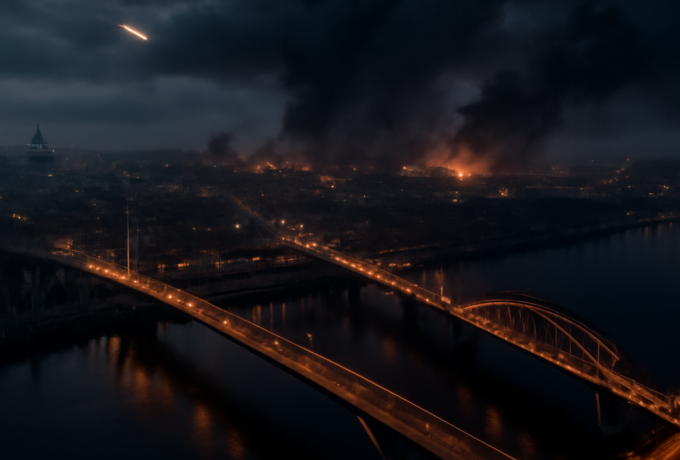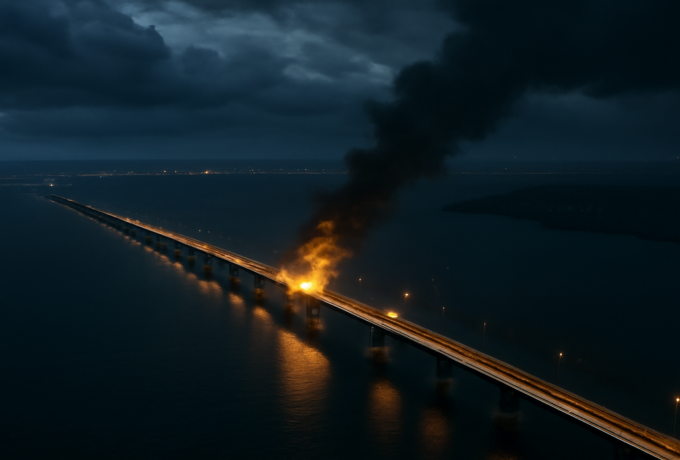
Ukrainian officials say Russian forces struck rescue and recovery operations after a deadly attack on the frontline village of Komyshuvakha, where at least 72 people were killed. The allegations concern a reported second strike on a shelter where residents and emergency workers had gathered after an initial attack.
BBC Verify examined police footage, images and material supplied by Ukrainian authorities. Russia’s Ministry of Defence was asked for a specific response about the Komyshuvakha attacks but had not replied at the time of publication.
What happened in Komyshuvakha?
Residents went to an aid centre on 2 November after a local Telegram group announced that humanitarian assistance would be distributed between 10:00 and 12:00 local time. Ukrainian authorities said the first strike hit buildings at about 09:45, killing one woman.
Edited police body-camera footage reviewed by BBC Verify shows people attempting to rescue a casualty from the rubble. Warnings about a possible second attack can be heard over police radio before people are told to move into an underground shelter.
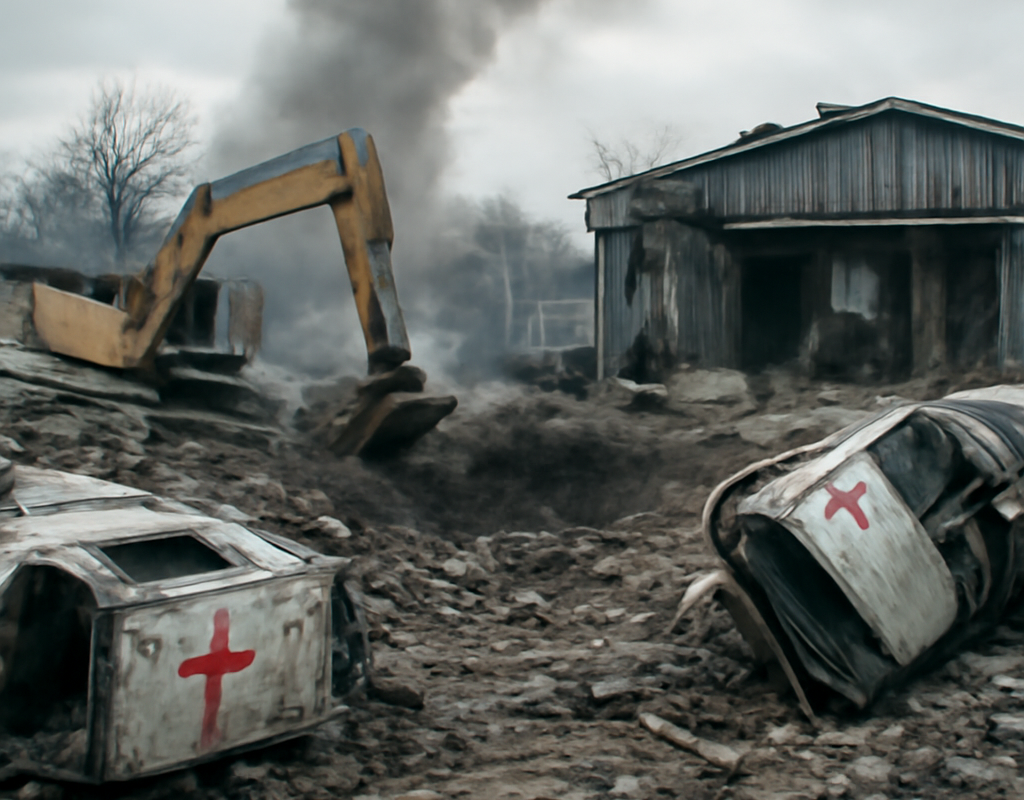
About an hour after the initial strike, a large explosion was heard while people were inside the shelter. Later footage showed a crater above the shelter, with bodies and structural debris recovered from the rubble.
Ukraine alleges a deliberate attack on rescue operations
The State Emergency Service of Ukraine said rescue work was repeatedly interrupted because of the risk of further shelling. It reported that three police officers, four workers and two rescue dogs were injured, while five vehicles were damaged.
According to Ukrainian officials, the death toll has reached at least 72, making the incident one of the deadliest single attacks reported since Russia launched its full-scale invasion in February 2022. Bodies were still being recovered from the site, officials said.
Oleksiy, an intelligence officer involved in the Ukrainian investigation, told BBC Verify that emergency vehicles were clearly marked. He accused Russian forces of deliberately attacking humanitarian equipment and said residents and infrastructure in the village had also been targeted by drones and bombs.
Evidence from footage and images
BBC Verify confirmed videos shared by Ukrainian police showing rescue workers reacting to warnings of drones and seeking cover. The footage also shows people treating an injured person at the scene.
Images taken after the attack show damage to emergency vehicles and excavation machinery. Ukrainian emergency officials said the danger had made it necessary for workers to retreat periodically while searching for victims.
Experts assess the bomb damage
Bomb-disposal expert Trevor Ball said the crater shown in the footage was consistent with damage caused by a FAB-3000, a Russian 3,000kg aerial bomb capable of destroying underground structures. Former National Crime Agency investigator Chris Proops also said the scale and depth of the damage matched the potential impact of such a weapon.
Verified photographs of munition fragments supplied by Ukrainian authorities showed part of a guidance kit compatible with the FAB-3000, according to both experts. A guidance kit can improve accuracy and allow a bomb to be launched from farther away from its target.
The assessment does not, by itself, establish who launched the weapon or whether the attack was intentional. Those questions would require a full independent investigation, including examination of the site and all available evidence.
What international law experts said
International law experts told BBC Verify that knowingly attacking rescue workers or their equipment could constitute a war crime. Ben Saul, professor of international law at the University of Sydney, said the incident appeared either to involve a deliberate attack on civilians or civilian objects, or an indiscriminate attack.
Yale professor Samuel Moyn said directly targeting rescuers or their equipment would violate international humanitarian law. The law requires parties to a conflict to take precautions to distinguish military targets from civilians and civilian objects.
Russia’s general statement on 2 November said its forces had targeted energy and transport infrastructure used by the Ukrainian military across Ukraine. Komyshuvakha has no reported military or industrial facilities, although it lies near a route used for troop movements, supplies and evacuations. The village was also reportedly hit on 28 October.
Why the incident matters
The allegations highlight the dangers faced by emergency crews operating near Ukraine’s front line. Rescue workers may be responding to casualties while also dealing with the risk of drones, artillery and follow-up strikes.
Funerals for victims have been held almost daily, including for people involved in aid distribution, residents collecting assistance and soldiers who officials said arrived to support rescue efforts.
The reported attacks remain subject to investigation. However, the combination of police footage, damage to emergency equipment, expert analysis of the crater and munition fragments provides important evidence about the scale and circumstances of the incident.
The key takeaway
Ukraine says Russian forces struck a rescue operation after the initial attack on Komyshuvakha, killing at least 72 people and injuring emergency workers. Evidence reviewed by BBC Verify is consistent with the use of a powerful guided bomb, while legal experts say any knowing attack on rescuers could amount to a war crime. Russia has not provided a specific response to the allegations.