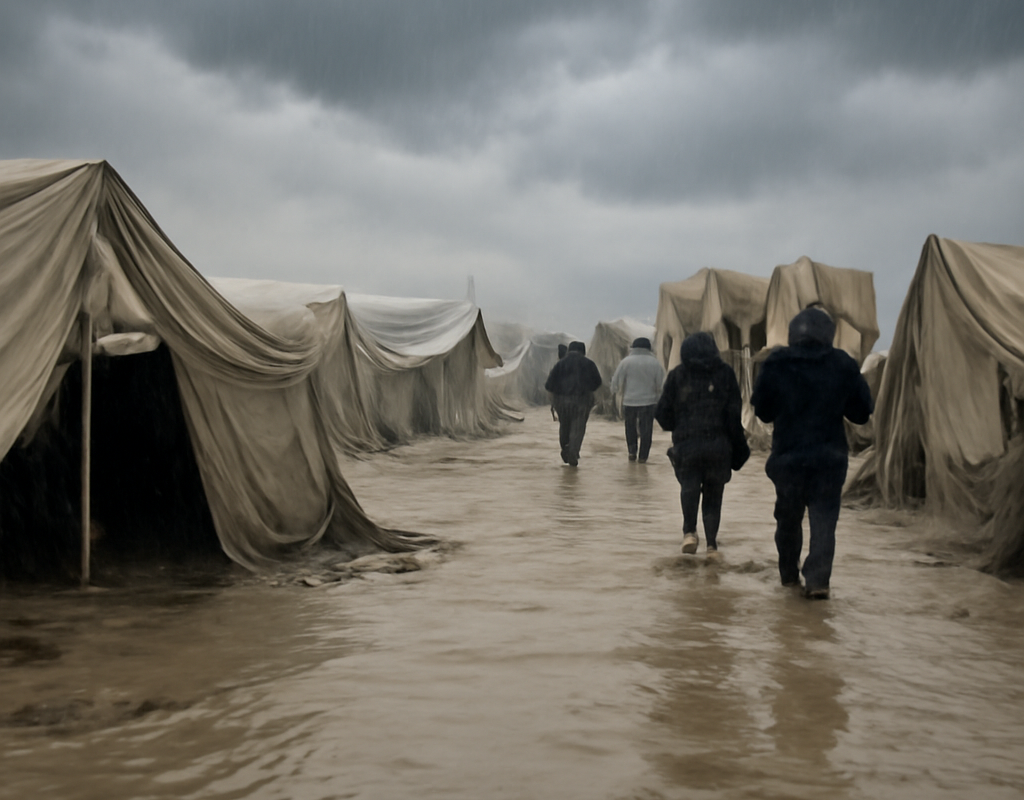
Britain, Australia, Canada and Italy have called on Israel to allow immediate humanitarian access across Gaza after severe flooding damaged shelters and worsened conditions for displaced people. Their appeal comes as aid agencies warn that thousands of families face further danger during the territory’s first winter storm.
Joint statement highlights Gaza’s worsening humanitarian crisis
The four countries’ foreign ministers said the situation in Gaza was “dire” and urged the opening of crossings to permit rapid and unrestricted deliveries. They said 150,000 tents and other essential supplies were being held at the border.
The statement warned that there was still time to act before winter conditions intensified. It specifically called for tents and “dual-use” items needed for humanitarian operations and early recovery to be allowed into Gaza.
Flooding damages tents and disrupts essential services
Heavy rain earlier this month caused widespread flooding across the war-torn territory. Tents used by displaced families were damaged or submerged, while a landslide and flooding contributed to deaths, according to the UN Office for the Coordination of Humanitarian Affairs.
The UN agency also reported thousands of damaged shelters and the suspension of critical services. For people living in temporary accommodation, winter weather creates immediate risks, including exposure, loss of basic belongings and reduced access to healthcare and sanitation.
Disagreement over aid figures
The Israeli military authority responsible for Gaza’s crossings said it was working with the US-led Board of Peace and the United Nations on a winter plan. It said 93,000 tents and 8,600 aid trucks carrying winter supplies had entered Gaza.
However, the four governments said substantial quantities of aid remained at the border. The conflicting figures underline the dispute over the scale and speed of humanitarian deliveries into the territory.
The Israeli authority also said reconstruction could begin only after Hamas fully disarms. Israel has repeatedly linked longer-term rebuilding and security arrangements to the removal of Hamas’s military capabilities.
EU repeats call for Israel to follow international law
The European Union issued a similar statement on Saturday, expressing grave concern about what it described as a continuing and devastating humanitarian crisis. The EU also urged Israel to comply with international law.
The latest appeals place renewed diplomatic pressure on Israel as aid agencies attempt to protect displaced civilians from worsening winter conditions. Access through Gaza’s crossings remains central to the delivery of shelter, food, medical supplies and equipment needed to repair damaged infrastructure.
Background to the Israel-Gaza war
The conflict began after the Hamas-led attack on southern Israel on 7 October 2023. About 1,200 people were killed and 251 were taken hostage, according to Israeli figures cited in the source report.
Israel responded with a military campaign in Gaza. More than 74,690 people have been killed in the territory, according to Gaza’s Hamas-run health ministry. The United Nations considers the ministry’s figures reliable, although the death toll does not distinguish between civilians and combatants.
Despite a ceasefire agreed in October last year, Israeli air strikes and other attacks have continued almost daily, according to the report. The ongoing violence has compounded the effects of displacement, damaged housing and limited access to basic services.
What happens next?
The immediate priority identified by international governments and humanitarian agencies is the movement of shelter and winter supplies into Gaza. Opening crossings and permitting the entry of materials needed for humanitarian work could help reduce the impact of further storms.
Whether the diplomatic calls lead to faster deliveries remains uncertain. Israel’s security conditions, the status of Hamas’s weapons and negotiations involving international bodies are likely to shape access and reconstruction plans.
The central message from the latest statements is clear: Gaza’s damaged shelters and exposed population face an urgent winter threat. Allowing essential supplies to move quickly through the crossings will be critical to limiting further suffering.