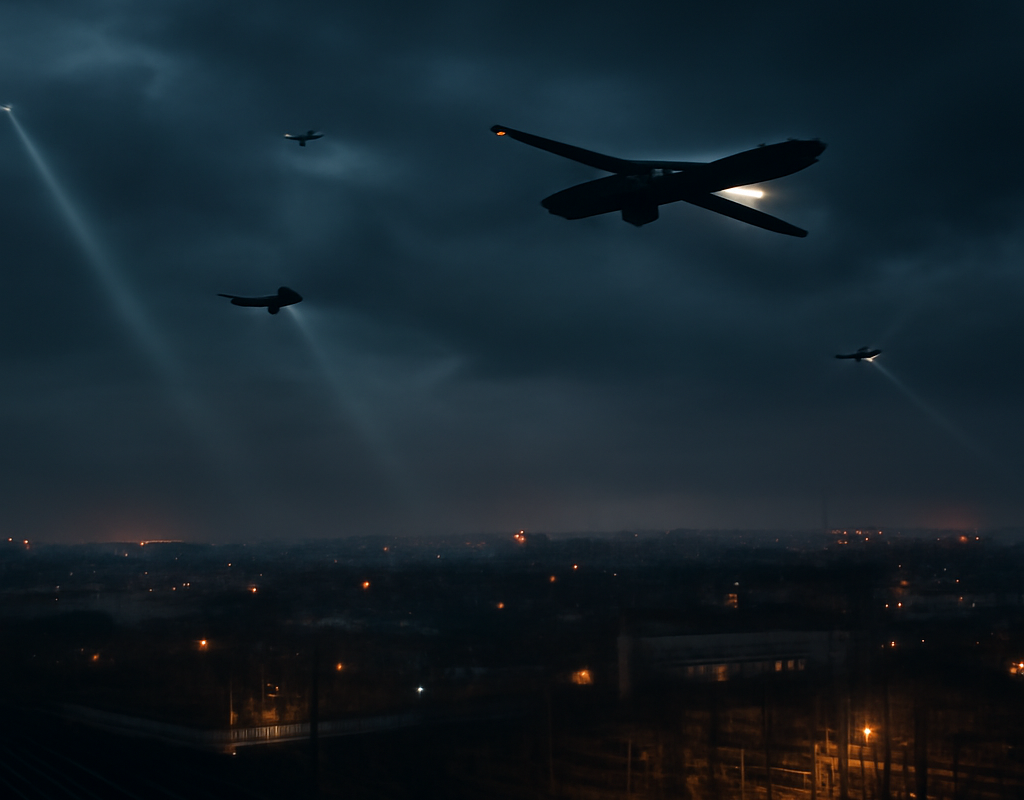
Ukraine’s ability to intercept Russian missiles and fast-moving drones is being affected by continuing speed restrictions on Starshield, President Volodymyr Zelensky has said. The military-grade satellite internet service, controlled by the US government and supplied through Elon Musk’s company, is used for air-defence operations as Russia intensifies attacks on energy infrastructure ahead of winter.
Starshield restrictions remain a problem for Ukraine
Ukraine uses standard Starlink connections for battlefield communications, while Starshield supports the interception of missiles and drones in Ukrainian airspace. According to Zelensky, the system is still operating too slowly in some frontline areas and temporarily occupied territories.
He said Ukrainian interceptor drones lose contact with their operators when travelling at about 161km/h, or 100mph. That loss of connection can prevent them from catching Russian jet-powered Shahed drones before they reach their targets.
“We are counting on these restrictions being lifted,” Zelensky said, linking the issue directly to the protection of Ukrainian lives and energy infrastructure during winter.
The president added that Ukrainian officials had been instructed to work closely with the US government and Musk’s company to resolve the problem.
Dispute over who controls the service
The speed restrictions were first reported in October and have since produced conflicting explanations from Elon Musk and US President Donald Trump.
Musk said responsibility lay with the US government because Starshield is controlled by Washington. Trump, however, denied responsibility and said he had instructed Musk to restore the service. Although the connection appeared to return to normal after about a week, Ukrainian officials later said restrictions were continuing.
The dispute has unfolded during a strained relationship between Zelensky and Trump over Ukrainian attacks on Russian oil infrastructure. Kyiv says those strikes target a major source of funding for Moscow’s war effort, while Trump has argued that attacks on Russian refineries have contributed to higher global energy prices.
Russian strikes target Ukrainian energy and rail networks
The warning over Starshield came as Russia launched attacks across several Ukrainian regions. Ukrainian authorities said energy infrastructure was hit in Zaporizhzhia, Sumy, Odesa, Zhytomyr and Kirovohrad.
Railway infrastructure was also struck in the Dnipro, Kharkiv and Zaporizhzhia regions. Local officials reported that scores of people were injured in the attacks, including strikes in Donetsk and Kyiv regions.
Two people were killed at an infrastructure facility in Mena, in Chernihiv region, according to regional governor Vyacheslav Chaus. He also reported multiple strikes on energy facilities across the area.
Ukraine is facing a separate shortage of US-made Patriot air-defence interceptors. The shortage has reduced the country’s ability to defend against Russian missiles, creating additional pressure on systems that rely on rapid detection, communication and interception.
Ukraine reports attacks inside Russia
Ukraine said its forces carried out strikes against a petrochemical plant and an oil refinery in Nizhnekamsk, a city in Russia’s Tatarstan region. Ukraine’s military described both facilities as important suppliers of raw materials and fuel for Russia’s war effort.
In Taganrog, an industrial port city near the Ukrainian border, a Ukrainian strike reportedly killed one person, according to the regional governor. In occupied Luhansk, officials installed by Moscow said a lorry driver and an elderly woman were killed.
The claims from both sides have not been independently verified in the source material, and the wider exchange of attacks continues to place energy and transport infrastructure at risk.
Estonia to close Russia border crossings
Estonia has announced plans to close its border crossing points with Russia from 1 December. The decision follows a suspected sabotage attempt against Threod Systems, an Estonian company that manufactures drones.
Estonian authorities said eight people were detained over an attempted arson attack and alleged that Russia’s GRU military intelligence service had ordered the operation. Moscow has not commented on the allegation.
Estonian Foreign Minister Margus Tsahkna said hostile actions against Estonia would have consequences. The planned border closures add to growing security tensions between Russia and neighbouring European states.
Why the satellite connection matters
The dispute highlights how dependent Ukraine’s modern battlefield systems are on secure, high-speed communications. Interceptor drones need an uninterrupted link between the aircraft and their operators to identify, pursue and engage incoming threats.
- Reduced connection speed can limit the effectiveness of interceptor drones.
- Fast-moving jet-powered drones may outrun systems that lose contact with operators.
- Damage to electricity infrastructure increases the importance of reliable air defence before winter.
- A shortage of Patriot missiles places further strain on Ukraine’s defensive network.
For Ukraine, the issue is therefore not simply a commercial service dispute. It affects the country’s ability to protect civilians, power supplies and critical infrastructure during an ongoing Russian campaign of missile and drone attacks.
What happens next?
Zelensky’s comments indicate that Kyiv is seeking a technical and political resolution with Washington and Musk’s company. Whether restrictions are lifted will depend on decisions involving the US government, Starshield’s operators and the broader diplomatic relationship between Ukraine and the United States.
With winter approaching and attacks focused on energy facilities, reliable communications will remain central to Ukraine’s air-defence strategy. The continuing Starshield restrictions could leave interceptor drones less effective at the moment they are most needed.
The key takeaway is clear: Ukraine says restoring Starshield performance is essential to defending its skies and protecting energy infrastructure as Russian strikes continue.