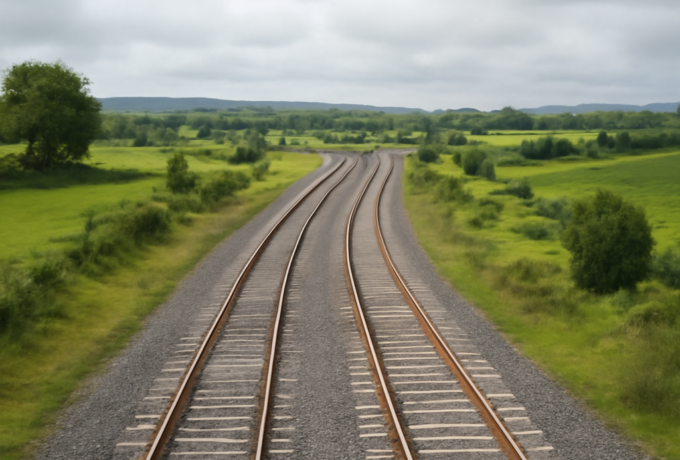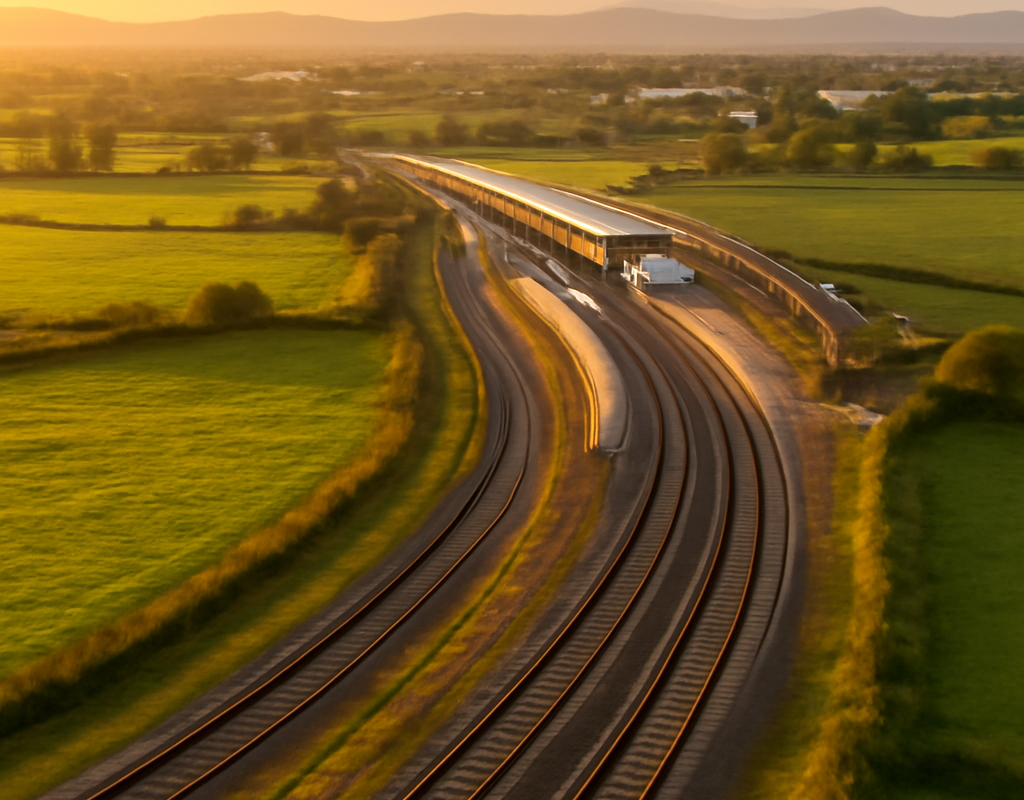
Ireland’s western rail network is entering a major phase of expansion, with new track, reopened routes and larger stations planned across the region. The programme could improve public transport, support housing delivery and strengthen economic links between Limerick, Galway, Clare and Mayo.
Western railway investment moves into a new phase
Irish Rail has appointed Aecom and Jacobs to develop plans for double-tracking the railway between Limerick Junction and Limerick Colbert station. The work will take the project towards the planning stage and is being presented as a key part of a wider transport strategy for the midwest and west of Ireland.
Irish Rail chief executive Mary Considine said the regional projects form part of a national investment pipeline worth approximately €4 billion over the next four years. The wider objective is to expand rail capacity and support up to 180 million passenger journeys annually in the longer term.
- Double-tracking between Limerick Junction and Limerick could be operational by 2032.
- The route could eventually support up to five trains per hour in each direction.
- The reopened Limerick–Foynes line is expected to begin freight operations in early 2027.
- Passenger services to Foynes would follow further work in Limerick city.
- The Athenry–Claremorris rail reopening is targeting passenger and freight services from 2030 or 2031.
Why the project matters for housing and regional growth
The proposed western railway investment comes as towns and cities outside Dublin face pressure to accommodate population and employment growth. Better rail capacity can make it easier for people to live farther from major employment centres while retaining access to reliable public transport.
In the midwest, improved links could help connect housing developments with Limerick city, Limerick Junction and surrounding communities. Irish Rail says the programme is intended to balance industrial expansion with housing development, rather than concentrating growth in a small number of locations.
Rail investment alone cannot resolve Ireland’s housing shortage. Planning, construction capacity, local services and employment must develop alongside transport infrastructure. However, dependable rail connections can make new housing locations more practical and improve access to education, healthcare and work.
Major rail projects under way across the west
Limerick Junction to Limerick double-tracking
The proposed double-track line would increase capacity between Limerick Junction and Limerick Colbert station. Irish Rail expects the project to reach the planning-permission stage in 2028 or 2029, with operations potentially beginning in 2032.
Once completed, the line could allow as many as five trains per hour in each direction. That would provide more flexibility for commuter, regional and other passenger services while reducing the limitations created by a single-track route.
Limerick to Foynes reopening
Test trains are already operating on the reinstated Limerick–Foynes freight line. The route is expected to open for freight in early 2027, supporting the movement of goods to and from the port.
Passenger trains are not planned at the initial stage. Passenger services would require the reopening of a short section in Limerick city known as Carey’s Road, after which the route could serve both local communities and the wider port area.
Limerick–Galway capacity improvements
Irish Rail has invited tenders for platform extensions along the Limerick–Athenry section. The work would allow six-carriage trains to operate, compared with the current capacity of up to four carriages.
The project is scheduled for completion by the end of 2027 and is expected to increase capacity on the Limerick–Galway route without waiting for every longer-term infrastructure proposal to be completed.
Galway Ceannt Station expansion
A €70 million upgrade at Galway’s Ceannt Station is nearing completion. The project will increase the number of platforms from two to five and create a larger station complex at the centre of a transport hub.
Construction is scheduled to finish by the end of 2026. The expanded station should provide more room for train movements and support future services in one of the country’s fastest-growing urban areas.
Athenry to Claremorris rail corridor
The reopening of the former Western Rail Corridor between Athenry and Claremorris, via Tuam, remains at the preliminary-works stage. Main construction is scheduled to begin in 2028, with passenger and freight operations targeted for 2030 or 2031.
Longer-term plans also include double-tracking between Athenry and Galway and adding passing loops between Athlone and Athenry. These measures would allow trains to pass each other and improve the reliability and frequency of services.
Follow regional infrastructure and public transport developments through DailyDigest Ireland news.
What the investment means for passengers
For passengers, the programme could deliver more frequent trains, additional seats and improved connections between western cities and towns. Capacity upgrades are particularly important on routes where demand is growing faster than existing platforms, carriages and track layouts can accommodate.
- More frequent services on key routes
- Longer trains with increased seating capacity
- Improved freight access to Foynes Port
- Better connections between Limerick, Galway, Mayo and the wider midwest
- Greater potential for rail-based commuting and regional development
Irish Rail is also due to commission a study into commuter services focused on Limerick. A new station at Moyross already has planning permission, while another station has been proposed for Ballysimon.
Timeline for the western rail programme
- 2026: Galway Ceannt Station expansion is scheduled for completion.
- Early 2027: Limerick–Foynes freight services are expected to begin.
- End of 2027: Platform extension work on the Limerick–Galway line is due to finish.
- 2028–2029: Double-tracking plans from Limerick Junction to Limerick are expected to reach the planning stage.
- 2028: Main construction on the Athenry–Claremorris reopening is scheduled to begin.
- 2030–2031: Passenger and freight services on the reopened Western Rail Corridor are targeted.
- 2032: The Limerick Junction–Limerick double-track project could become operational.
What happens next?
The immediate priorities are design, planning and procurement. The Limerick Junction project must progress through technical development and statutory approvals before construction can begin. Other schemes also depend on funding, detailed engineering and coordination with local planning authorities.
The timetable for the Western Rail Corridor remains a target rather than a guarantee. As with all major infrastructure projects, construction schedules may change as planning, land, procurement and delivery issues are resolved.
Frequently asked questions
When could the Limerick Junction double-track open?
Irish Rail has indicated that the line could be operational by 2032, subject to planning, funding and construction progress.
Will the Limerick–Foynes line carry passengers?
The line is expected to open first for freight. Passenger services would require the reopening of the Carey’s Road section in Limerick city.
What is planned for the Western Rail Corridor?
The Athenry–Claremorris section via Tuam is being prepared for reopening, with main construction targeted for 2028 and services targeted for 2030 or 2031.
How could the projects affect housing?
Improved rail connections could support housing and employment growth in towns linked to Limerick, Galway and Mayo. Transport investment will need to be matched by planning, services and housing delivery.
Conclusion
This western railway investment represents one of the most significant opportunities to reshape transport and regional growth outside Dublin. If the projects are delivered on schedule, better rail capacity could support housing, freight, commuting and economic development across the west of Ireland. The key takeaway is clear: the benefits will depend not only on laying track, but on coordinating rail investment with planning and the communities it is intended to serve.