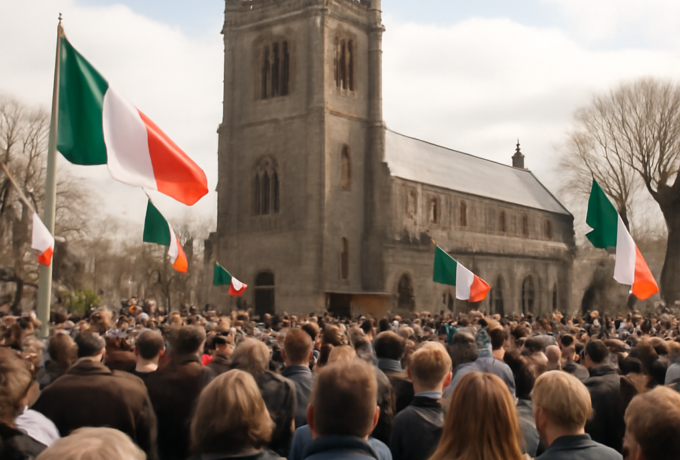
Simon Harris has written to political leaders seeking their views on the future of Irish unity, opening a new political discussion about how the question should be approached across the island. The correspondence places constitutional change and public dialogue back among Ireland’s major political issues.
What happened?
The Tánaiste, Simon Harris, has contacted political leaders to ask for their views on Irish unity. The move is focused on gathering perspectives on the issue and understanding how political parties believe the debate should develop.
The correspondence does not, by itself, represent a decision to hold a border poll or a change to the constitutional position. Instead, it signals an effort to seek political views on a subject that involves the Republic of Ireland, Northern Ireland and the UK.
Why Irish unity is back in focus
Irish unity remains one of the most significant constitutional questions on the island. Under the Good Friday Agreement, a future referendum on Northern Ireland’s constitutional status can take place if the UK Secretary of State believes it is likely that a majority would vote for a united Ireland.
Any such process would carry major political, legal, economic and social implications. It would also require detailed consideration of how public services, representation, healthcare, education, taxation and governance might operate in a changed constitutional arrangement.
That is why discussions about Irish unity increasingly focus not only on identity and constitutional principle, but also on practical preparation and public consent.
- Simon Harris has written to political leaders about Irish unity.
- The request seeks political views and does not announce a border poll.
- The issue affects communities in the Republic, Northern Ireland and Britain.
- Any future constitutional change would require extensive public and political debate.
What the request could mean for Irish politics
The initiative may encourage political parties to clarify their positions on the timing, preparation and structure of any future debate. It could also prompt renewed discussion about whether citizens should receive more information about the possible consequences of constitutional change before any referendum is considered.
For the Irish Government, the challenge is to support informed discussion without presenting a timetable that has not been agreed. Political leaders may differ sharply on whether preparations should begin now, how they should be managed and what role the Government should play.
The response from parties and independent representatives will help show whether there is support for a shared process or whether significant disagreements remain over the next steps.
The role of Northern Ireland and the UK
Irish unity cannot be addressed solely through politics in Dublin. Northern Ireland’s political institutions, communities and voters would be central to any future constitutional decision. The UK Government would also have a formal role under the terms of the Good Friday Agreement.
The agreement recognises the right of people in Northern Ireland to identify as British, Irish or both, and to hold British and Irish citizenship. Any future debate would therefore need to account for different identities, traditions and political expectations across the island.
A responsible process would need to be inclusive and based on clear, accessible information. It would also have to avoid treating constitutional change as a simple administrative exercise.
Questions political leaders may now face
Responses to Simon Harris’s letter are likely to centre on several practical questions:
- Should cross-party or all-island discussions begin immediately?
- What evidence and information would citizens need before voting?
- How should the interests of people in Northern Ireland be represented?
- What arrangements would be required for public services and institutions?
- How can debate remain respectful and protect community relations?
These questions are likely to shape the next phase of Irish unity discussions more than slogans or short-term political messaging.
Follow DailyDigest for further Ireland News, Irish Politics and public affairs updates as responses emerge.
What happens next?
The immediate next step is for political leaders to consider the request and provide their views. The available information does not confirm what form any follow-up discussions will take, or whether the correspondence will lead to a formal Government initiative.
Readers should distinguish between political engagement on Irish unity and the separate legal process required for a border poll. No border poll has been announced in the source information, and no date has been provided.
Frequently asked questions
Has a border poll been announced?
No. The request for political views is not an announcement of a border poll or a referendum timetable.
Who decides whether a poll takes place in Northern Ireland?
Under the Good Friday Agreement, the UK Secretary of State for Northern Ireland has the power to call a poll when it appears likely that a majority would vote for a united Ireland.
Why does the issue matter across the island?
A constitutional change would affect governance, public services, political representation, identity and the relationship between communities in the Republic of Ireland, Northern Ireland and the UK.
Conclusion
Simon Harris’s letter brings Irish unity into renewed political focus, but it should be understood as a request for views rather than a referendum announcement. The central question now is whether political leaders can support a careful, inclusive and evidence-based conversation about the island’s future. For readers following Breaking News Ireland, the next important development will be the political responses and any decision on how discussions continue.