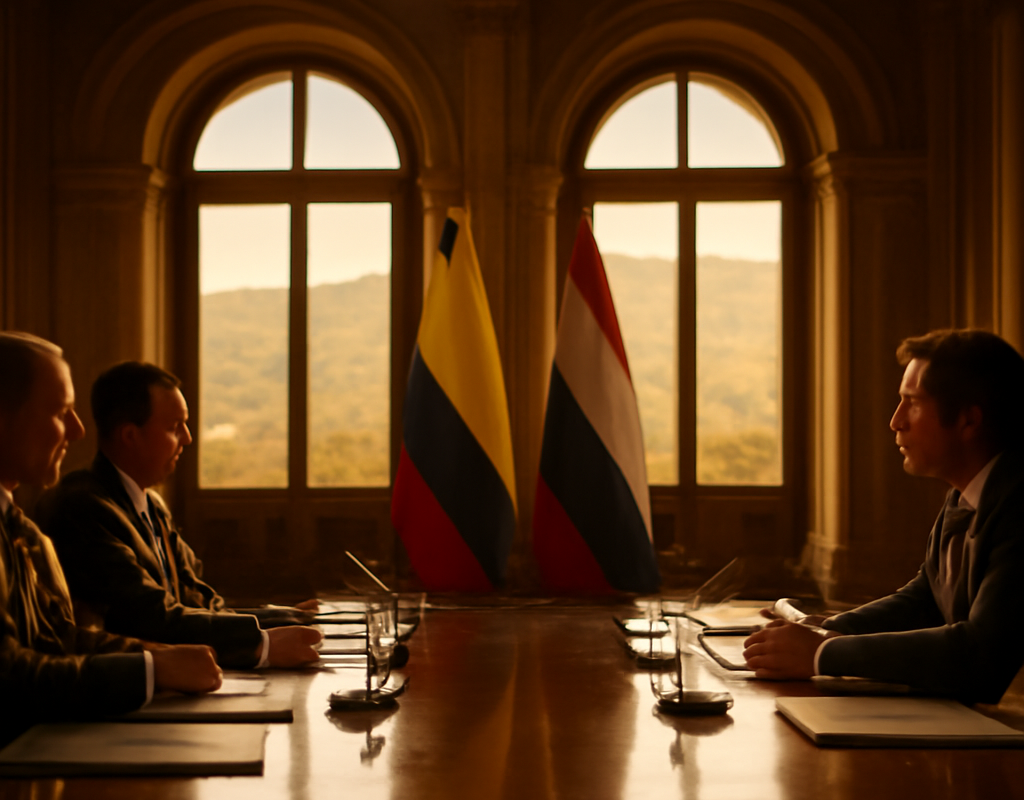
The United States and Venezuela have agreed to restore military co-operation, marking a dramatic shift in relations less than a year after US forces seized former Venezuelan leader Nicolás Maduro in Caracas. The agreement was signed in Venezuela on Wednesday during talks between US Defence Secretary Pete Hegseth and interim President Delcy Rodríguez.
The deal is expected to cover military training, operational equipment and access to new technology, although neither government has released its full terms. Both sides said the renewed partnership would help address threats they consider common to the two countries.
US-Venezuela military agreement signals major policy reversal
Hegseth described Venezuela’s transformation in striking terms, saying it had moved from being a serious regional threat to a co-operative security partner in fewer than 12 months. Rodríguez called the agreement highly significant for bilateral relations and said it could turn a period of confrontation into practical co-operation.
The arrangement ends a long freeze in formal military ties. Co-operation was terminated in 2005 under former Venezuelan President Hugo Chávez, who accused US military personnel stationed in Venezuela of making hostile comments about his government. Chávez also alleged that the US military office at Fuerte Tiuna was being used to plot against his administration.
Relations deteriorated further during Maduro’s presidency. Washington increased its reward for information leading to his capture to $50m (£38m) late last year, before US forces seized Maduro in a military operation on 3 January. Maduro and his wife, Cilia Flores, are now being held in New York and face charges including drug trafficking and conspiracy to commit torture. Both deny the allegations.
Hegseth links agreement to campaign against armed groups
Speaking at the US embassy in Caracas, Hegseth presented the new agreement as part of the Americas Counter Cartel Coalition, a US-led effort focused on confronting drug-trafficking networks and armed groups across the region.
He said the partnership would open “a new chapter” for the two countries and the wider Western Hemisphere. His speech also contained a direct warning to groups he accused of using Venezuela as a safe haven, saying US forces would pursue and kill them.
Rodríguez was less specific about military operations, focusing instead on training Venezuela’s armed forces and improving their equipment and technological capabilities. The lack of published detail means it is not yet clear whether the agreement involves intelligence sharing, joint exercises, equipment transfers or operational deployments.
- Training: Venezuela’s armed forces could receive renewed support and instruction.
- Equipment: Rodríguez referred to improvements in operational equipment.
- Technology: The agreement may expand access to technology used against shared security threats.
- Regional co-operation: The deal is linked politically to the Americas Counter Cartel Coalition.
Colombia remains central to US regional strategy
After visiting Venezuela, Hegseth travelled to neighbouring Colombia, another important partner in the US security strategy for Latin America. Colombia is already part of the Americas Counter Cartel Coalition, and Hegseth previously raised the possibility of joint US-Colombian military operations against armed groups.
Colombian President Abelardo de la Espriella rejected a report that he had refused to take part in such operations. In a statement on X, he said any decision would have to comply with Colombia’s constitution, domestic law and national sovereignty.
Hegseth reposted the statement and said the US-Colombian partnership was stronger than ever. His comments suggest Washington is seeking a broader regional network, although the precise limits of military co-operation with Venezuela and Colombia remain uncertain.
What happens next for Venezuela?
The agreement represents a significant change from the hostility that defined US-Venezuelan relations under Maduro. However, its practical importance will depend on the details eventually made public and on how Venezuela’s interim authorities implement the commitments.
Questions remain over the scope of training, the equipment involved and whether the arrangement will lead to joint action outside Venezuela. The treatment of Maduro, the outstanding criminal charges and the political legitimacy of the interim government are also likely to remain sensitive issues.
For now, the announcement shows Washington and Caracas moving rapidly from confrontation to security co-operation. The next indication of the deal’s significance will come when officials publish more information about its military programmes and regional objectives.
The key takeaway: the US-Venezuela military agreement resets relations after Maduro’s capture, but its real impact will depend on details that have not yet been disclosed.