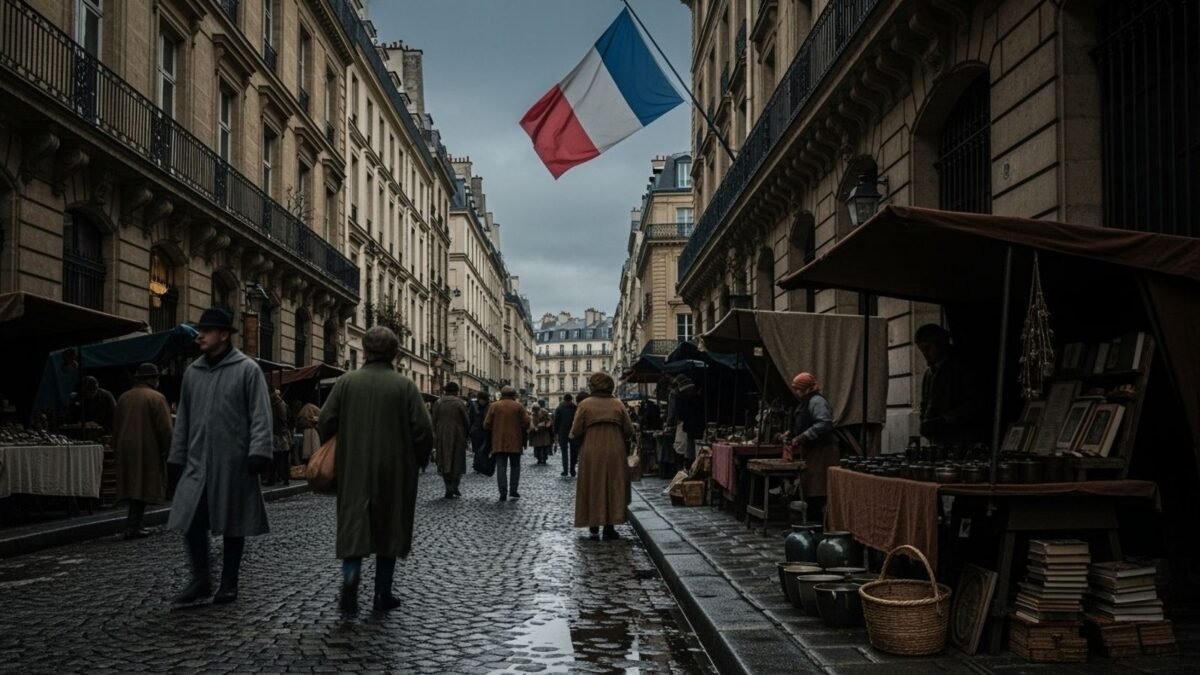
The Siege of Paris was supposed to force the French capital into submission, but the 132-day blockade produced scenes that seemed almost unbelievable. As food and fuel disappeared, Parisians built an improvised postal network in the sky, ate animals from zoos and endured bombardment while trying to preserve ordinary life.
From September 19, 1870, to January 28, 1871, roughly two million people were trapped inside the city’s defensive ring. These ten episodes reveal how the siege transformed daily life and created some of the most unusual stories in European military history.
1. Voisin’s Extraordinary Christmas Menu
On Christmas Day 1870, the fashionable Voisin restaurant on the rue Saint-Honoré offered a menu that reflected both luxury and desperation. Its courses reportedly included elephant consommé, roast camel, kangaroo stew, bear chops, wolf and cat served with rats. The meal was accompanied by prestigious wine, creating a stark contrast with the bread queues outside.
The menu did not represent what most Parisians ate. It belonged to wealthy diners who could afford rare meat at inflated prices, while many poorer residents struggled to obtain basic rations.
2. Paris Ate Its Zoo Animals
Voisin’s menu was not merely theatrical. As the siege continued, restaurants served animals from Parisian collections, including kangaroos, bears, antelopes and peacocks. Two elephants, Castor and Pollux, became the best-known examples after being killed in late December when the zoo could no longer feed them.
Elephant meat commanded high prices, and sellers sometimes falsely claimed that cheaper meat was elephant. The episode showed how scarcity could turn familiar public attractions into sources of food.
3. Horses Became a Staple
Livestock brought into Paris was consumed within weeks. Residents then turned to horses, including cab horses and carriage animals. By the end of the siege, an estimated 65,000 to 70,000 horses had been eaten.
Horse meat appeared openly in butcher shops and restaurant dishes, including consommé and preparations made with marrow. Unlike some emergency foods, it remained part of French culinary life after the siege.
4. Rats and Other Unlikely Meats Appeared
As beef and mutton became scarce, market stalls advertised dog and cat meat, while rats were sold to customers who could afford them. Some restaurants incorporated rat into dishes such as salami and pies.
The trade was controversial: some people feared disease, while others viewed the meat as an expensive novelty. It was another sign that the normal boundaries of Parisian food culture had collapsed.
5. Bread Was Made with Improvised Ingredients
Paris had expected its flour stores to last around 80 days, but the blockade continued for 132. By January, bakers were using bran, chopped straw and flour-mill sweepings to stretch supplies. The resulting loaves were dark, gritty and difficult to eat.
People nevertheless waited in long queues in freezing conditions. During one reported week, more than 4,000 people died, illustrating the human cost of hunger, cold and disease.
6. Balloons Kept Paris Connected
When Prussian forces cut the telegraph lines, Félix Nadar helped develop a balloon post. Sixty-seven balloons left Paris during the siege, carrying about three million letters, more than 100 passengers and carrier pigeons.
The balloons used flammable coal gas and could not be steered reliably. Pilots had to trust the wind, meaning a flight intended to cross the enemy lines could land hundreds of kilometres away.
7. Gambetta Escaped by Air
Minister Léon Gambetta used the balloon Armand-Barbès to leave Paris on October 7, 1870. The craft came under fire while crossing the Prussian lines, and Gambetta was grazed on the hand by a bullet. He eventually reached Tours, where he helped organise the French war effort outside the capital.
8. A Balloon Reached Norway
The balloon Ville d’Orléans travelled about 1,408 kilometres before landing in Norway. Its pilots had intended to make a far shorter journey, but strong winds carried them into Scandinavia. The episode demonstrated both the reach and the unpredictability of siege-era aviation.
9. Pigeons Carried Microfilm
Because balloons could leave Paris more easily than they could return, carrier pigeons provided a link back into the city. René Dagron developed a microfilm system that allowed one pigeon to carry tens of thousands of tiny messages.
Of 302 pigeons sent out, only 57 reportedly returned. Those that did were celebrated for delivering vital dispatches despite attempts to intercept or deceive the system.
10. Paris Was Shelled After Months of Hunger
For much of the siege, Prussian forces relied on starvation rather than bombardment. Shelling began in January 1871, with roughly 12,000 shells fired into Paris over 23 nights. Hospitals, theatres and homes were hit, and about 400 people were reported killed or wounded.
Despite the attacks, concerts and dinners continued. Paris surrendered three weeks after the bombardment began, ending one of the most extraordinary sieges of the nineteenth century.
The lasting lesson of the Siege of Paris
These stories are memorable because they combine ingenuity, inequality and suffering. Balloons and pigeons kept information moving, while improvised bread and zoo meat showed the desperate reality facing ordinary residents. The Siege of Paris was not simply a military blockade; it was a test of how a modern city adapted when its usual systems failed.