Ukrainian President Volodymyr Zelenskyy says US officials raised the possibility of Ukraine giving up territory in exchange for NATO membership, adding a new and highly sensitive issue to diplomatic efforts aimed at ending Russia’s war.
Zelenskyy said he could not accept such terms alone and that Ukrainians would have to be consulted if Western governments formally presented the proposal. The comments came as Washington, Kyiv and European governments continued discussions about security guarantees, territorial questions and the shape of any future peace settlement.
What Zelenskyy said about the reported proposal
According to comments reported by Agence France-Presse, Zelenskyy said US representatives had asked whether Ukraine might join NATO if it withdrew from parts of Donbas. He described this as the first time the question had been raised in that form.
The remarks do not indicate that Ukraine has accepted the idea, nor that a final agreement has been reached. They instead point to an exploratory proposal in ongoing negotiations, with major questions still unresolved.
Zelenskyy said Ukraine was discussing “specific security guarantees” with NATO and the European Union. He also stressed that any decision involving Ukrainian territory could not be made solely by the president.
- The reported idea concerns territorial concessions and possible NATO membership.
- Ukraine has not been reported as accepting the terms.
- Zelenskyy said any such decision would require consultation with the Ukrainian people.
- Security guarantees from NATO and the European Union remain part of the discussions.
Russia maintains its territorial demands
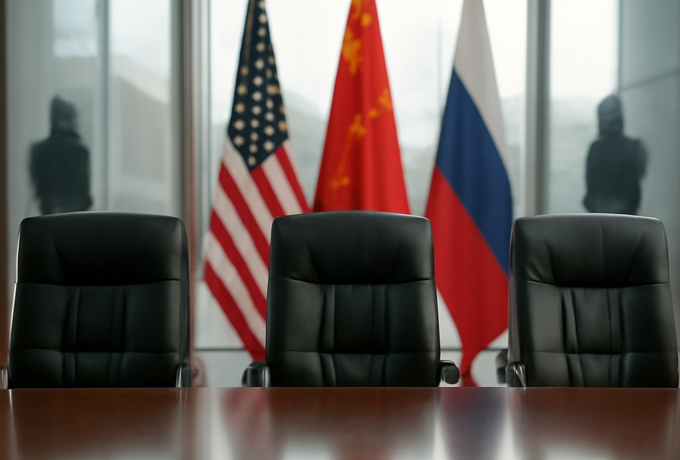
The reported proposal emerged after Russian President Vladimir Putin met US special envoys Steve Witkoff and Jared Kushner in Moscow. The meeting formed part of wider diplomatic contacts focused on the war and possible pathways towards a settlement.
Putin indicated that Russia was not prepared to abandon its territorial demands concerning parts of Ukraine. He also rejected the deployment of foreign peacekeeping forces in Ukraine, according to the source report.
Those positions underline the central difficulty facing negotiators: Ukraine is seeking credible guarantees for its future security, while Russia continues to press territorial claims and oppose arrangements that could strengthen Western military involvement.
Europe seeks a role in peace negotiations
US representatives later met Zelenskyy in Ireland, where the participants said Europe would have a voice in future peace negotiations. Jared Kushner wrote that this could allow broader post-war European security arrangements to be considered alongside the territorial dispute between Ukraine and Russia.
European governments have repeatedly argued that any settlement affecting the continent’s security cannot be negotiated without European participation. The conflict has affected European defence planning, energy policy, sanctions, refugee protection and relations between the European Union and Russia.
However, Russian officials appeared to question whether the reported territorial and NATO formula had been discussed in Moscow. Foreign Ministry spokesperson Maria Zakharova said her department understood that the issue had not been raised during the talks with the US envoys.
Presidential aide Yuri Ushakov said Russia’s position on European involvement had been set out comprehensively. He also accused European countries of seeking to enter the negotiations while challenging them to decide whether they wanted peace or continued war.
Why the proposal would be politically difficult
Any arrangement involving Ukrainian territory would face serious legal, political and security questions. Ukraine has consistently opposed recognising Russia’s claims over occupied territory, while Moscow has demanded control over areas it says belong to Russia.
NATO membership would also require agreement among all alliance members. Membership is not an automatic exchange for a political concession, and any invitation would involve separate decisions by NATO allies and compliance with the alliance’s accession requirements.
For European governments, the issue would also raise questions about:
- whether territorial concessions could create a lasting peace or encourage further demands;
- what security guarantees would be legally and militarily credible;
- how any ceasefire would be monitored;
- whether European forces could participate in post-war arrangements;
- how sanctions and reconstruction support would be handled.
What happens next in the Ukraine peace discussions?
The immediate next step is clarification. The reported comments do not establish a completed US plan, a Ukrainian commitment or a negotiated settlement with Russia.
Further talks are expected to focus on the relationship between territorial issues, security guarantees and European involvement. Ukraine’s position, Russia’s territorial demands and the willingness of NATO members to offer long-term protection will remain decisive.
Any agreement would also need to address implementation, monitoring and the status of occupied areas. Until those issues are resolved, reports of possible formulas should be treated as part of an evolving diplomatic process rather than as an adopted peace plan.
Conclusion
The latest EU news and wider European security debate now include a reported US suggestion linking possible Ukrainian territorial concessions with NATO membership. Zelenskyy has made clear that Ukraine has not accepted the idea and that any decision on territory would require public consultation. With Russia disputing aspects of the account and Europe seeking a formal role, the proposal remains an unconfirmed negotiating concept rather than a final settlement.