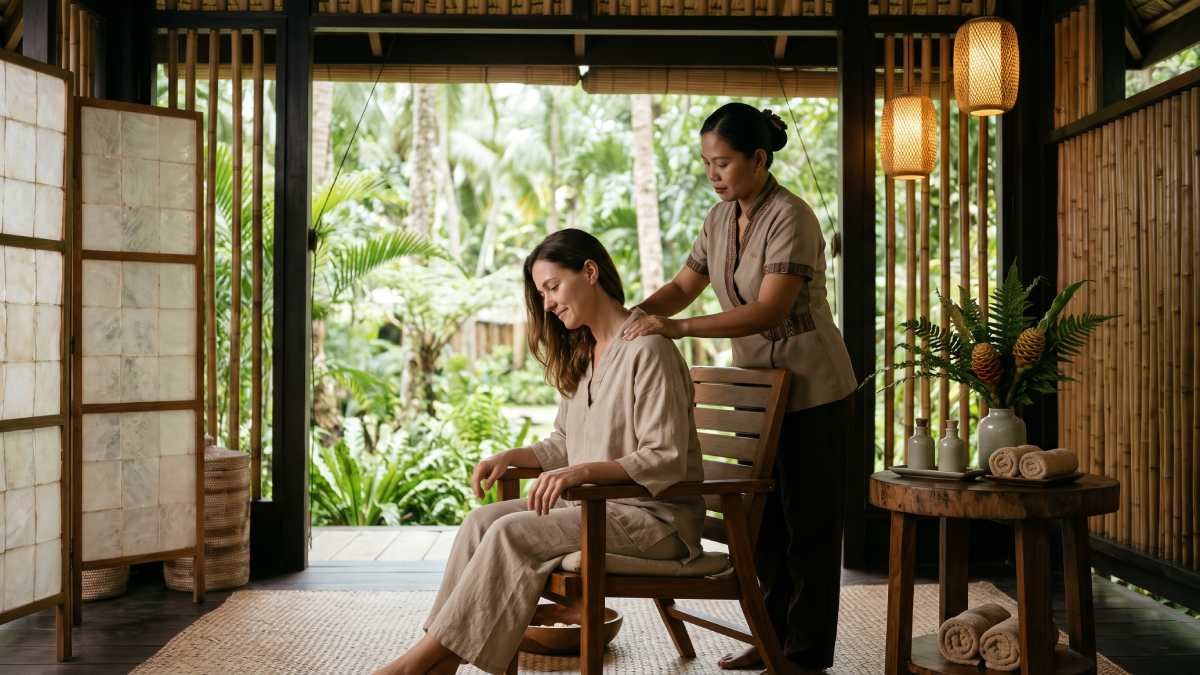
The Philippines is using the 49th ASEAN Summit in Pasay City to showcase traditional wellness as part of a broader tourism and investment strategy. Inside the summit’s International Media Center, visiting journalists and delegates can experience short sessions of hilot and dagdagay while learning about Filipino food, crafts, heritage and regional culture.
The initiative reflects a policy shift away from focusing only on visitor numbers. Philippine tourism officials are placing greater emphasis on longer stays, higher visitor spending, sustainable employment and the spread of tourism benefits beyond Metro Manila.
Traditional wellness arrives inside the ASEAN media centre
The International Media Center at the World Trade Center Metro Manila began operations on November 11, 2026, and was formally opened on November 13. It was designed to support approximately 2,000 local and international journalists covering the ASEAN Summit and related diplomatic meetings.
Within Hall B, the Philippine Pavilion includes a Boracay-inspired Health and Wellness Hub. Accredited practitioners from the Wellness Tourism Association of the Philippines are providing 15-minute sessions, with operational support from Okada Manila staff.
Three traditional Philippine treatments are being presented:
- Hilot Tinuod: a traditional head, neck and shoulder massage.
- Hilot Ginhawa: a traditional back and shoulder massage.
- Dagdagay: a traditional foot massage.
The compact format is designed for people working long hours at a major international event. It also introduces foreign media to Philippine healing traditions in a professional hospitality setting, without presenting the summit facility as a substitute for clinical medical care.
Wellness diplomacy links culture with business travel
The wellness hub forms part of a much larger Philippine Experience Center. Alongside the treatments, the media centre features food, coffee, cocoa, coconut products, crafts, art and regional enterprise displays.
A seven-day beverage station highlights coffee from several Philippine areas, including Benguet, Sagada, Batangas, Tarlac, Tanay, Maguindanao and Sultan Kudarat. An Intramuros-inspired walkway, Pinoy Kalye, connects the main exhibition area with an One Town, One Product showcase, a Philippine MSME Hub and gastronomy kiosks representing Luzon, the Visayas and Mindanao.
The Department of Tourism’s objective is to turn a short business visit into a broader cultural and leisure experience. Journalists and delegates are being encouraged to explore local products and traditions so that professional exposure can develop into future visits, investment and destination coverage.
Why the Philippines is prioritising higher-value tourism
The wellness focus comes as official tourism accounts show a gap between travel volume and visitor spending. Tourism Direct Gross Value Added at current prices reached PHP 2.27 trillion in 2025, down slightly from PHP 2.30 trillion in 2024 and below the PHP 2.51 trillion recorded in 2019.
Inbound tourism expenditure also declined, falling to PHP 698.46 billion in 2025 from PHP 745.99 billion in 2024. Accommodation accounted for PHP 195.66 billion, transport services for PHP 175.1 billion, and food and beverage services for PHP 124.43 billion.
Domestic tourism moved in the opposite direction. Domestic expenditure increased from PHP 3.16 trillion in 2024 to PHP 3.26 trillion in 2025, while total internal tourism expenditure reached PHP 3.96 trillion.
These figures help explain the government’s interest in experiences that can encourage visitors to spend more locally and remain in the country for longer. Wellness tourism may connect accommodation, food, transport, healthcare-related services, craft production and regional employment.
Employment and regional development remain central
Tourism industries employed approximately 7.7 million people in the Philippines in 2025, up from 7.5 million in 2024, according to figures reported from national tourism accounts. The government is therefore presenting wellness not simply as a luxury add-on, but as one possible route to more resilient provincial employment.
The approach also fits the National Tourism Development Plan 2023–2028, which places greater weight on sustainable investment and the quality of tourism benefits. The policy direction is to measure success not only through arrivals, but also through:
- jobs created in local communities;
- investment reaching destinations outside the capital;
- longer visitor stays;
- higher spending across domestic suppliers; and
- stronger links between tourism, culture and small businesses.
A multi-city model for future events
Pasay City is only one part of the strategy. Cebu hosted the 48th ASEAN Summit and related meetings in May 2026, while Clark in Pampanga hosted the JCI World Congress in November. Tourism officials cited the Clark event as attracting more than 5,000 young leaders, with planning projections of roughly 6,000 delegates.
By connecting Metro Manila, Cebu and Clark with regional itineraries, the Department of Tourism hopes that conference participants will continue travelling after official meetings end. This business-events model could give destinations outside the capital greater access to international visitors while supporting local accommodation, restaurants, wellness providers and makers.
What the ASEAN Summit initiative means for travellers
For visitors, the project signals that traditional Filipino wellness is being incorporated into the country’s formal meetings, luxury hospitality and cultural tourism offer. The summit sessions are limited to the event environment, but the wider message is aimed at future visitors seeking wellness breaks, cultural experiences and regional travel.
Travellers considering the Philippines should distinguish between accredited wellness services and medical treatment. They should check practitioner credentials, understand what a treatment involves and seek professional medical advice for health concerns. The summit activation itself is primarily a cultural and hospitality showcase.
Conclusion
The Philippines is using the ASEAN Summit to demonstrate how hilot, dagdagay and other local traditions can support a higher-value tourism strategy. The central takeaway is that wellness is being positioned alongside food, heritage, enterprise and business events to encourage longer stays, wider regional spending and sustainable employment. If the model succeeds, future international gatherings could become gateways to broader Philippine travel rather than short visits confined to the capital.