

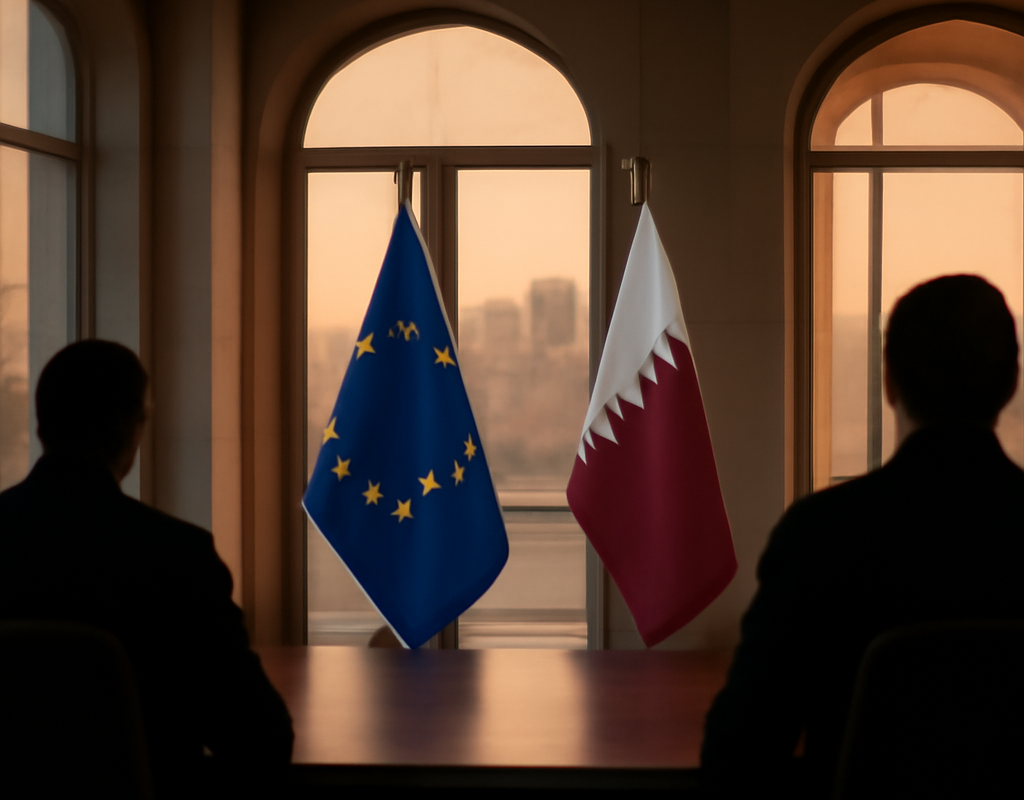
Standfirst: The European Union is preparing defence discussions with Qatar as it seeks closer security, political and economic cooperation with Gulf countries. The proposed talks reflect Europe’s effort to deepen regional partnerships, but the available information does not indicate that a formal defence agreement has yet been concluded.
The European Union plans to hold defence talks with Qatar as part of a wider effort to strengthen ties with the Gulf region, according to EU Ambassador to Qatar Antonino Maggiore. The discussions would add a security dimension to an already broader relationship involving political dialogue and economic cooperation.
The announcement comes as instability and security concerns continue to shape relations between Europe and Gulf states. However, the information currently available describes a plan to expand cooperation rather than a completed agreement or new EU military deployment.
What the EU has announced
Maggiore said Europe intends to strengthen defence cooperation with Qatar and other Gulf countries. The ambassador also indicated that the EU wants to deepen political and economic engagement across the region.
The proposed discussions could give the EU and Qatar a forum to examine shared security concerns and identify areas for closer coordination. No detailed agenda, timetable, funding commitment or operational arrangement has been publicly confirmed in the source material.
The development should therefore be understood as a diplomatic and policy initiative. It is not, on the information available, an announcement that the EU has agreed to deploy forces, establish a military base or provide a specific defence capability.
Why Gulf security matters to Europe
Qatar occupies an important position in Gulf diplomacy and has frequently been involved in regional dialogue. For the EU, closer engagement with Doha could support communication on security issues that affect Europe’s wider interests.
Those interests include:
- regional stability and crisis diplomacy;
- security cooperation with Gulf partners;
- political coordination during periods of tension;
- trade and investment relations; and
- energy and transport links connecting Europe with the Gulf.
The Gulf is also strategically important because developments there can have consequences beyond the region. Disruptions to maritime routes, escalating military tensions or diplomatic crises may affect international trade, energy markets and European foreign-policy planning.
A broader EU-Qatar relationship
Defence cooperation would form part of a wider relationship rather than stand alone. The ambassador’s comments linked security discussions with efforts to expand political and economic cooperation between Europe and Qatar.
This approach is consistent with the EU’s broader use of diplomatic partnerships. Rather than focusing exclusively on military matters, the Union often combines political dialogue, trade, investment, energy, transport and security cooperation when dealing with strategically important partners.
For Qatar, closer engagement with the EU could provide another channel for diplomatic coordination with European governments and institutions. For the EU, stronger links could improve its ability to communicate with a key Gulf partner during regional crises.
Is this a new EU defence agreement?
There is no indication in the available information that a formal defence agreement has been signed. The announcement concerns planned talks and an intention to strengthen cooperation.
That distinction matters. Any future arrangement would need to be assessed according to its legal form, participating EU institutions and member states, and the areas of cooperation covered. Political discussions do not automatically create binding military obligations.
Further details would be needed to establish:
- which EU bodies or member states would participate;
- whether the talks would produce a formal agreement or political declaration;
- which security issues would be addressed;
- whether any funding or equipment commitments would follow; and
- how the initiative would fit with existing European and international security partnerships.
What it means for Ireland and other EU countries
The proposed talks do not appear to create immediate new obligations for Ireland or other EU member states. Ireland’s participation in any future initiative would depend on the details of the arrangement and the decisions taken by the relevant national and European authorities.
Nevertheless, developments affecting Gulf security can matter to Irish interests indirectly. Ireland is connected to international trade, energy markets and European foreign policy, meaning a more stable regional environment could have wider implications for businesses, consumers and diplomatic planning.
No specific effect on Irish defence policy, domestic law or public spending has been announced.
What happens next?
The next step is likely to be further diplomatic engagement between the EU and Qatar. The key issue will be whether the planned discussions produce a defined framework for cooperation or remain part of broader political dialogue.
Readers should look for clarification on the timing of the talks, the institutions involved and any formal conclusions. Until those details are published, the development is best described as an announced intention to explore stronger defence and security ties.
Conclusion
The EU’s plan for defence talks with Qatar signals an effort to build closer security relations with the Gulf while also expanding political and economic cooperation. The initiative is still at the discussion stage, and no formal defence commitment has been confirmed. Its significance will depend on whether future talks lead to specific agreements, practical cooperation or wider coordination during regional crises.