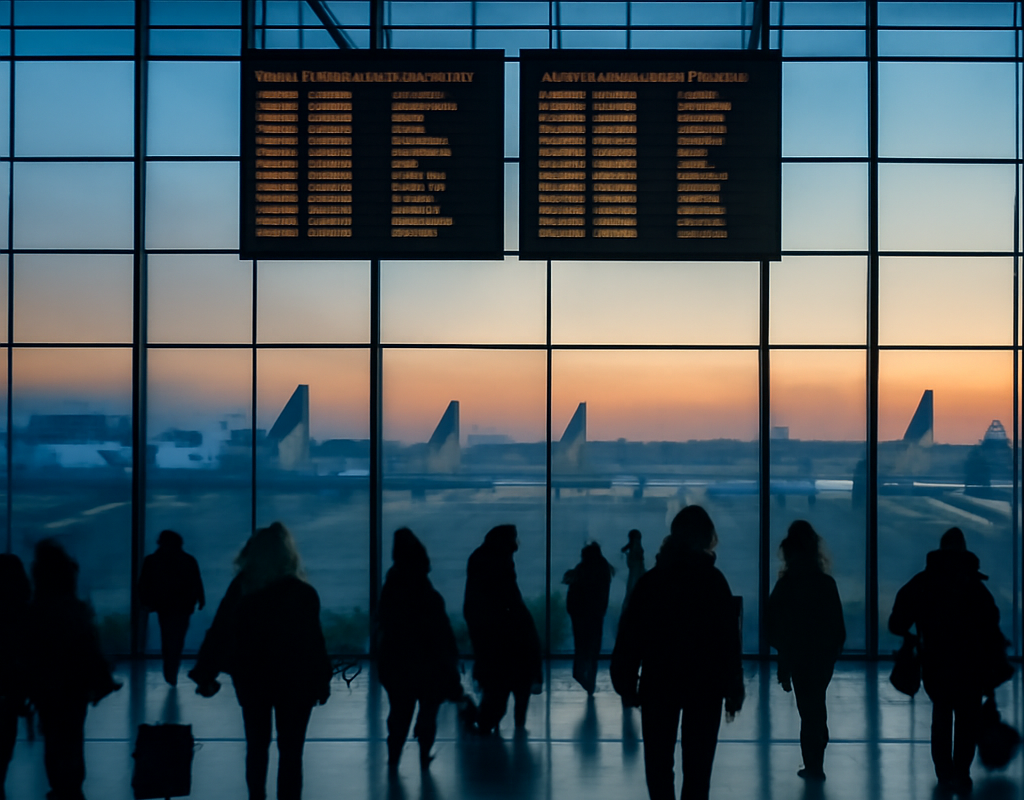
Passengers travelling to and from the United States continued to face flight delays and cancellations on Saturday after the Federal Aviation Administration lifted a rare nationwide ground stop linked to a telecommunications outage.
The disruption affected airports across the country and left airlines working to restore schedules, reposition aircraft and confirm the availability of pilots and cabin crew. Although departures began resuming, officials warned that normal operations would not return immediately.
What happened to US flights?
The Federal Aviation Administration, or FAA, halted flights nationwide on Friday after reporting a telecommunications outage. The measure prevented aircraft from departing while the agency checked that its systems were stable and safe to use.
The ground stop was later lifted at 8:15 p.m. Eastern Time. The FAA said it had tested its systems before allowing flights to resume and advised passengers to contact their airlines for the latest information.
The order was unusual because it applied across the United States rather than being limited to one airport or region. Its effects continued after the restriction ended, as airlines faced aircraft, crew and scheduling problems created by the stoppage.
Delays and cancellations continued after the restart
Flight-tracking services showed significant disruption at major US airports on Saturday morning. FlightAware reported more than 8,860 cancellations involving flights to or from the United States on Friday, with approximately 2,650 additional cancellations recorded so far on Saturday.
Those figures cover flights operating to and from the US and illustrate why lifting the ground stop did not immediately restore normal travel. When aircraft and crews are out of position, airlines may need several operating periods to rebuild schedules.
Passengers were therefore advised to check directly with their airline before travelling to the airport. A flight that has not been cancelled may still be delayed, retimed or affected by a crew or aircraft shortage.
Airlines begin recovery efforts
United Airlines, Delta Air Lines and American Airlines said they were resuming operations. American said it was concentrating on operating as many remaining flights as possible while preparing for recovery over the following days.
Airlines typically manage this type of disruption by prioritising scheduled services, moving aircraft between airports and finding available crews. The process can be complicated when delays spread across several hubs and international routes.
- Passengers should check their airline’s app, website or customer-service channels.
- Travellers should confirm both departure and arrival times before leaving for the airport.
- International passengers should allow for possible onward-connection changes.
- Those affected should keep records of cancellation notices and rebooking information.
Officials blame ageing air traffic control infrastructure
US Transport Secretary Sean Duffy attributed the disruption to what he described as an “incredibly old” air traffic control system. He also warned that the effects of the outage would take time to unwind, even after airspace operations reopened.
The comments highlighted the vulnerability of essential aviation infrastructure to communications failures. Air traffic control depends on reliable communications and data systems, and any interruption can have consequences well beyond the location where the problem begins.
The FAA said its systems had been thoroughly tested before flights resumed. That assurance addressed the immediate operational question, but the wider incident is likely to renew attention on the resilience and modernisation of US air traffic control technology.
What the disruption means for travellers from Europe
The incident also affected passengers travelling between Europe and the United States. Flights from European airports may be delayed when aircraft arriving from the US are late, while passengers with connections inside the country may face further changes after landing.
The disruption is not an EU decision or a European aviation measure. It resulted from an operational incident affecting the US aviation system. However, because the United States is a major destination for transatlantic travel, delays can have knock-on effects for passengers, airlines and airports on both sides of the Atlantic.
Travellers from Ireland and other European countries should rely on their airline for confirmed booking information rather than assuming that the lifting of the ground stop means every scheduled flight will operate. Airport websites may show useful local updates, but airlines control rebooking and flight-specific notifications.
What happens next?
The immediate priority for US airlines is to clear the backlog of cancelled and delayed flights while restoring aircraft and crews to their planned locations. The pace of recovery will depend on operational capacity, weather conditions, airport congestion and the availability of staff.
The FAA’s system checks allowed flights to restart, but passengers may continue to experience disruption while airlines rebuild their networks. Further information about individual flights should come from the relevant carrier.
The episode also puts renewed focus on the condition of the US air traffic control system. Any future review will need to establish the cause and scope of the telecommunications outage and consider whether additional investment or safeguards are needed.
Conclusion
The nationwide US ground stop has been lifted, but the flight disruption has not ended. Thousands of passengers continue to face cancellations and delays while airlines restore schedules, and travellers from Europe should check directly with their carriers before heading to the airport.