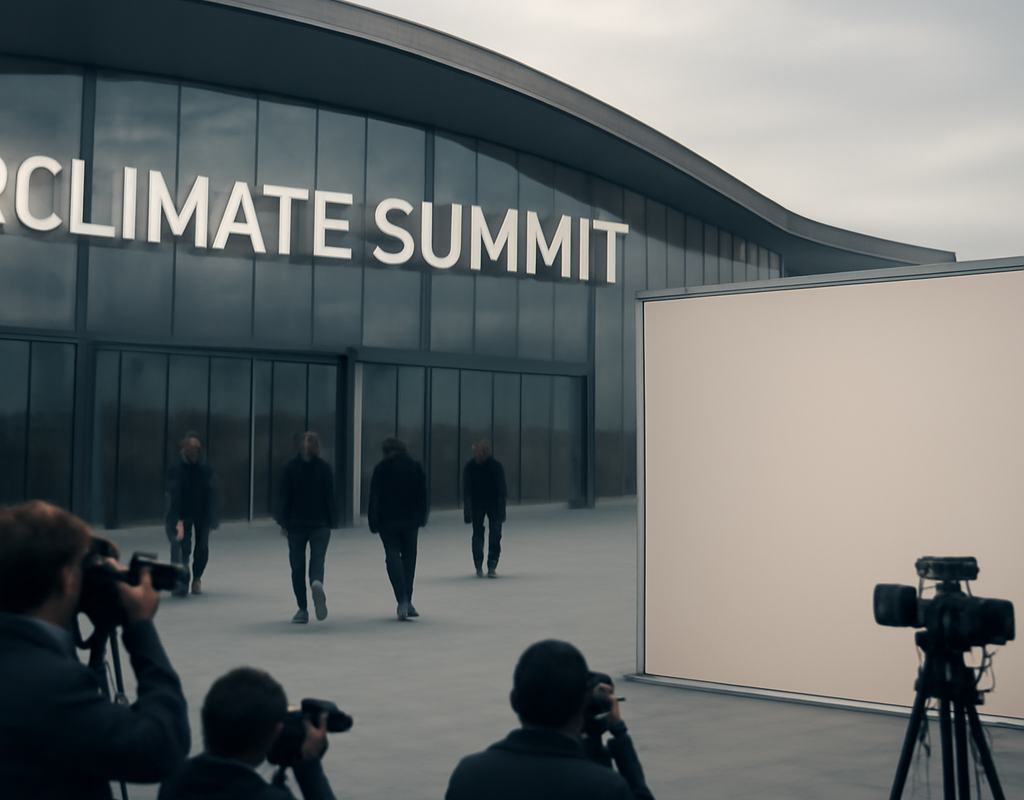
EU leaders have faced criticism after missing a family photograph at COP31, as governments meet to coordinate positions on climate negotiations. The episode has drawn attention to the political visibility of the European Union at a summit focused on emissions, fossil fuels and the future of international climate action.
The leaders held private discussions about the positions they would take during negotiations, which are scheduled to continue into the following week. Their absence from the public photograph became a notable moment at a conference where diplomatic presence and unity are closely watched.
What happened at COP31?
European leaders attending COP31 reportedly met privately to discuss their approach to the negotiations. The talks are expected to cover the difficult balance between cutting greenhouse-gas emissions, protecting economic competitiveness and responding to pressure for stronger action on fossil fuels.
The family photograph is a customary public moment at major international summits. While missing it does not itself change EU policy or determine the outcome of negotiations, the absence attracted criticism because it created a visible contrast between the private discussions and the public stage.
Why the meeting matters for EU climate policy
The European Union presents itself as a major actor in global climate diplomacy. Its influence at COP31 will depend not only on the commitments made at the summit, but also on whether member states can maintain a coherent negotiating position.
EU climate policy already includes a range of measures aimed at reducing emissions and changing how energy, transport and industry operate. However, implementation can create political pressure, particularly when governments are also dealing with energy security, industrial costs and concerns about household affordability.
Key issues likely to shape the EU’s position include:
- How quickly countries should reduce their reliance on coal, oil and gas.
- How climate targets can be aligned with industrial competitiveness.
- Whether wealthier countries should provide more finance for climate action in developing economies.
- How governments can adapt to more frequent heatwaves, floods and other climate risks.
- How international negotiations can produce commitments that are measurable and enforceable.
Political symbolism and practical negotiations
At a summit such as COP31, public appearances carry political significance. A shared photograph can signal unity, while an absence may prompt questions about coordination, priorities or the level of political engagement.
Nevertheless, the central work of the conference takes place through formal negotiations, ministerial meetings and technical discussions. The missed photograph does not amount to a new European law, a change to EU regulations or a formal decision by the European Council. Any binding European measure would require the appropriate EU legislative or institutional process.
The private meeting may still prove important if it helps member states agree on common objectives. EU negotiators often need to balance different national energy mixes and economic circumstances, meaning that a shared position can require extensive coordination before formal talks advance.
What does COP31 mean for Europe?
Climate negotiations have direct implications for Europe. Stronger global commitments could support EU efforts to expand renewable energy, improve energy efficiency and reduce exposure to imported fossil fuels. They could also affect European manufacturers if international competitors face different environmental requirements.
At the same time, climate action remains politically sensitive. Businesses are seeking predictable rules, while households and public authorities are concerned about the cost of the transition. The EU’s negotiating position will therefore be judged both by its environmental ambition and by how convincingly it addresses the economic and social consequences of change.
For Ireland, the outcome may influence the wider international environment in which national climate policy operates. Ireland remains bound by its EU obligations and could be affected by developments concerning renewable energy, agriculture, transport, carbon pricing and climate finance. The summit itself does not automatically alter Irish law or create immediate new requirements.
What happens next?
Negotiations at COP31 are expected to continue after the leaders’ discussions. The next stage will involve governments working through areas of disagreement and determining whether a broader agreement can be reached.
Attention will focus on whether the EU can speak with a consistent voice, what commitments it supports and whether the final outcome provides practical progress on emissions reductions and climate finance. The political controversy over the photograph is likely to remain secondary to those substantive negotiations.
Conclusion
The criticism surrounding the missed COP31 family photograph highlights the importance of political visibility at a major climate summit, but it does not represent a change in EU law or policy. The more significant test will be whether European leaders can coordinate an effective negotiating position and help deliver credible international action on climate change.