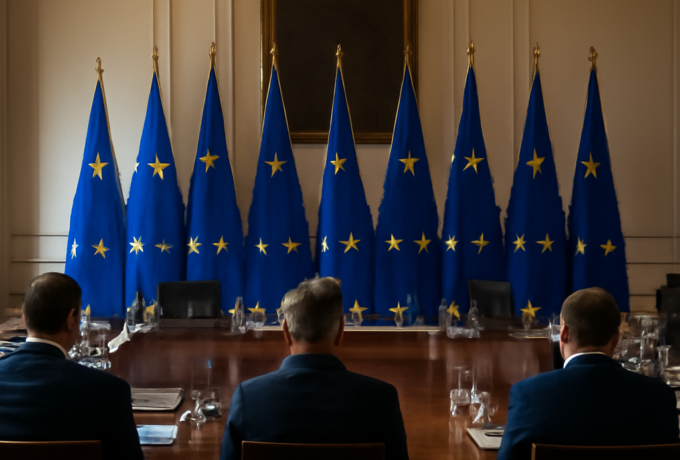
EU leaders have called for all 27 member states to support a new financial package for Ukraine as the country faces a projected €70 billion budget shortfall in 2027. The demand emerged during a European leaders’ summit in Dublin, where governments debated how to raise €45 billion of the required funding.
The discussions place Ukraine’s wartime finances at the centre of Ireland’s latest breaking news, while also exposing divisions between governments that support collective EU borrowing and nationalist administrations opposed to contributing to another loan.
EU summit focuses on Ukraine’s €70 billion funding gap
Ukraine’s budget deficit has grown as Russia’s full-scale invasion, which began in February 2022, continues to place enormous pressure on public finances. European Union leaders are considering a package that would provide €45 billion, with the United Kingdom, Norway, Canada and other western allies expected to help cover the remaining amount.
A collective EU-backed loan is currently viewed by several governments as the most practical way to raise the money. Taoiseach Micheál Martin said borrowing jointly as a bloc appeared to be the “most effective” option for securing the tens of billions needed, while stressing that the arrangement would not necessarily set a permanent precedent.
The proposal is politically sensitive because it would require governments to agree on shared financial responsibility. Previous discussions showed that not every member state is willing to participate in common borrowing for Ukraine.
Sweden says opting out would be unacceptable
Swedish prime minister Ulf Kristersson argued that every EU country should contribute to the new support plan. He said governments could not simply decline to take part while benefiting from the wider union.
His position reflects the view among Ukraine’s strongest European supporters that financial assistance must be organised collectively. They believe a fragmented approach could weaken the EU’s leverage and make it more difficult for Kyiv to maintain essential public services during the war.
- Ukraine faces an estimated €70 billion budget gap for 2027.
- The EU is being asked to provide approximately €45 billion.
- The UK, Norway, Canada and other allies would contribute the balance.
- Several EU governments oppose taking part in another common loan.
- The issue was discussed at a summit in Dublin during Ireland’s EU Council presidency.
Nationalist governments challenge a collective loan
The proposed package has revived an argument over solidarity inside the European Union. Hungary, Bulgaria, the Czech Republic and Slovakia have indicated opposition or reluctance to participate in a new common loan, although the precise terms of any future arrangement have not yet been finalised.
Three countries—Hungary, Slovakia and the Czech Republic—did not participate in an earlier €90 billion loan agreed by other EU states in December. That arrangement marked the first time EU leaders collectively took on debt to finance support for Ukraine.
The political dispute is particularly significant because the governments resisting the loan are net beneficiaries of the EU’s common budget through areas such as agricultural support and regional development funding. Supporters of the new plan say that shared rights should come with shared responsibilities when the union faces a major security crisis.
There is also pressure to link agreement on Ukraine’s financing with negotiations over the EU’s next long-term budget. Such a connection could increase leverage over governments that oppose the loan, but it may also make the budget talks more difficult.
Frozen Russian assets remain part of the debate
European governments have previously used frozen Russian central bank assets as backing for Ukraine-related borrowing. Around €210 billion in Russian assets remain immobilised in European financial institutions under sanctions imposed after the invasion.
Under the previous loan structure, EU countries could in principle recover the money they borrowed from proceeds connected with those assets. The approach is intended to reduce the long-term burden on European taxpayers while ensuring that support reaches Ukraine during the war.
Latvia’s prime minister questioned why Europe should rely primarily on its own resources when Russian money is already frozen. The issue remains legally and politically complex, however, and the Dublin summit did not produce a final decision to transfer the underlying assets directly to Ukraine.
Follow DailyDigest for further Ireland News, European politics and international News Updates.
Europe prepares for a role in future peace talks
The summit also addressed Europe’s position in any negotiations concerning the war. European Commission president Ursula von der Leyen said Europe would decide who represents its interests in talks involving Russia and Ukraine.
She defended continued European support for Kyiv, saying the EU’s participation would be necessary to protect its own interests and support Ukraine. European Council president António Costa said any negotiating team would combine representatives from larger member states with officials from EU institutions.
No final list of representatives was announced. The question of who speaks for Europe could become increasingly important if diplomatic discussions develop, particularly on issues involving security guarantees, reconstruction and sanctions.
AI investment also discussed at Dublin summit
Ukraine was not the only major issue on the summit agenda. EU leaders also received a briefing from artificial intelligence researcher Geoffrey Hinton on the opportunities and risks associated with AI.
Von der Leyen described artificial intelligence as a defining technological shift and said Europe needed to develop substantial computing capacity. She said the continent already had 19 AI factories, with seven additional facilities being planned, alongside a proposed investment of €30 billion.
The discussion links the summit’s immediate geopolitical concerns with a longer-term debate about Europe’s economic competitiveness, technological independence and ability to respond to rapid changes in AI.
What happens next?
The EU has not yet finalised the structure of the new Ukraine loan. Governments must still resolve several questions, including participation, financial guarantees, the treatment of frozen Russian assets and how the package will fit into the next EU budget.
The key developments to watch are:
- whether all 27 governments agree to participate;
- how the €45 billion EU contribution will be raised;
- whether Russian assets will provide security for the loan;
- how Ukraine’s financing will be connected to wider EU budget negotiations;
- what role European representatives will play in future peace talks.
Why does this matter for Ireland?
Ireland hosted the summit as part of its presidency of the Council of the EU, placing Dublin at the centre of discussions about European security and financial policy. The outcome could affect the EU budget, relations between member states and the bloc’s approach to supporting Ukraine over the coming year.
For readers following Irish Politics, the meeting also highlights the Taoiseach’s role in balancing Ireland’s support for Ukraine with the financial and legal questions surrounding joint European borrowing.
Frequently asked questions
How much money does Ukraine need?
Ukraine is facing an estimated €70 billion gap in its 2027 budget. EU countries are being asked to provide approximately €45 billion, with allied countries expected to contribute the remainder.
Why is the EU considering a joint loan?
Several governments believe collective borrowing is the most effective way to raise the required funds. It would allow the EU to use its combined financial strength rather than relying on separate national contributions.
Are all EU countries supporting the plan?
No. Hungary, Bulgaria, the Czech Republic and Slovakia have opposed or expressed reluctance about participating in a new common loan, although negotiations are continuing.
Will frozen Russian assets fund Ukraine directly?
Frozen Russian central bank assets have been used as backing for previous borrowing arrangements. A final decision on whether the assets can be used directly to fund Ukraine has not been made.
Conclusion
The Dublin summit has exposed a clear choice for the European Union: build a united financing mechanism for Ukraine or risk deeper divisions over who pays for the war’s economic consequences. The demand that every member state contribute will shape the next stage of EU negotiations and determine how much support Kyiv receives in 2027. For the latest Irish News and Breaking News Ireland developments, the key question is whether Europe can turn political solidarity into an agreed financial package.