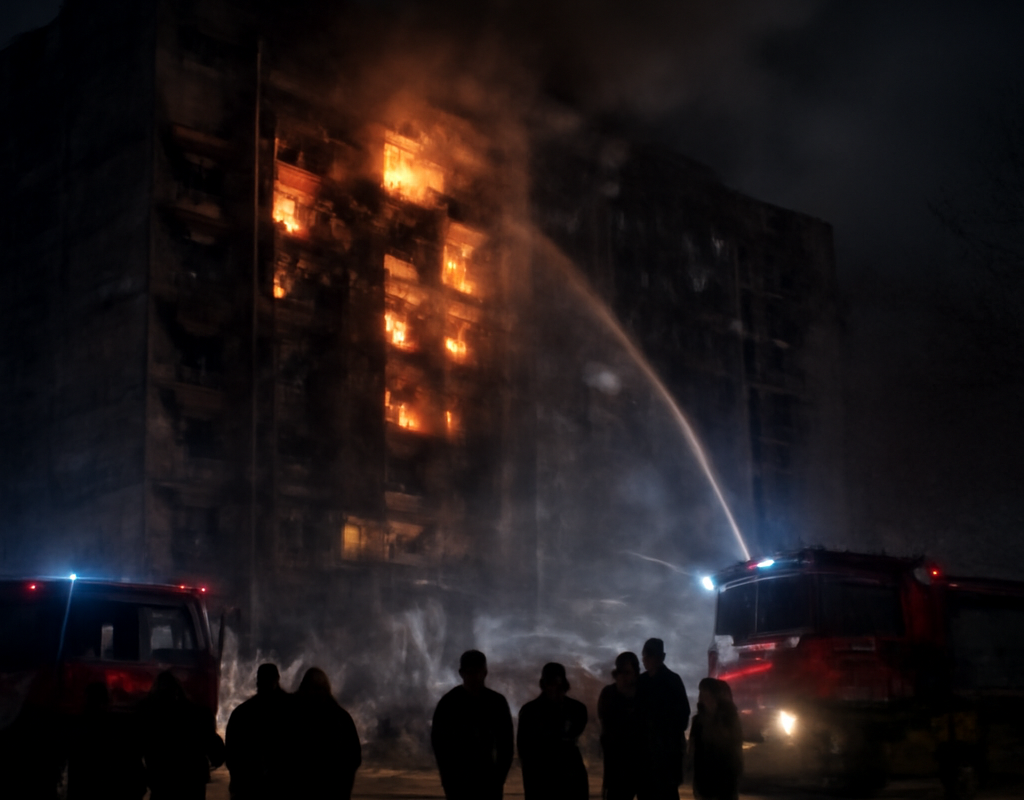
A Russian drone attack sparked a major fire at an apartment building in Kyiv early on Thursday, as residents fled their homes and emergency crews worked to contain the blaze. The strike adds to a continuing series of attacks on Ukraine’s capital and surrounding region, with civilian buildings and infrastructure repeatedly coming under fire.
Ukrainian emergency workers were deployed to the scene while residents were helped to safety. The available report did not provide a confirmed death toll or specify the full extent of the damage, so those details remain subject to official updates.
What happened in Kyiv?
The attack hit a residential building in Kyiv, causing a substantial fire. Footage from the scene showed flames affecting the structure as firefighters battled to prevent the blaze from spreading.
Residential strikes can create complex rescue conditions, particularly in high-rise buildings. Emergency services must search damaged apartments, evacuate residents, treat injuries and assess whether structures remain safe to enter.
- A Russian drone strike caused a major fire at a Kyiv apartment building.
- Residents left the building as firefighters and rescue workers responded.
- The confirmed casualty figures and complete damage assessment were not available in the initial report.
- The incident comes amid continuing Russian attacks on Ukrainian cities and energy infrastructure.
Why the attack matters
The strike illustrates the continuing pressure on Ukrainian cities, even away from the immediate frontline. Kyiv has faced repeated waves of drones and missiles during the war, with attacks affecting homes, transport links, public buildings and critical infrastructure.
Such attacks also place additional pressure on Ukraine’s emergency services. Firefighters, medics and rescue personnel may be required to operate during further air alerts, while damage to electricity, heating or water systems can increase risks for civilians as colder weather approaches.
The incident is part of a broader pattern reported across Ukraine in recent days. Other attacks have damaged infrastructure in the Kyiv region, while strikes elsewhere have caused fires, injuries and disruption to power supplies. Ukrainian officials have continued to call for stronger air-defence support, including additional interceptor missiles.
What is known about the casualties and damage?
The initial account confirmed a major fire and the evacuation of residents but did not establish a final number of casualties. Early information after an attack can change as rescue teams search damaged buildings and local authorities verify reports from hospitals and emergency services.
Further official information is expected to clarify:
- whether anyone was killed or injured;
- how many apartments or buildings were damaged;
- whether essential services were disrupted;
- whether unexploded debris created additional hazards; and
- when residents may be allowed to return.
It is important to distinguish confirmed information from preliminary reports while emergency operations remain under way.
Ukraine’s wider security situation
Russia’s full-scale invasion of Ukraine continues to generate frequent missile and drone attacks across the country. The reported strike in Kyiv follows other incidents involving residential areas, logistics facilities and energy-related infrastructure.
Ukraine’s air-defence capacity remains a central issue in its efforts to protect civilians and critical systems. Kyiv has repeatedly sought more interceptors and other equipment from international partners, arguing that sustained attacks require a reliable ability to detect and stop incoming weapons.
The attacks also carry wider European implications. Damage to Ukraine’s energy system can affect humanitarian needs, displacement and regional security, while the continuing war remains central to European foreign policy and discussions about military assistance, sanctions and Ukraine’s relationship with the European Union.
What happens next?
Local authorities and emergency services are expected to complete rescue and safety checks before confirming the full consequences of the strike. Investigators will also assess the type of weapon used and the sites affected.
For residents, the immediate priorities are medical assistance, temporary accommodation and access to essential services. At the national level, Ukrainian officials are likely to renew requests for air-defence support and international assistance.
The incident is a reminder that the war continues to affect civilians directly, including people living far from the frontline. The most important takeaway from this latest EU news and European security development is that the humanitarian and infrastructure risks remain immediate, while the final impact of the Kyiv strike will depend on the results of ongoing emergency operations.