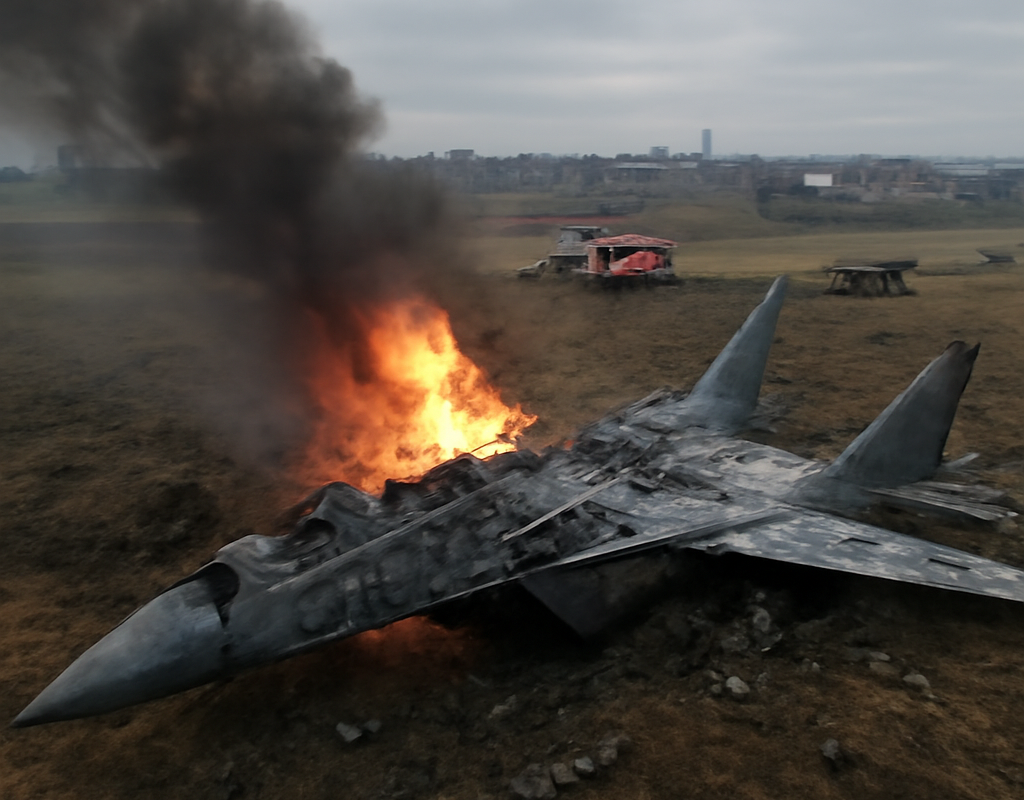
A Serbian MiG-29 fighter jet crashed near Belgrade on Tuesday morning, killing its pilot, Major Goran Bulajić, according to Serbia’s defence ministry. The aircraft came down near Stara Pazova, northwest of the capital, at approximately 8:45am local time.
Serbian MiG-29 crash under investigation
Military police were sent to the crash site, while Serbia’s defence ministry established two investigative teams to examine what happened. One commission will assess the circumstances of the accident and whether any responsibility rests with the military organisation. A separate expert commission from the air force will investigate the technical and operational causes of the crash.
The ministry said Bulajić was 53 and had served in the Serbian military since 1996. He is survived by two children. The circumstances surrounding the flight, including whether the jet experienced a mechanical failure or another problem, had not been established in the information released.
Video shared on social media appeared to show the aircraft burning in a field. The footage’s wider context and the precise sequence of events were not independently established in the available report, making the official investigations central to determining the cause.
What is known about the incident
- The crash happened on Tuesday morning near Stara Pazova, northwest of Belgrade.
- The Serbian defence ministry reported that the pilot, Major Goran Bulajić, died.
- Military police attended the scene.
- Serbia has appointed both a general investigative commission and an air force expert commission.
- The cause of the crash had not yet been announced.
The MiG-29 in Serbian service
The MiG-29 was developed by the Soviet Union’s Mikoyan-Gurevich Design Bureau from the early 1970s and entered Soviet military service in 1983. It was designed as a front-line fighter and became one of the most recognisable Soviet-era combat aircraft.
The National Museum of the United States Air Force has described the aircraft as a formidable threat to Western air forces during the Cold War. The fighter is equipped with a 30mm cannon and can carry air-to-air missiles, bombs and rockets.
Serbia operates a fleet that includes MiG-29 aircraft, making the type an important part of the country’s air defence capability. However, the available information does not indicate whether the aircraft involved in Tuesday’s crash was conducting a training flight, an operational mission or another form of military activity.
Investigation will determine the cause
Aircraft accidents can involve several possible factors, including technical faults, maintenance issues, weather conditions, pilot-related circumstances or problems during take-off and landing. None of those factors had been confirmed in this case.
The appointed commissions are expected to examine the wreckage, flight records, maintenance history and other evidence gathered at the scene. Their findings may clarify the aircraft’s condition before the crash and the actions taken by the pilot.
The incident is a significant loss for Serbia’s armed forces, particularly because Bulajić had spent decades in military service. Further details are expected to depend on the progress of the official investigation.
What happens next?
Authorities will secure the crash site and collect evidence before investigators reach conclusions about the accident. The defence ministry has not announced a cause, and no responsibility has been assigned.
For now, the confirmed facts are that a Serbian MiG-29 crashed near Stara Pazova, Major Goran Bulajić died, and military and air force investigators have been tasked with establishing what happened. The official findings will be needed before the circumstances of the crash can be assessed reliably.
Key takeaway: The Serbian MiG-29 crash near Belgrade claimed the life of Major Goran Bulajić. Investigations are under way, but the cause of the accident remains unknown.