Measles cases in Europe are falling sharply in 2026, but new outbreaks in countries including Bulgaria and Italy show how quickly the highly contagious disease can return when vaccination coverage is uneven. Provisional health data also highlights continued concerns in England and Ukraine.
Figures published by the European Centre for Disease Prevention and Control (ECDC) cover the European Union, Iceland, Liechtenstein and Norway, collectively known as the European Economic Area (EEA). They record 2,325 measles cases in the 12 months to September 2026, compared with 10,195 cases in the equivalent period a year earlier.
Measles cases in Europe are well below recent peaks
The latest European measles figures remain provisional, and additional infections are expected to be reported before the end of the year. Nevertheless, the data suggests that 2026 will be considerably quieter than the previous two years.
The EEA recorded 7,655 cases during 2025, while more than 35,000 infections were reported in 2024. That earlier surge led six countries, including Austria and Spain, to lose their measles-free status in January. The United Kingdom was also among those countries.
No measles deaths had been reported in the EEA by September 2026, according to the available ECDC data. However, the overall decline should not be interpreted as the elimination of outbreak risk.
Bulgaria and Italy report the most cases in the EEA
Bulgaria and Italy have each recorded approximately 600 measles cases during 2026, making them the most affected countries in the EEA data supplied so far.
Italy’s outbreak is easing
Italy’s case numbers have been declining since April, when 173 infections were recorded in a single month. The downward trend is encouraging, although continued monitoring remains important because measles spreads rapidly among people without sufficient immunity.
Bulgaria faces vaccination-record concerns
Bulgaria reported only two measles cases throughout 2025, but has experienced a significant increase this year. Health officials have linked the outbreak partly to falsified immunisation records.
In one particularly affected region, around 60% of children recorded as vaccinated had no detectable antibodies against measles, mumps or rubella. The finding suggests that official vaccination records may not always reflect actual protection within the community.
Cases are also being reported outside the EEA
The wider European picture includes sizeable outbreaks beyond the ECDC’s EEA reporting area. England had recorded 1,055 confirmed measles cases by 9 November 2026. Ukraine reported 653 cases through September.
These figures are not directly interchangeable with the ECDC totals because the reporting periods and national surveillance systems differ. They nevertheless demonstrate that measles remains an active public-health concern across Europe.
Low vaccination rates leave communities vulnerable
Vaccination coverage differs considerably between European countries. The reported rate ranges from 68% in Romania to 99% in Hungary. Because measles is extremely contagious, at least 95% of a population generally needs to be vaccinated to prevent sustained outbreaks.
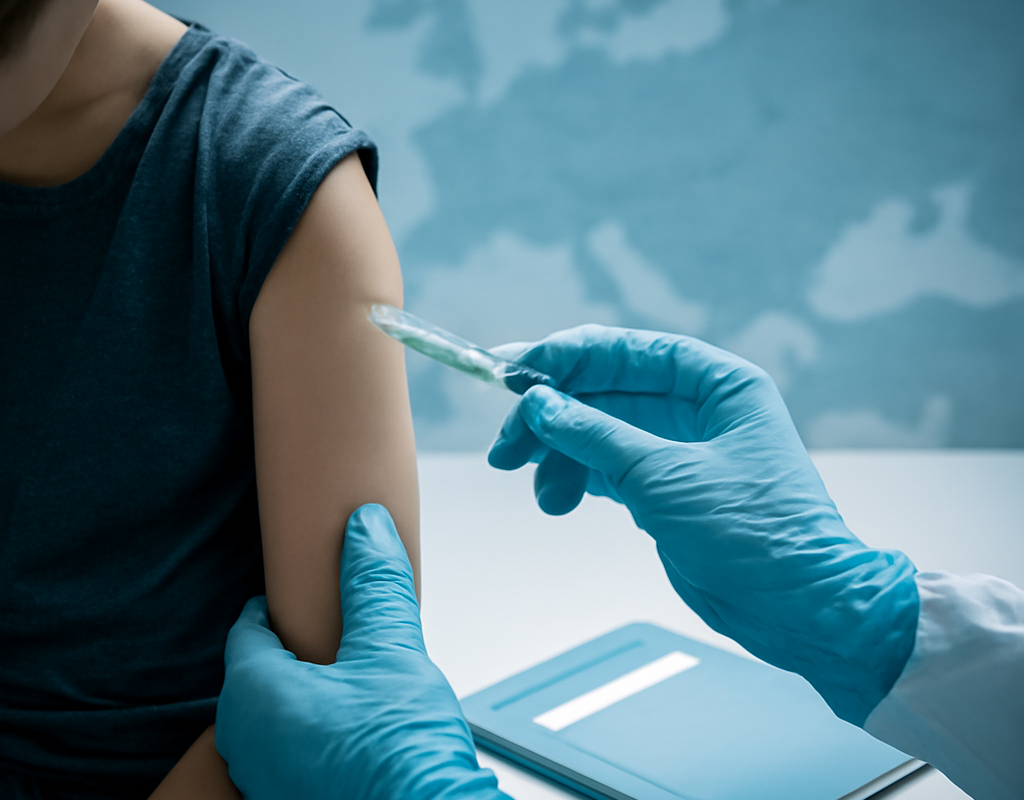
Two doses of the measles vaccine provide up to 97% protection, making routine immunisation a central tool in controlling transmission. ECDC analysis found that most cases during the latest period occurred among people who were unvaccinated, although the agency considered only cases where vaccination status was known.
The age breakdown also shows that measles affects more than very young children:
- About 28% of cases were in children under five.
- Approximately 51% were among people aged 15 or older.
- The remaining cases were distributed among other age groups.
Gaps in vaccination can arise from missed childhood doses, unequal access to healthcare, incomplete records or misinformation. Once the proportion of protected people falls, imported infections can trigger local outbreaks.
What the latest European measles data means
The fall in measles cases is a positive development, but the figures are not evidence that the disease has been permanently contained. The data remains incomplete for 2026, and outbreaks in Bulgaria, Italy, England and Ukraine underline the importance of maintaining high vaccination coverage.
For families and communities, the main lesson is straightforward: strong immunisation rates are needed even when national case numbers are declining. Health authorities will continue to watch areas with lower coverage closely as the year progresses.
The latest European measles data points to a calmer year overall, but sustained vaccination remains essential to prevent isolated outbreaks becoming wider epidemics.