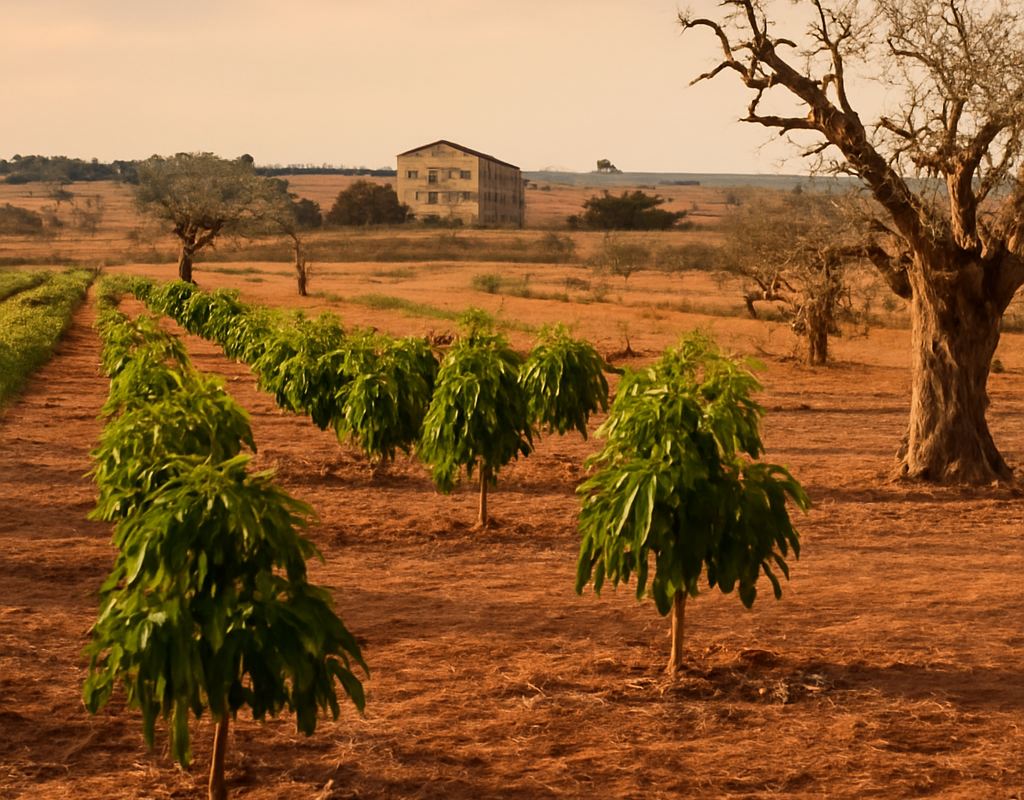
Salento is replacing some of its devastated olive groves with avocado trees, but the experiment is exposing a wider European challenge. The region’s response to Xylella fastidiosa shows how climate change, plant disease and water shortages are increasingly shaping agriculture across the Mediterranean.
EU news: why Salento is turning to avocados
In the province of Lecce, farms near Calimera and Vernole are harvesting avocado varieties including Hass, Bacon and Fuerte. The crop is no longer a small-scale curiosity. For growers whose olive trees were destroyed by Xylella, it represents a possible way to keep damaged land productive.
At the Tommasi farm, avocado trees first planted in 2017 now produce an estimated 70 to 100 fruits per tree, or roughly 10 quintals per hectare. A further 700 trees were planted in April 2026. These figures illustrate both the opportunity and the patience required: new plantations take years to become commercially productive and need specialised investment.
Xylella has become a European agriculture threat
Xylella fastidiosa was first detected in the European Union in Apulia in October 2013. The bacterium colonises the xylem, the plant tissue responsible for transporting water and nutrients. In olive trees, infection can lead to progressive drying and, in severe cases, death.
The disease has since been identified beyond Italy, including in France, Spain and Portugal. Its potential hosts include olive, almond, citrus and vine plants, as well as ornamental species. The European Food Safety Authority’s 2025 host-plant database recorded 727 species in which Xylella has been reported, with stronger scientific evidence for 463 of them. That does not mean every species is equally vulnerable: the outcome depends on the bacterial subspecies, host and environmental conditions.
Fresh warning signs appeared in Italy during 2026. Seven olive trees in Taurianova, Calabria, tested positive for the pauca subspecies, marking the first outbreak reported in that region. In Basilicata, the multiplex subspecies was detected on an almond tree near Matera. Authorities introduced emergency plant-health measures and eradication operations in both areas.
Why EU rules matter
Under EU plant-health law, Xylella is classified as a quarantine pest. Implementing Regulation 2020/1201 requires surveillance, outbreak delimitation and the removal of infected plants. Where the bacterium is newly detected, eradication is generally the objective. In areas where it is already widespread and elimination is considered unrealistic, authorities focus on containment.
The issue is significant because an outbreak can disrupt entire agricultural supply chains, affecting growers, processors, distributors and rural employment. A November 2025 assessment by the European Commission’s Joint Research Centre and EFSA estimated that a large-scale spread could cause annual production losses of up to €7.1 billion and put more than 540,000 jobs at risk. This is a modelled scenario, not a record of losses already incurred.
Europe news today: warmer conditions are changing crops
Avocado, mango and papaya are gaining attention in southern Italy as rising temperatures create conditions more suitable for tropical and subtropical crops. University of Bari calculations identified 23,885 hectares of olive groves in Xylella-affected areas that could potentially support avocado cultivation. Apulia is already estimated to have about 4,000 hectares devoted to tropical crops.
Temperature trends are helping drive the change. Coldiretti Puglia’s analysis of Copernicus ERA5-Land data found that Italy’s average temperature anomaly for the first ten months of 2026 reached 2.11°C above the 1991–2020 average, the highest January-to-October figure in the national series.
However, warmer weather alone does not guarantee a viable harvest. Farmers must also consider soil drainage, salinity, extreme weather and access to reliable irrigation.
The water problem behind Salento’s avocado expansion
Avocado trees need substantial water, particularly during hot summers. Their roots are concentrated mainly in the upper soil layers, making them dependent on moisture close to the surface. Agronomic estimates suggest that an adult tree may use between 136 and 220 litres of water per day in summer, although requirements vary by conditions and management.
The crop is also sensitive to saline water and poorly draining soils. Those risks are especially important in Salento, where groundwater reserves face pressure and seawater intrusion has been documented. Unlike avocado, olive trees are adapted to Mediterranean drought and can tolerate prolonged dry periods more effectively.
Apulia ended its formal water-shortage emergency on 30 June 2026 after a wetter winter and spring. Yet the improvement did not remove the region’s structural water problems. At the beginning of October, the ANBI Observatory reported that four artificial reservoirs in Capitanata held 98.12 million cubic metres—less than 30% of their combined authorised capacity of 331.9 million cubic metres.
In Salento, agriculture also relies heavily on underground supplies. Falling aquifer levels and seawater intrusion create a risk that expanding water-intensive crops could intensify competition between farms and household users.
What Salento’s experiment means for European agriculture
The shift from olives to avocados is neither a guaranteed solution nor an inherently unsustainable choice. It may help some farms recover income after Xylella, but plantations require time, investment and careful water planning. Avocados can also be damaged by sudden winter cold.
For Mediterranean agriculture, the central question is not simply which crops can survive warmer temperatures. It is which crops can remain productive without exhausting groundwater, worsening salinity or increasing vulnerability to drought and extreme weather.
The key takeaway: Salento’s avocado boom illustrates the difficult choices facing Europe as plant disease and climate change reshape farming. Agricultural diversification may offer a future after Xylella, but only where water supplies, soils and environmental limits can support it.