Russia is casting doubt on direct peace talks with Europe even as the United States pushes for a broader diplomatic format to address the war in Ukraine. The development is central to the latest EU news, with European governments now preparing a joint negotiating position while remaining cautious about Moscow’s intentions.
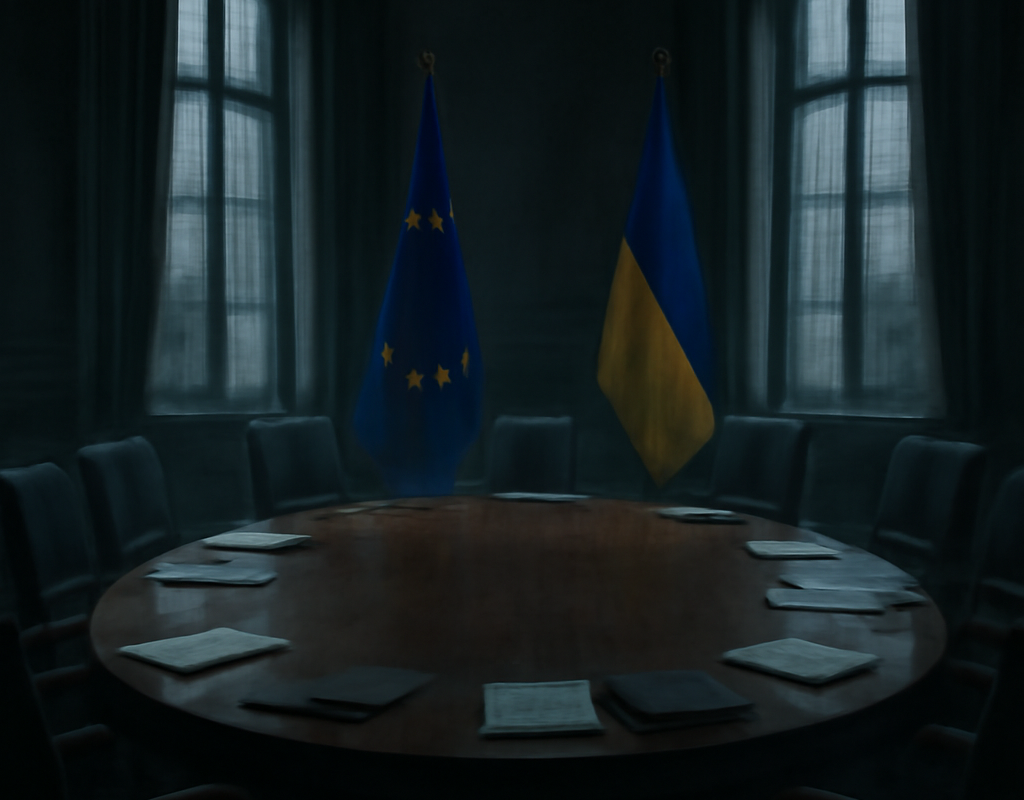
Europe has agreed on a team to represent the continent in future discussions. It includes France, Germany, the United Kingdom, Italy, Poland, the EU institutions, and NATO. The arrangement is intended to give Europe a formal place at the table after months in which negotiations largely ran along separate tracks.
Russia questions timing of direct Europe talks
Yury Ushakov, a senior aide to Russian President Vladimir Putin, said the date for a meeting with the European delegation had not been agreed. He also suggested that further trilateral discussions involving Russia, Ukraine and the United States might take place before Europe joins the process.
That position has increased uncertainty over the next phase of the negotiations. US special envoy Jared Kushner, however, said preparations were under way for a multilateral meeting in the near future. He described direct engagement between Europe and Russia as important after years without sustained contact at that level.
The conflicting signals are now a major focus of European news and EU foreign policy. European, American and Ukrainian officials broadly agree that the existing two-track arrangement has reached its limits and that future discussions should involve all key parties together.
Why Europe wants a seat at the table
The talks have so far operated through two parallel channels: one involving Ukraine, Russia and the US, and another bringing together Ukraine, Europe and the US. European officials have feared being left outside decisions that directly affect the continent’s security.
That concern became particularly visible during earlier discussions in Abu Dhabi, where Europe was effectively separated from the main Russia-US-Ukraine channel. Washington now believes the format should change, while European governments have accepted that direct multilateral engagement is necessary.
Paula Pinho, the European Commission’s chief spokesperson, said the EU was ready to participate in a multilateral process. Nevertheless, diplomats have warned that expectations should remain modest, citing the repeated reversals and pauses that have marked the peace effort over the past year.
Europe’s concerns about Moscow’s aims
European officials remain sceptical because Russia has delayed direct contact while continuing to discuss Europe’s security architecture. Critics argue that this approach could be intended to shift attention away from Ukraine and revive demands about NATO and Russia’s former sphere of influence.
According to the source report, Russian demands presented to the United States included a halt to NATO enlargement, the withdrawal of NATO forces to their 1997 positions and an end to military support for Ukraine. European diplomats view those demands as difficult to reconcile with the security concerns of countries in central and eastern Europe.
The continuing attacks on Ukraine, particularly before winter, have further weakened confidence in Moscow’s diplomatic intentions. For many European governments, any negotiations will need to be backed by credible security guarantees and a clear role for Ukraine in decisions about its future.
EU prepares a common mandate
Brussels has begun drafting a common mandate for the proposed multilateral talks. The document is expected to bring together principles that Ukraine’s allies have followed since Russia’s full-scale invasion.
Austria has circulated a separate two-page paper built around four areas:
- Political arrangements
- Security and ceasefire monitoring
- Humanitarian issues
- Economic measures
The Austrian proposal calls for the EU to maintain pressure through sanctions, prepare a mission to monitor a possible ceasefire and develop a strategy for immobilised Russian assets. It also suggests dividing responsibilities among the EU, NATO, the United Nations, the Organisation for Security and Co-operation in Europe and the Coalition of the Willing.
The proposal reflects a wider shift in European affairs: governments are no longer debating only who should participate, but also what mandate the European delegation should carry. A shared position could help prevent mixed messages and clarify the principles that would guide any future settlement.
What happens next in the EU and Ukraine talks?
Senior representatives from the joint European team are due to meet US and Ukrainian officials on Thursday on the sidelines of the Coalition of the Willing gathering in Berlin. The meeting is expected to focus on the next steps and the practical arrangements for possible multilateral negotiations.
For Europe, the immediate challenge is to remain ready without treating a meeting as guaranteed. The EU is also preparing further sanctions against Russia and continuing support for Ukraine, meaning diplomacy is developing alongside economic and military pressure.
The key question in this latest Europe news is whether Moscow will accept direct engagement with the European delegation or seek to prolong the existing format. Until that is clear, the proposed talks remain a possibility rather than a settled diplomatic breakthrough.
Conclusion
The latest EU news shows Europe moving towards a united role in negotiations over Ukraine while Russia continues to delay or qualify direct contact. A European team now exists, and Brussels is working on a common mandate, but meaningful progress will depend on Moscow accepting a genuinely multilateral process. For European governments, preparedness, sanctions and continued support for Ukraine remain essential while the diplomatic channel is tested.