


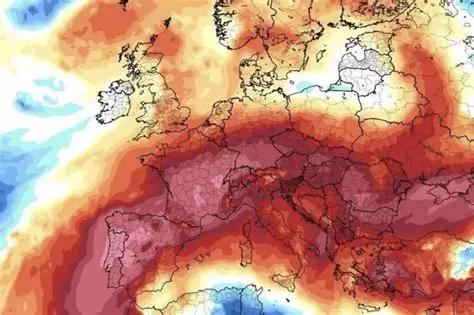
The latest Europe news from France shows how extreme heat is becoming more than a weather story. As temperatures surged across the country, the French heatwave exposed a stark divide between people who can access cool homes, green spaces and safe swimming areas, and those who cannot.
In and around Paris, especially in lower-income suburbs such as Saint-Denis, residents described a daily battle to cope with punishing temperatures. While wealthier households may rely on insulated homes, portable cooling systems or summer travel, many families in disadvantaged districts are left with fans, spray bottles and improvised ways to cool down. The result is a growing climate inequality crisis that is now central to irish news, ireland news and wider international reporting on extreme weather.
Europe News: How the French Heatwave Hit Hardest in Poorer Communities
In Saint-Denis, one of France’s poorest municipalities, some residents turned to unsafe options such as jumping into canals not officially designated for swimming. Others stayed indoors in overheated flats without air conditioning, or searched for shade in streets with limited tree cover.
Residents said the official advice to drink water, avoid the sun and stay hydrated often feels disconnected from their reality. For renters in social housing, installing air conditioning may not be permitted. Public cooling options can also be limited, inaccessible or unsuitable for some families.
One of the clearest lessons from this Europe news story is that climate emergencies are not experienced equally. The same heatwave can be uncomfortable for some and dangerous for others, depending on housing quality, income, health and access to public services.
Why heatwaves hit low-income neighbourhoods harder
- Poor insulation in older or overcrowded housing
- Restricted access to air conditioning or private outdoor space
- Less tree cover and fewer shaded public areas
- Limited access to inclusive swimming and cooling facilities
- Greater health risks for elderly, sick and vulnerable residents
Researchers and policy experts in France say heat is revealing long-standing inequalities in housing, urban planning and social support. That makes this not just a summer weather event, but a public health and infrastructure issue.
Read more: latest Ireland breaking news and long tail Irish current affairs updates | in-depth Irish media analysis and Ireland news developments today
Deaths Rise as France Faces Growing Climate Pressure
French public health data showed 2,025 additional deaths during the heatwave week beginning June 22, with a 30 percent week-on-week rise nationwide. In the Paris region, the increase was even sharper at 62 percent. Those figures underline how deadly prolonged heat can become when cities are not built to protect vulnerable populations.
Experts argue that repeated emergency measures are no longer enough. Temporary shelters and water stations may help, but they do not address the deeper structural issues behind climate vulnerability. Better-insulated buildings, more urban greenery, accessible cooling centres and targeted support for exposed communities are increasingly seen as essential.
This Europe news update also reflects a broader trend seen across the continent: heatwaves are arriving more often, lasting longer and placing extra pressure on healthcare systems, schools, transport and housing.
What experts say needs to change
- Upgrade housing insulation in low-income districts
- Expand public access to safe cooling spaces
- Plant more trees and restore urban green zones
- Develop long-term heat adaptation plans instead of short-term responses
- Protect homeless people with permanent housing solutions, not only emergency measures
From Paris to Chamonix: Uneven Impacts Across France
While the Paris suburbs baked in heavy heat, mountain towns such as Chamonix experienced a different reality. Temperatures there also rose above 30C, around 10C above normal for late June, but cooler nights, nearby forests and glacial rivers offered some relief.
Even so, the Alps are showing visible signs of climate stress. The Bossons Glacier above Chamonix has continued to shrink, and climbing routes in the Mont Blanc area are becoming more hazardous because of rockfall linked to warming conditions. This means the French heatwave is not only a city story; it is also a warning about deep environmental change across landscapes that once seemed naturally protected.
The contrast between Paris and Chamonix highlights a key Europe news theme: geography, infrastructure and wealth shape who can adapt. Altitude and green access can help, but urban populations without those advantages are left far more exposed.
Explore more: European luxury travel trends with Irish audience insights and destination features | trusted Ireland news coverage, Europe updates and Irish public interest stories
FAQs About the French Heatwave
Why is this heatwave considered unequal?
Because lower-income residents often live in poorly insulated homes, have less access to cooling, and rely on public infrastructure that may be limited or inadequate.
How severe was the health impact?
France recorded more than 2,000 additional deaths during the heatwave week cited by public health authorities, with especially sharp increases in the Paris region.
Are mountain areas safe from extreme heat?
Not entirely. Places like Chamonix may have cooler nights and more greenery, but they are still experiencing unusually high temperatures and serious glacier loss.
What does this mean for future climate policy?
It suggests governments will need stronger long-term adaptation measures focused on housing, public health, homelessness and urban design.
Conclusion
This Europe news story from France makes one point unmistakably clear: heatwaves do not affect everyone the same way. In poorer neighbourhoods, extreme temperatures can quickly become a crisis shaped by housing, exclusion and lack of infrastructure. As climate change accelerates, the French experience offers a warning for cities across the continent, including those followed closely in ireland news and irish news: protecting people from heat will require more than advice—it will require fairer, better-designed communities.