


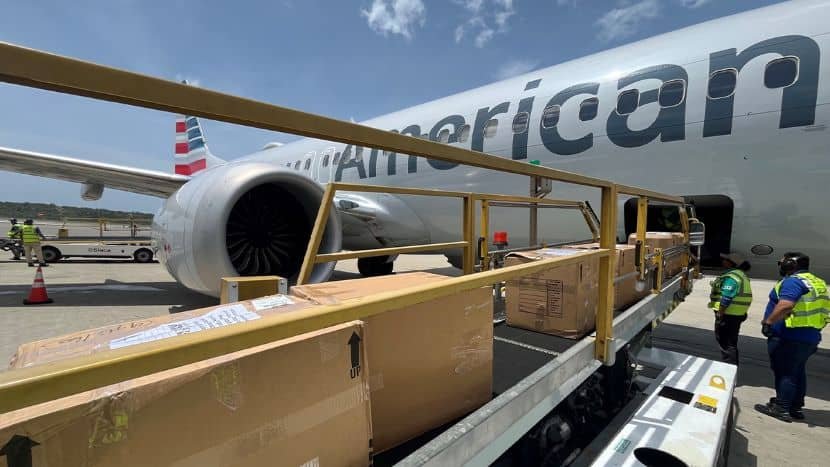
Baggage handling pressure is becoming a defining issue for major US airlines even as North America posts some of its best baggage performance figures in years. Fresh industry and government data show a clear split: the region is improving overall, but several large network and regional carriers still face intense scrutiny over delayed and mishandled checked bags.
That contrast matters for travellers across Europe and beyond, especially anyone connecting through US hubs on long-haul itineraries. For passengers booking transatlantic trips, baggage reliability is no longer a minor operational detail; it is a key part of the travel experience, affecting confidence, onward connections and holiday planning.
Baggage Handling Pressure Grows Despite Better North American Results
Recent baggage data points to meaningful progress across the aviation sector. North America has reduced mishandled baggage rates to among the lowest globally, helped by investments in automation, RFID tracking, mobile notifications and smarter airport systems. Globally, baggage handling has also improved, showing that airlines and airports are becoming more efficient at processing huge luggage volumes.
Yet baggage handling pressure remains unevenly distributed. Airlines with sprawling hub-and-spoke networks, large international operations and heavy connecting traffic tend to face more difficulty than carriers with simpler route structures. In practice, that means some of the biggest names in US aviation are still under the microscope.
Why the gap still exists
- Large hub airports create more transfer points for checked bags
- Tight aircraft turnaround times leave little room for error
- Regional feeder flights add complexity to long-haul journeys
- Weather, gate changes and delays can trigger chain reactions
- Passenger expectations for real-time tracking are higher than ever
Which US Airlines Face the Most Attention
Among major carriers, American Airlines continues to draw attention because of the sheer scale of its operation. Handling baggage across one of the world’s largest flight networks naturally increases operational risk. Even with expanded tracking tools and digital updates, the airline remains closely watched by passengers and regulators.
United Airlines faces similar challenges. Its global network moves millions of bags through major hubs where connections, aircraft swaps and short transfer windows all add to baggage handling pressure. For airlines with broad international footprints, transfer baggage remains one of the hardest problems to solve consistently.
Regional carriers are also part of the story. PSA Airlines and Envoy Air, both deeply tied to the American Airlines network, face elevated baggage stress because they rely on rapid schedules and frequent short-haul connections. When one early flight runs late, baggage performance can quickly deteriorate across multiple downstream routes.
SkyWest Airlines, operating for several major US brands, must coordinate baggage across multiple airline partnerships, terminals and aircraft types. That kind of operational scale makes consistency difficult, even when systems are improving.
Alaska Airlines has made gains through technology and customer-service improvements, but still trails some of the strongest baggage performers in the US market.
Airlines often seen as stronger baggage performers
- Delta Air Lines
- Southwest Airlines
- Allegiant Air
These carriers benefit, in different ways, from stronger operational flow, more streamlined networks or fewer complex international transfer patterns.
Read more: best Ireland travel news updates | top Ireland aviation industry coverage
Why Bags Still Go Missing or Arrive Late
The biggest cause of mishandled baggage is still transfer failure between connecting flights. Industry estimates show that missed transfers account for a large share of delayed bags globally. This is especially relevant at busy US gateways used by European travellers heading to domestic American destinations.
Other common causes include:
- Incorrect or unreadable baggage tags
- Loading mistakes on the ramp
- Severe weather disruption
- Airport congestion
- Customs or security inspection delays
All of these factors contribute to ongoing baggage handling pressure, even in a period of measurable improvement. In short, technology can reduce mistakes, but it cannot fully eliminate the complexity of moving luggage through congested, interconnected airport systems.
How Technology Is Reshaping the Baggage Journey
Airlines are spending heavily to bring baggage operations into a more transparent digital era. RFID tracking, app-based alerts, automated sorting systems and AI-supported decision tools are helping carriers cut down on error rates and recover delayed luggage faster.
One of the most important shifts is visibility. Travellers increasingly expect to know where their bags are at every stage: check-in, screening, loading, transfer and arrival. That expectation has turned baggage handling pressure into not only an operations issue, but also a customer-service and brand-trust issue.
There is some good news here. Industry data indicates that many delayed bags are now reunited with passengers within 48 hours, showing clear progress compared with earlier years. For airlines, that means recovery systems are improving even when disruptions happen.
Explore more: luxury Ireland travel trends and insights | Ireland holiday planning and airport news
What This Means for European Travellers
For readers following Europe News and the wider World Travel Digest, the takeaway is practical. Anyone flying to, from or through the United States should pay close attention to connection times, baggage policies and airline network structure. A low fare can become far less attractive if a checked bag misses an onward flight.
Smart tips to reduce baggage risk
- Choose longer connection times at large US hubs
- Use airline apps with live baggage tracking
- Keep essentials in cabin baggage
- Photograph your bag and tag before departure
- Use direct flights where possible
Travellers on multi-stop itineraries should be especially cautious because every extra handoff adds to baggage handling pressure. This is particularly true during peak summer travel, storm periods and major holiday weekends.
FAQs
Why are some airlines worse at baggage handling than others?
Airlines with larger hub networks, more connecting flights and more international transfers generally face greater operational complexity, which increases the chance of baggage delays.
Is North America improving overall?
Yes. Regional baggage performance has improved significantly thanks to digital tracking, automation and more efficient airport processes.
What is the main cause of delayed luggage?
Missed transfers between connecting flights remain the leading cause of mishandled baggage.
Should travellers avoid checking bags?
Not necessarily, but travellers with tight connections or multi-flight itineraries should take precautions and use available tracking tools.
Conclusion
Baggage handling pressure remains a major challenge for airlines such as American, United, PSA, Envoy and others, even as North America becomes one of the world’s better-performing regions for luggage reliability. The core issue is not a lack of progress, but the reality that complex networks, transfer-heavy itineraries and rising passenger demand continue to test airline systems. For travellers, the clearest takeaway is simple: baggage performance is improving, but choosing smarter itineraries and staying informed still matters more than ever.