


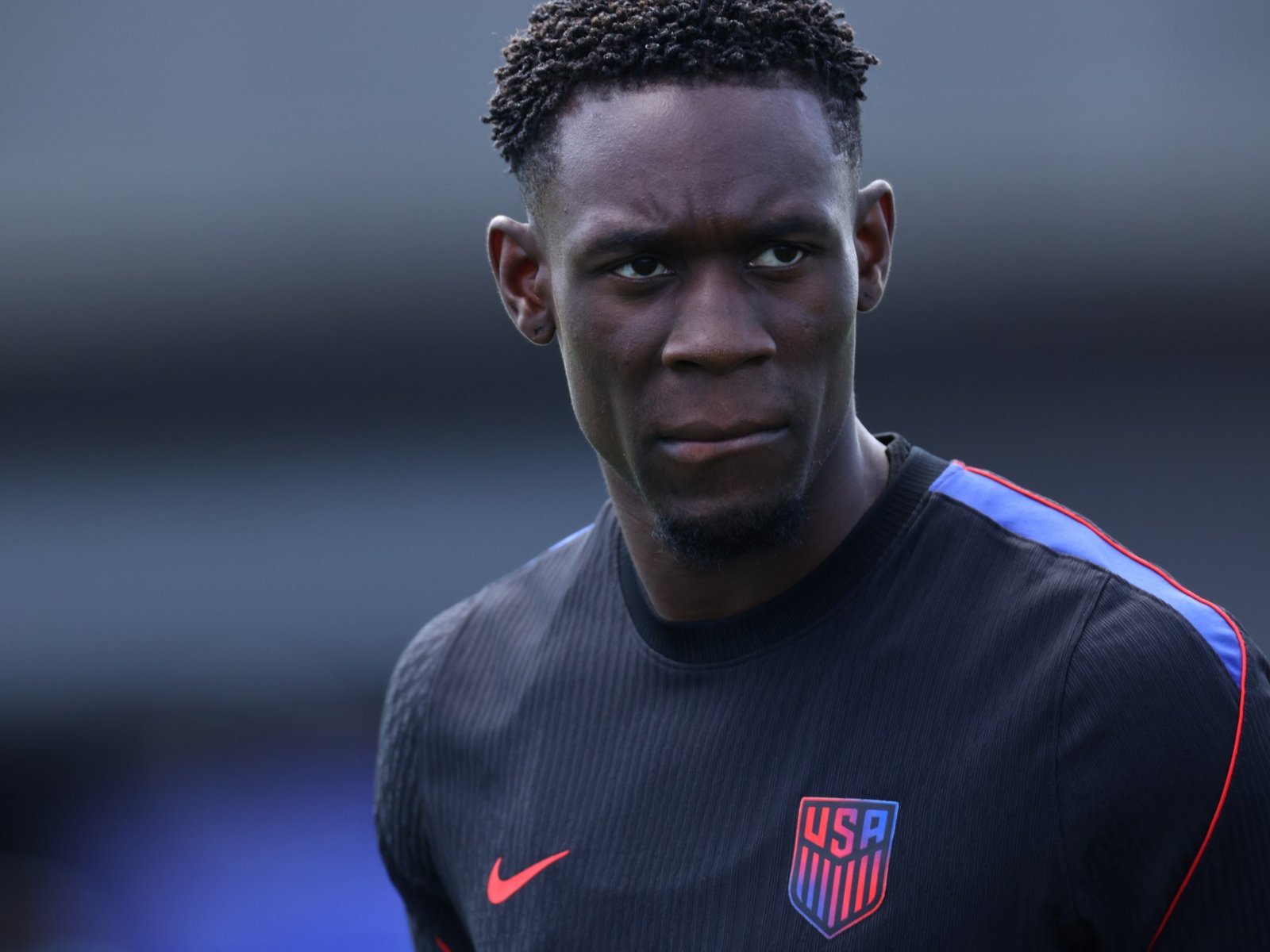
The latest Europe news story dominating football headlines is not just about a World Cup knockout match; it is about whether the sport’s rulebook applies equally to everyone. FIFA’s decision to suspend Folarin Balogun’s automatic ban after a red card, reportedly following intervention from US President Donald Trump, has triggered a fierce backlash across the game and quickly become a major talking point in ireland news and wider irish news coverage.
Balogun, the United States forward and Monaco striker, was sent off in the USA’s 2-0 win over Bosnia and Herzegovina after catching Tarik Muharemovic on the ankle. Under normal World Cup rules, that dismissal would carry an automatic one-match suspension. Instead, FIFA invoked a disciplinary provision to suspend the sanction, clearing him to face Belgium in the last 16.
Europe News: Why the Balogun Decision Is So Controversial
The heart of the controversy is simple: critics argue FIFA used discretionary power in a way that appears to contradict its own competition rules.
FIFA relied on Article 27 of its disciplinary framework, which allows a judicial body to suspend implementation of a sanction and place the player under a probationary period. However, opponents of the decision point to other rules that seem far more direct:
- Article 66.4 of the FIFA Disciplinary Code, which sets out an automatic one-match ban after a red card
- Article 10.5 of the World Cup 2026 regulations, which also states that a player sent off is automatically suspended for the following match
- World Cup circular guidance reaffirming that a red card leads to a mandatory suspension
That legal tension is why this Europe news story has spread far beyond the United States and Belgium. For many in football, the issue is not only whether Balogun deserved a red card, but whether a major tournament can retain credibility if established disciplinary consequences are reversed under political pressure.
Did Balogun deserve the red card?
That remains part of the debate. Some analysts believe the challenge looked clumsy rather than malicious, arguing a yellow card would have been enough. Others support the on-field verdict, especially because VAR reviewed the incident before the referee produced the red card.
Even some coaches who thought the call was harsh still questioned FIFA’s reversal. Their argument was that once VAR and the match officials had reached a final decision, the process for overturning its consequences should be transparent, independent and consistent.
Read more: latest Ireland breaking news and top Irish football updates
How Belgium, UEFA and Football Figures Reacted
Belgium’s football federation said it was astonished by FIFA’s move and suggested it was examining possible responses. Belgium coach Rudi Garcia ridiculed the decision, implying it was so unusual it felt like an April Fools’ joke.
UEFA went even further, describing the ruling as crossing a “red line”. Former FIFA president Sepp Blatter also criticised the outcome, saying red card decisions should be governed by rules and evidence rather than political influence.
Several prominent football voices echoed that concern:
- Thomas Tuchel questioned who can overturn such decisions and on what basis
- Stale Solbakken warned the precedent could damage the World Cup
- Ian Wright called the situation damaging for the tournament’s integrity
- Roy Keane bluntly described the ruling as unfair
This is why the story has become such a strong item in irish news discussion as well. In Ireland, where football audiences closely follow both FIFA governance and refereeing consistency, the case has raised wider questions about fairness, transparency and the influence of power in global sport.
Trump’s Reported Role and Why It Matters
According to reports, Trump contacted FIFA president Gianni Infantino after the Bosnia match and requested a review of Balogun’s red card. Trump later publicly welcomed FIFA’s decision, describing it as the correction of an injustice.
That element transformed the case from a routine refereeing controversy into a global governance issue. Political involvement in disciplinary matters is especially sensitive because it creates the perception that elite access can alter sporting outcomes.
For observers across Europe news coverage, the concern is not only what happened in this case, but what happens next. If one automatic suspension can be paused, could future yellow-card accumulations, touchline bans or post-match sanctions also become negotiable?
Explore more: best Irish media analysis, Ireland sports headlines and football controversy coverage
Has Anything Like This Happened Before?
Historically, this is highly unusual. Reports suggest it is the first time since 1962 that a World Cup red card has not led to a suspension. That fact alone explains why the backlash has been so strong.
There have been disciplinary adjustments in other contexts, but World Cup automatic bans are typically treated as among the clearest and least flexible rules in tournament football. Once that certainty disappears, teams may begin to question whether disciplinary decisions are being applied evenly.
What this means for the World Cup
The immediate impact is obvious: Balogun was made available for a crucial knockout match against Belgium. The longer-term impact could be more serious. FIFA may now face pressure to clarify:
- When automatic suspensions can be suspended
- Who has authority to trigger a review
- Whether political contact played any role in the final judgment
- How future cases will be handled consistently
These are the questions driving this Europe news controversy, and they are unlikely to disappear once the final whistle blows.
FAQs
Why was Folarin Balogun originally suspended?
He received a red card against Bosnia and Herzegovina after a VAR review, which normally brings an automatic one-match World Cup ban.
Why are people criticising FIFA?
Critics say FIFA appeared to override its own automatic suspension rules and did so amid reported political pressure, harming confidence in the tournament’s integrity.
Did everyone agree the red card was correct?
No. Many felt the foul was accidental and only worthy of a yellow card, but the controversy now centres more on process and fairness than on the tackle itself.
Why is this significant in ireland news and irish news coverage?
Irish audiences closely follow FIFA governance, refereeing standards and tournament fairness, making the case a major talking point beyond the teams directly involved.
Explore more: in-depth European current affairs, Ireland trending stories and global sports governance news
In the end, this Europe news controversy is about more than one player or one match. FIFA may believe it corrected a harsh decision, but many across football see a more troubling message: if automatic bans can be reversed after high-level lobbying, trust in the rules becomes harder to defend. That is why the Balogun case will remain a defining talking point in Europe news, ireland news and irish news long after this World Cup tie is over.