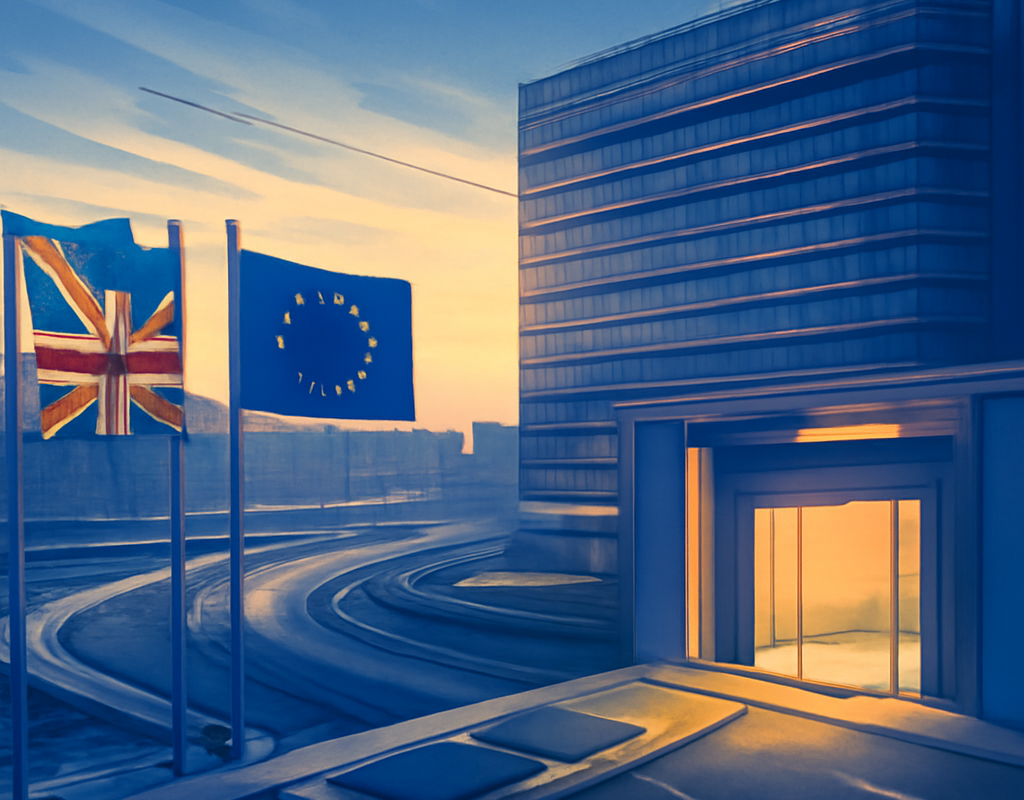
The EU-UK summit in Brussels is testing whether warmer political language can translate into practical cooperation. UK Prime Minister Andy Burnham is seeking a reset with the European Union, but the negotiations show how difficult it will be to repair relations after Brexit.
Burnham’s visit on 20 November marks his first trip to Brussels since becoming prime minister in July. He has said Brexit has not worked, raised the possibility of Britain eventually rejoining the EU and promised a national discussion about the country’s European future.
What is on the EU-UK summit agenda?
The second EU-UK summit is bringing Burnham together with European Commission President Ursula von der Leyen and European Council President António Costa. The proposed package focuses on reducing practical barriers created by Britain’s departure from the bloc.
The main areas under discussion include:
- Less paperwork and fewer border checks for food and agricultural products.
- Closer links between the UK and EU carbon emissions trading systems.
- A youth mobility scheme allowing up to 100,000 young people from each side to live, work and study across the Channel.
- Greater cooperation on migration, including a proposed Channel action plan.
- More collaboration on security, technology and energy.
If implemented, the measures could improve trade and mobility without reversing Brexit. They would also provide a framework for closer EU-UK relations in areas where both sides face shared economic and security pressures.
Disputes continued until the final negotiations
The talks were not straightforward. EU ambassadors held a special meeting before the summit to address disagreements that threatened to overshadow the diplomatic gathering.
One dispute concerned the role of British officials in shaping EU regulations. London wanted a meaningful say over rules it might later need to follow. France opposed giving the UK special treatment, but a late compromise appeared to offer British officials a consultative role without voting rights.
University fees were another contentious issue. Brussels wanted EU students to pay the same tuition fees as British students, while London resisted full equal treatment. An emerging compromise would involve discounted fees, although the final details are still to be agreed.
Why the Made in Europe programme matters
Britain also wants access to the EU’s planned Made in Europe industrial programme, which aims to protect European manufacturers from foreign competition. The EU is broadly sympathetic, but expects the UK to align with its trade policies, particularly its approach to Chinese electric vehicles.
No definitive agreement on that issue is expected at the summit. It illustrates the central challenge of the EU-UK relationship: closer participation often requires alignment with European rules, while Britain remains outside the institutions that make them.
A first step rather than a return to the EU
Burnham is presenting the agreements as the beginning of a broader process. However, he has postponed setting out detailed options for Britain’s European future until further discussions have taken place.
EU governments are responding cautiously. The warmer tone from London is welcome, but memories of Brexit remain fresh. Member states will want evidence that any rapprochement is durable rather than a temporary change in political messaging.
That makes the summit less a dramatic reunion than an attempt to establish trust. Cooperation on food trade, youth mobility, energy and security could create momentum, but it does not amount to a decision on EU membership.
Europe rejects a return to spheres of influence
The Brussels meeting is taking place against a wider debate about Europe’s place in global diplomacy. A summit involving Donald Trump, Vladimir Putin and Xi Jinping in Shenzhen produced a declaration on nuclear risks, United Nations reform and oil supplies, but no breakthrough on Ukraine or Iran.
European leaders were not included in that gathering. At a Coalition of the Willing meeting in Berlin, they rejected any attempt to divide the continent into spheres of influence. German Chancellor Friedrich Merz warned against a repeat of the Yalta-style division of Europe, while French President Emmanuel Macron argued that Europeans must determine their own security future.
The debate also included Ukraine’s potential NATO membership. Kyiv sees stronger security guarantees as essential, but Russia continues to oppose military cooperation between Ukraine and European countries.
Other developments in European news
The day’s EU news also includes several significant developments:
- Russian drones damaged the Dutch and Austrian embassies in Kyiv. EU foreign policy chief Kaja Kallas summoned Russia’s envoy and called for greater pressure on Moscow.
- Hungary was expected to lift its veto on the final two EU accession clusters for Ukraine. Moldova could also benefit from progress on minority-rights arrangements.
- A cyberattack disrupted European Commission systems handling salaries, leave and medical reimbursements. The perpetrators have not been identified.
- The EU agreed to postpone key methane emissions rules by two years, a decision welcomed by oil and gas importers but criticised by environmental campaigners.
- EU ambassadors broadly backed a proposed 10-year probation period for new members, including provisions allowing voting rights to be suspended for serious rule-of-law breaches.
What the summit means for EU-UK relations
The EU-UK summit offers a route towards closer cooperation, but it does not erase the consequences of Brexit. The most immediate gains would come from reducing trade friction, expanding youth opportunities and improving collaboration on shared challenges.
For Burnham, the test will be whether the agreements lead to measurable improvements and support a credible national conversation about Britain’s relationship with Europe. For the EU, the priority will be ensuring that closer cooperation does not weaken its rules or decision-making process.
The clearest takeaway from today’s Europe news is that a reset may be possible, but a return to the old relationship is not on the table. The EU and UK are beginning a cautious new phase, one agreement at a time.