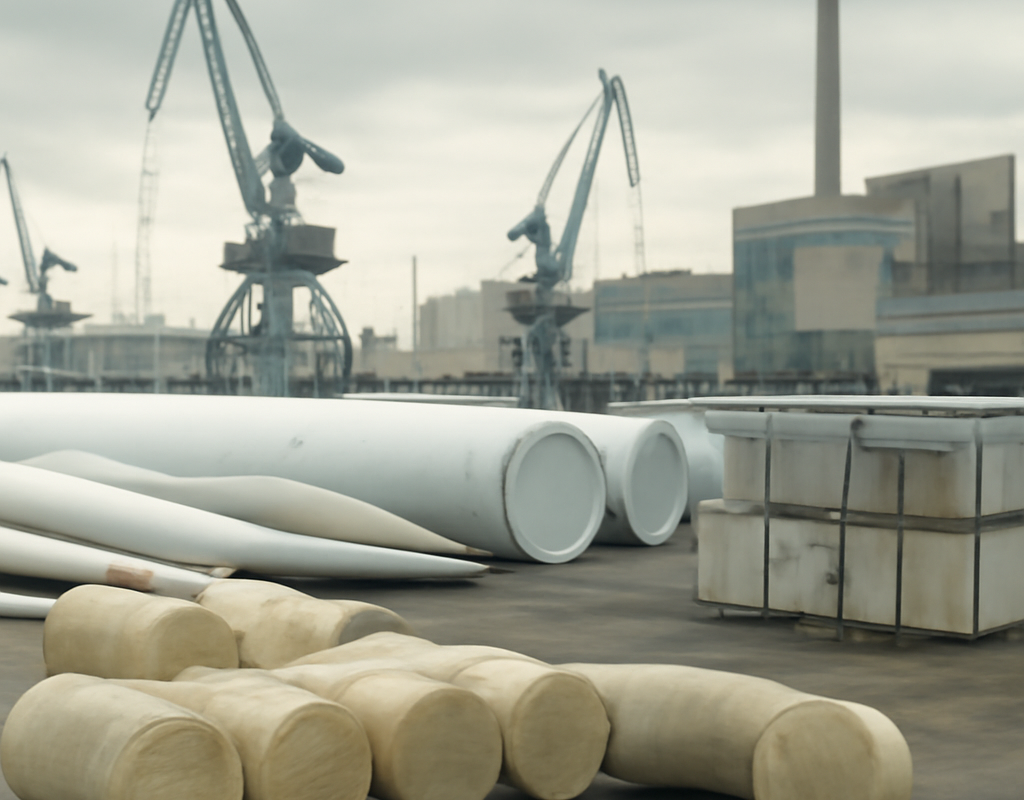
The latest EU news brings a significant new move against cheap Chinese imports. The European Commission has opened an investigation into composite resins and glass fibre materials, products used in sectors ranging from renewable energy and transport to aerospace and defence.
The probe could eventually result in tariffs or quotas on imports entering the European market. Although Chinese suppliers are at the centre of Brussels’ concerns, any safeguard measures would apply to imports from all of the EU’s trading partners.
What the EU trade investigation covers
The European Commission announced the investigation on 23 November 2026 after identifying a surge in imports of composite materials. These products are important industrial inputs used in:
- Wind energy and other renewable-energy equipment
- Electricity infrastructure
- Cars, transport equipment and mobility systems
- Aerospace manufacturing
- Defence-related production
Brussels is examining whether the rise in imports is harming European producers. The investigation is expected to take between nine and 11 months. Its outcome could determine whether the EU introduces quantitative limits, additional duties or other trade-defence measures.
This is not an action aimed exclusively at China. Safeguard measures are generally designed to respond to import pressure affecting an industry and can cover products from multiple countries, even when one supplier is responsible for much of the increase.
Why Brussels is focusing on Chinese imports
The investigation forms part of a wider effort to address the EU’s trade imbalance with China and protect strategic European industries. The source report says low-cost Chinese imports into the bloc rose by 25% over the past year, while the EU’s trade deficit with China has reached €1 billion a day.
European manufacturers have also raised concerns that earlier trade measures were being bypassed. The Commission had already imposed additional duties on certain resins and glass fibre reinforcements. According to the report, Chinese producers were accused of shifting production to other countries to avoid those duties.
That background helps explain why the Commission chose a broader safeguard investigation rather than relying only on existing product-specific measures. The case is also connected to the EU’s ambitions in energy security, defence production and advanced manufacturing.
Industry reaction
Ludovic Piraux, president of Glass Fibre Europe, said the decision reflected the seriousness of the situation facing the sector. He linked the materials to reducing energy dependence, strengthening defence capacity, transforming transport and maintaining advanced manufacturing in Europe.
Those arguments reflect a central theme in current EU policy news: industrial resilience is increasingly being treated as part of economic and strategic security, not simply as a question of competition between companies.
Separate agreement limits Chinese hybrid car exports
The new European trade investigation comes shortly after EU countries backed a separate agreement on Chinese hybrid vehicles. The agreement, reached after negotiations between Brussels and Beijing, is due to take effect on 1 December.
It will establish country-specific quotas allowing up to 350,000 Chinese hybrid vehicles into the EU each year for four years. The arrangement includes a fixed annual adjustment rate of 6%. EU officials expect the agreement to reduce current Chinese hybrid-car exports to the bloc by more than half.
However, the car agreement has not settled broader concerns about Chinese imports. Instead, it highlights the different tools available to the EU, including negotiated quotas, anti-dumping duties and safeguard investigations.
What happens next in EU-China trade relations?
The composite-materials case will now proceed through the Commission’s investigation process. European producers, importers and other interested parties are expected to provide evidence about prices, volumes and the impact on the EU market.
The Commission also wants to continue discussions with Beijing beyond the automotive sector. EU Trade Commissioner Maroš Šefčovič is expected to hold a video meeting with China’s commerce minister, Wang Wentao, in January, followed by an in-person meeting planned for March 2027.
The talks may determine whether further negotiated solutions are possible or whether Brussels moves towards additional trade restrictions. Any future measures could affect supply chains for renewable energy, transport, infrastructure and defence.
Why this matters for Europe
This decision is an important development in European trade policy because it targets materials that support several strategic industries at once. Tariffs or quotas could offer relief to European manufacturers, but they could also increase costs for companies that rely on imported inputs.
The investigation therefore presents a difficult balance for EU policymakers: protect domestic production without making clean-energy equipment, transport technology or industrial projects more expensive. The final decision will depend on evidence gathered during the investigation rather than on the announcement alone.
The key takeaway from this EU news update is that Brussels is taking a broader and more assertive approach to trade defence. The outcome of the composite-materials probe, alongside the hybrid-car agreement and planned EU-China talks, will help shape the next phase of European Union trade relations with Beijing.