Global shipping carries more than 80 per cent of world trade, but its dependence on fossil fuels makes decarbonisation particularly difficult. As the International Maritime Organization (IMO) revisits its delayed Net-Zero Framework, the debate over wind propulsion, batteries, LNG and e-fuels is once again at the centre of EU news and wider European climate policy.
Why the IMO shipping deal matters
The IMO is due to discuss the future of its Net-Zero Framework between 23 November and 4 December 2026. The framework includes a global marine fuel standard and a mechanism for pricing greenhouse-gas emissions from ships.
The measures had already been approved by the IMO’s Marine Environment Protection Committee in spring 2025 and were expected to receive formal approval later that year. However, the process was postponed after the Trump administration threatened tariffs against countries supporting the agreement.
The renewed talks could determine the emissions profile of the global fleet for more than two decades. For readers following European news, the outcome also matters because the European Union is already applying its own shipping climate rules.
Shipping emissions remain difficult to cut
Shipping produces about 2.3 per cent of global carbon dioxide emissions. Around 90 per cent of the fleet still runs on oil-based fuels, with tankers, container ships and bulk carriers among the largest sources of pollution.
Experts from Future Cleantech Architects describe shipping as one of the hardest sectors to decarbonise. The challenge is especially acute for large deep-sea vessels, which need enormous amounts of energy and often travel long distances without reliable opportunities to refuel.
There is no single replacement technology. Instead, the sector is likely to need a combination of measures, including:
- Slower sailing speeds, which can significantly reduce fuel use.
- More efficient hulls, engines, logistics and digital route planning.
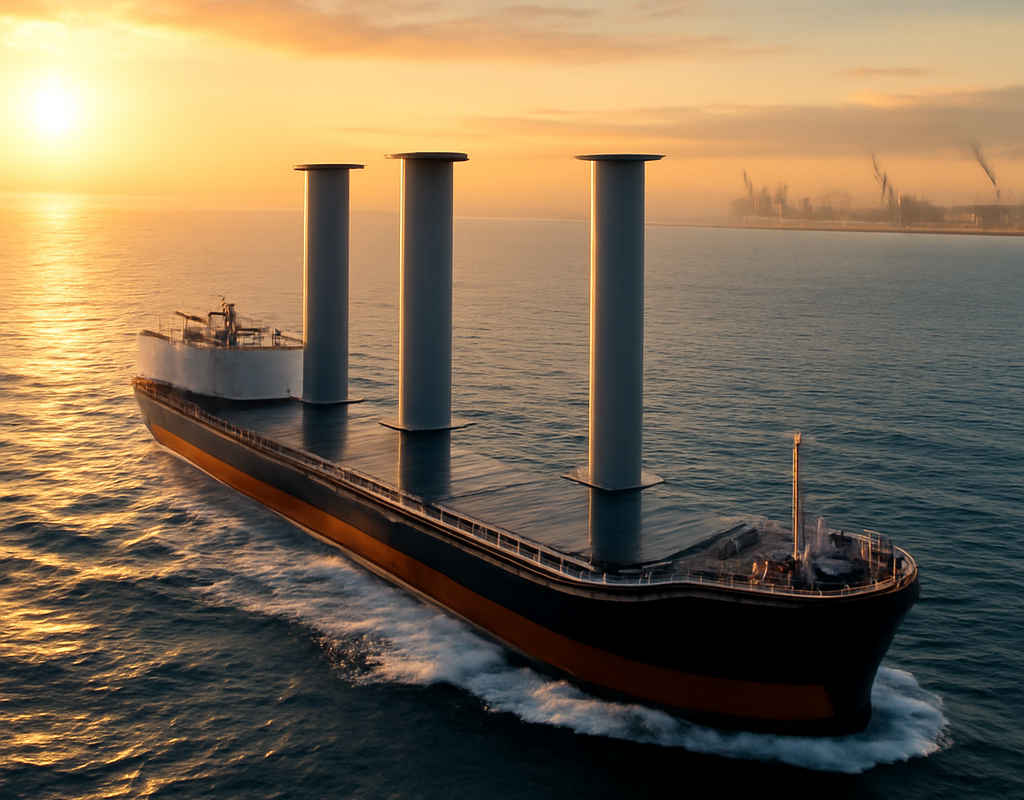
- Wind-assisted systems such as rotor sails, suction sails and wing sails.
- Battery-electric and hybrid propulsion for smaller or shorter-distance vessels.
- Lower-carbon fuels, including methanol, ammonia and renewable hydrogen.
- Shore-side electricity, allowing ships to switch off onboard generators in port.
Wind power and batteries offer practical options
Wind-assisted propulsion can reduce emissions when ships operate on routes with favourable conditions. Rotor sails and other systems are particularly suited to tankers and bulk carriers, where there is generally more room for equipment than on heavily stacked container ships.
About 150 vessels already use some form of wind assistance. Combining wind systems with shore power could produce substantial savings for suitable tanker routes, although performance depends on weather, vessel design and operating patterns.
Battery technology is more promising for smaller cargo vessels and inland or coastal routes. China is already operating a large all-electric container ship on the Yangtze, while battery-swapping systems could allow vessels to replace depleted battery containers during port calls rather than waiting for lengthy recharging.
That approach would require major investment in ports, standardised battery containers and reliable renewable electricity. It is an example of why EU policy news increasingly focuses not only on fuels, but also on infrastructure.
What EU shipping rules mean for LNG
The EU’s FuelEU Maritime Regulation is currently the most developed regional framework specifically designed to reduce shipping emissions. It will push vessels towards lower-carbon fuels, but its treatment of LNG has generated concern.
LNG can have lower lifecycle emissions than heavy fuel oil, yet it remains a fossil fuel and can release methane during production, transport and combustion. Methane has a much stronger short-term warming effect than carbon dioxide, particularly over a 20-year period.
This creates a risk that LNG-powered vessels could meet regulatory requirements while still locking the industry into gas infrastructure. That matters because ships ordered today may remain in service beyond 2050.
In the 2025 order book, most new vessels were still designed for conventional oil propulsion. Among alternative-fuel orders, LNG led methanol and ammonia. Many ships are dual-fuel capable, but that does not guarantee that owners will use green fuels if they remain unavailable or too expensive.
Can e-methanol solve the fuel problem?
E-methanol is one of the more technically ready options for shipping. It can work with established methanol-capable engines and has considerably lower lifecycle emissions when produced with renewable energy and captured carbon.
However, supply remains limited and costs are high. E-fuels can be several times more expensive than conventional marine fuel, while producers need confidence that shipowners will purchase them before committing billions to new plants.
A commercial e-methanol facility in Denmark illustrates the direction of travel. The Kasso site has annual capacity of 42,000 tonnes and operates using solar power. Its developers say the product can deliver a substantial reduction in carbon emissions compared with fossil-based alternatives.
The wider challenge is coordination. Fuel producers need customers, shipowners need dependable supply, and ports need bunkering facilities. Without long-term regulation, each group may wait for the others to move first.
What happens next for European shipping?
Even without a global agreement, the shipping transition is likely to continue through regional regulation, investor pressure and changing technology. The IMO talks will show whether governments can establish common rules, but the EU is already shaping the market through FuelEU Maritime and broader climate legislation.
The key question is not whether shipping has green alternatives. Wind systems, batteries, shore power and renewable fuels all have potential. The harder question is how quickly they can be scaled while preventing LNG and other transitional options from becoming long-term infrastructure.
The latest EU news on maritime policy will therefore remain important far beyond Brussels. Decisions on fuel standards, emissions accounting and port investment could affect trade costs, shipbuilding and the pace of Europe’s climate transition.
The takeaway
The stalled IMO deal has delayed a global answer, but it has not stopped innovation. EU news and international shipping policy now point towards a mixed system: efficiency and wind assistance where practical, batteries for shorter routes, and renewable fuels for deep-sea vessels. The decisive factor will be stable rules that give producers, shipowners and ports enough confidence to invest.