A suspected drone strike on a Russian ship at Libya’s Benghazi port has prompted a security investigation and renewed concern that the Russia-Ukraine war could be affecting maritime facilities well beyond the Black Sea. No casualties were reported, but the blast highlights the risks facing ports, crews and shipping routes across the Mediterranean.
What happened at Benghazi port?
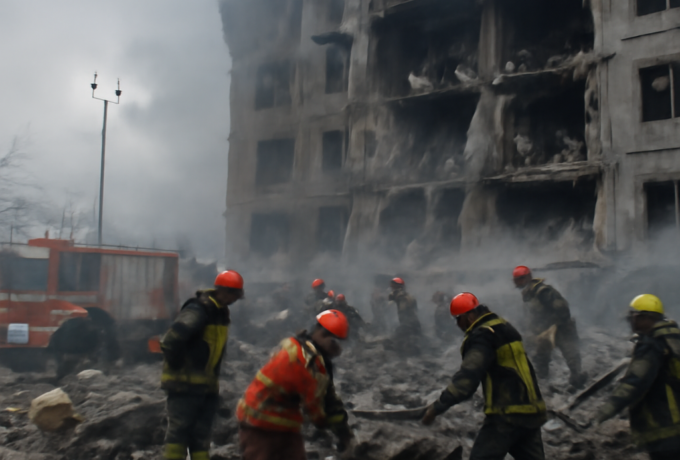
The explosion occurred on Sunday while a Russian vessel was docked at Benghazi in eastern Libya for refuelling and resupply before its planned return to Russia. Authorities said emergency crews responded to a fire and brought it under control.
Libya’s eastern administration said drones were suspected of targeting the ship, although no government or armed group immediately claimed responsibility. Officials did not identify the vessel or provide details about its cargo.
Initial reports were confused. Some accounts suggested that an ammunition storage facility at a naval installation had caught fire. Authorities later clarified that the blast originated aboard the Russian ship. Local broadcasters reported that residents were advised to keep away from the area while emergency operations continued.
Vessel identification remains provisional
Naval analysts have provisionally identified the damaged vessel as the Russian missile corvette Merkury. Reports said it may have suffered extensive damage, but the available information did not establish the precise cause of the explosion or confirm what the ship was carrying.
Libyan and Russian officials are expected to conduct a joint investigation. The findings will be important in determining whether the incident was an accident, a deliberate attack or the result of another cause.
Why the incident matters for European security
The Benghazi explosion comes as Ukraine has been associated with attacks on Russian military infrastructure, energy assets and maritime interests in locations far from the principal land front. However, there is currently no publicly presented evidence linking Ukraine to the blast in Libya, and Kyiv has not claimed responsibility.
The timing has nevertheless drawn attention because another Russian cargo vessel was reportedly struck by a drone in the eastern Baltic Sea the previous day, near Finnish waters. Finland’s military said Ukraine was likely responsible for that incident, though the source report noted that Kyiv had not accepted responsibility.
Together, the reports have intensified discussion about the vulnerability of ships and port infrastructure outside traditional combat zones. Any confirmed attack near a civilian harbour could affect:
- the safety of port workers and local residents;
- commercial shipping and refuelling operations;
- maritime security across the Mediterranean;
- the protection of energy and military logistics networks; and
- the risk of further international escalation.
Libya warns against becoming a foreign battleground
Libya’s political division gives the incident additional significance. The country has competing authorities and security structures, with the eastern administration controlling areas around Benghazi while the internationally recognised Government of National Unity is based in Tripoli.
The Tripoli administration expressed concern that civilian maritime infrastructure could be drawn into foreign military activity. It warned against using Libyan ports for operations connected to international conflicts and said Libya should not become a staging ground for confrontations between outside powers.
Libya’s location on the southern Mediterranean makes it strategically important for access to North Africa and the Sahel. Its fragmented security institutions also complicate efforts to control foreign military involvement and protect national infrastructure.
Previous incidents involving Russian vessels
The explosion follows other reported incidents involving Russian ships in or near the Mediterranean. In March, a Russian liquefied natural gas carrier was reportedly badly damaged off the Libyan coast. Russian President Vladimir Putin blamed Ukraine, although responsibility remained disputed.
The vessel was described as being linked to Russia’s so-called shadow fleet, a network used to transport Russian energy exports while navigating Western sanctions. Ukraine has previously acknowledged operations against vessels connected to Russian maritime trade, including an incident in the Mediterranean in December of the previous year.
These episodes have increased concern about the consequences of maritime attacks near civilian ports and international shipping lanes. Fires or explosions aboard ships can threaten crews, harbour workers, coastal communities and the marine environment even when no casualties are recorded.
What happens next?
The joint Libyan-Russian inquiry will need to establish whether a drone was involved, identify the source of the blast and clarify the vessel’s mission and cargo. Until investigators publish evidence, claims about responsibility should be treated as unconfirmed.
A finding that the ship was deliberately attacked would raise fresh questions about the geographical reach of the Russia-Ukraine conflict and the security of North African ports. For Libya, the incident also underlines the danger of allowing its divided territory and strategic coastline to become entangled in foreign military operations.
The key takeaway: the Benghazi blast remains under investigation, but the suspected attack has already exposed wider concerns about maritime security, Libya’s political fragmentation and the possibility that the war in Ukraine is affecting shipping routes far beyond Europe’s immediate eastern front.