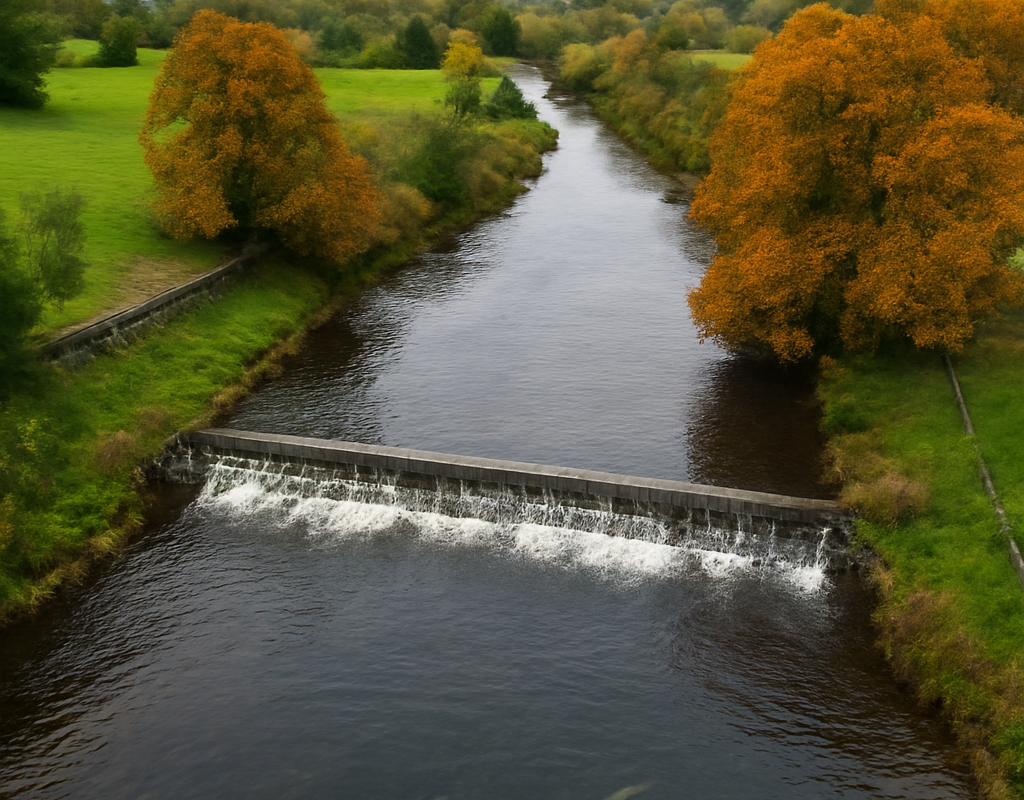
Centuries-old weirs in the River Liffey are to be examined as local authorities consider whether they are obstructing migrating Atlantic salmon. The review comes after Inland Fisheries Ireland (IFI) fish-counter data showed a steep decline in salmon numbers over the past two decades.
The development is a significant issue for Ireland’s rivers and wider environmental policy. Atlantic salmon depend on access to suitable river habitats during their migration, and falling returns have raised concerns about the future of the species in the Liffey.
River Liffey weirs under examination
Local authorities will assess the effect of existing weirs on salmon trying to move through the River Liffey. Weirs are low structures built across rivers, often for historic industrial, milling or water-management purposes. While some are centuries old, they can create barriers for fish moving upstream to spawning areas.
The examination is intended to establish how these structures affect salmon migration and whether changes may be needed. The source report does not specify which individual weirs will be altered, removed or fitted with fish passage measures, so no final engineering decision has been announced.
Why salmon need a clear route
Atlantic salmon have a complex life cycle. They are born in freshwater, spend part of their lives at sea and later return to rivers to reproduce. Their journey requires access to connected stretches of suitable habitat.
A barrier that appears relatively small can nevertheless have a major effect if fish cannot pass it safely or if they are delayed during migration. The condition and flow of a river, alongside water quality and available spawning habitat, can also influence salmon survival.
IFI data points to a long-term decline
Recent fish-counter data from Inland Fisheries Ireland shows that Atlantic salmon numbers have collapsed over the last 20 years. The decline has left the stock at risk of local extinction, according to the report.
Fish counters provide a way to monitor numbers moving through selected river locations. Although the data relates to monitored sites rather than every salmon in the country, it offers an important indication of changes in migratory fish populations over time.
The figures add urgency to the review of the Liffey’s weirs. Identifying barriers is one part of a wider conservation challenge, but it may help authorities determine where practical intervention could improve access to river habitat.
What the review could examine
An assessment of the weirs may consider several factors, including:
- Whether each structure prevents or delays salmon moving upstream.
- How river flow changes at different times of the year.
- Whether a fish pass or another design solution could improve movement.
- The historical, structural and environmental importance of the weirs.
- How any proposed work would affect the river and surrounding communities.
Any intervention would need to balance conservation objectives with the condition and purpose of the structures. The review is therefore an assessment stage, rather than confirmation that the weirs will be removed.
A wider environmental concern for Ireland
The River Liffey is an important waterway, and the condition of its salmon population reflects broader concerns about freshwater ecosystems in Ireland. Migratory fish can be affected by a combination of pressures, including barriers, habitat loss and changes to river conditions.
For that reason, the Liffey examination is likely to be relevant beyond the immediate locations of the weirs. Decisions about river connectivity can influence biodiversity, conservation planning and the management of historic infrastructure.
However, the available information does not identify a single cause for the decline in Atlantic salmon numbers. The reported fish-counter results show the scale and direction of the change, while the planned examination will help authorities investigate the role played by the weirs.
What happens next?
Local authorities are expected to examine the structures and their impact on migrating salmon. Further details will be needed on the individual sites, the evidence gathered during the assessment and any recommendations that follow.
Possible next steps could include maintaining the existing structures, modifying them or introducing measures designed to help fish pass. Any proposal would require appropriate technical and environmental consideration before work could begin.
The key issue is whether the River Liffey can provide salmon with a sufficiently connected route to the habitats they need. With Atlantic salmon numbers falling sharply over two decades, the review of the river’s historic weirs could become an important part of Ireland’s freshwater conservation response.
The key takeaway
The planned examination of River Liffey weirs comes as Atlantic salmon numbers face a serious long-term decline. Authorities have not announced a final solution, but assessing these barriers is a necessary step towards understanding whether improved fish passage could help protect one of Ireland’s best-known migratory fish species.