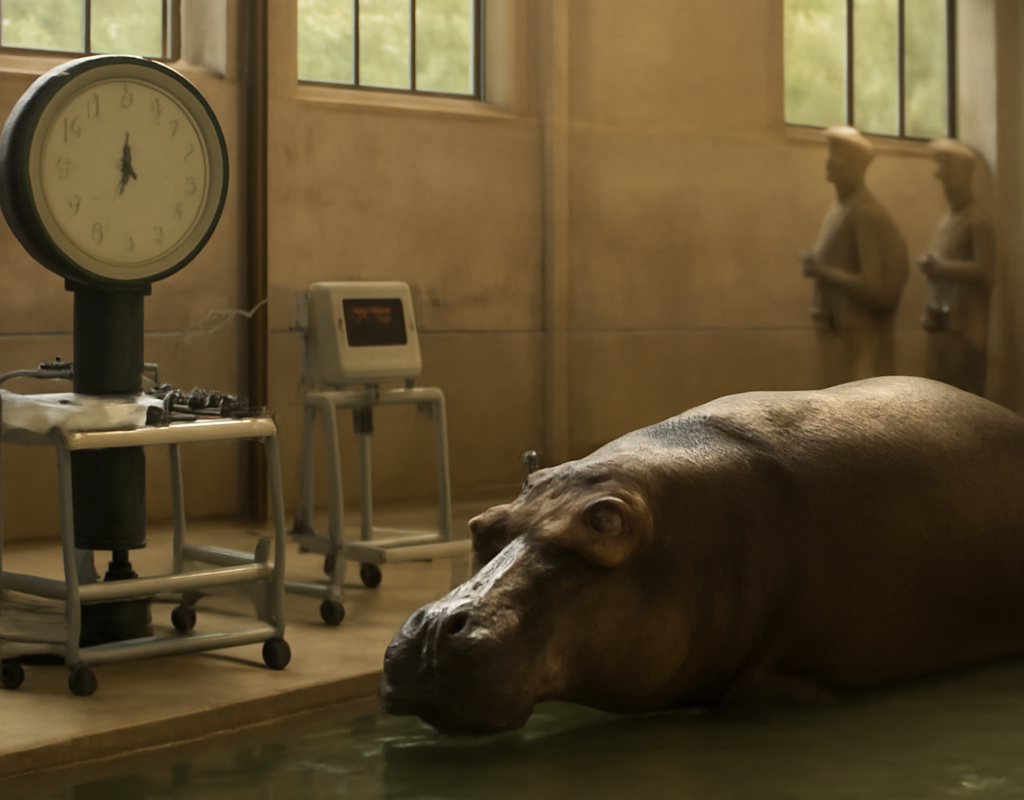
Dublin Zoo spent €15,000 on groundbreaking cataract surgery that restored vision in the left eye of Imani, an 18-year-old common hippopotamus. The procedure, carried out last year after months of preparation, is believed to be the first recorded cataract operation of its kind on a common hippopotamus.
The successful treatment is one of several animal welfare and conservation projects detailed in Dublin Zoo’s annual report. The report also records the use of movement-monitoring devices on several animals, an unsuccessful attempt to introduce two Amur tigers and the first Chilean flamingo eggs seen at the zoo in at least five years.
Dublin Zoo’s cataract surgery improved Imani’s quality of life
Imani underwent surgery on her left eye after developing cataracts. Although her right eye could not be saved, Dublin Zoo said the operation led to a noticeable improvement in her confidence, movement and overall quality of life.
The procedure required careful planning by the zoo’s animal-care and veterinary teams, working with external specialists. Because safely anaesthetising a hippopotamus requires accurate information about the animal’s weight, Dublin Zoo installed new weighing scales as part of the preparation.
The zoo said the operation and the work surrounding it demonstrated its commitment to innovative animal welfare. For Imani, restoring sight in one eye has helped her navigate her environment with greater confidence despite the loss of vision in the other.
How much did the procedure cost?
The cataract operation cost approximately €15,000. That sum represented only a small part of Dublin Zoo’s wider spending on animal care, which totalled €11.27 million last year.
The annual expenditure included animal feed, veterinary services, grounds staff and depreciation of facilities. The report says the zoo cared for 31 mammal species and 14 reptile species at the end of the year, alongside its wider collection of animals.
Animal monitoring devices tested on elephants, tigers and hippos
Dublin Zoo also took part in a pilot project with L’Oceanogràfic in Valencia to monitor the behaviour and activity of selected animals. Male Asian elephant Aung Bo, female Amur tiger Luda and Imani were fitted with monitoring bracelets around their front legs.
The devices work in a similar way to fitness trackers. Their built-in accelerometers continuously record movement and behaviour, giving keepers data that can support animal-care decisions.
By studying activity levels over time, the zoo’s teams can build a clearer picture of normal behaviour and identify information that may help guide husbandry. The project is intended to support welfare assessments rather than replace the knowledge of keepers and veterinary staff.
- Aung Bo: Dublin Zoo’s male Asian elephant.
- Luda: a female Amur tiger who arrived from Copenhagen Zoo.
- Imani: the 18-year-old common hippopotamus who underwent cataract surgery.
Amur tiger breeding attempt ended after aggression
The annual report also outlines Dublin Zoo’s efforts to encourage its Amur tigers to breed. A new female, Luda, was brought from Copenhagen Zoo and briefly introduced to Max, the resident male, in November 2025.
However, the pair had to be separated quickly because of aggression from Max. Dublin Zoo said efforts to achieve a successful introduction remain ongoing.
The development highlights the complexity of managing breeding programmes for endangered species. Introducing animals requires careful attention to behaviour, compatibility and safety, and progress may depend on gradual changes rather than a single meeting.
Chilean flamingos laid eggs for the first time in years
There was also encouraging news from Dublin Zoo’s Chilean flamingo flock. The birds laid eggs for the first time in at least five years, an important behavioural milestone for the group.
The eggs were subsequently lost following disturbance within the flock, so no breeding success was recorded on this occasion. Nevertheless, the zoo considers the egg-laying activity a positive indication that the birds may be capable of breeding in the future.
For zoological collections, breeding behaviour can provide useful insight into an animal group’s wellbeing and environmental conditions. While egg-laying alone does not guarantee future chicks, it may help keepers refine care and management approaches.
What Dublin Zoo’s latest report shows
The projects described in the report range from specialised veterinary treatment to behavioural monitoring and species-breeding initiatives. Together, they show how modern zoo care combines medical expertise, daily husbandry and long-term conservation planning.
Imani’s treatment is the most unusual example, but the monitoring project and the work with Amur tigers and Chilean flamingos also focus on understanding animal behaviour and improving future outcomes.
The key takeaway from Dublin Zoo’s latest report is that animal welfare investment extends well beyond routine feeding and enclosure maintenance. In Imani’s case, a complex €15,000 operation restored sight in one eye and improved her quality of life, while other projects are helping the zoo gather information to guide care for animals across its collection.