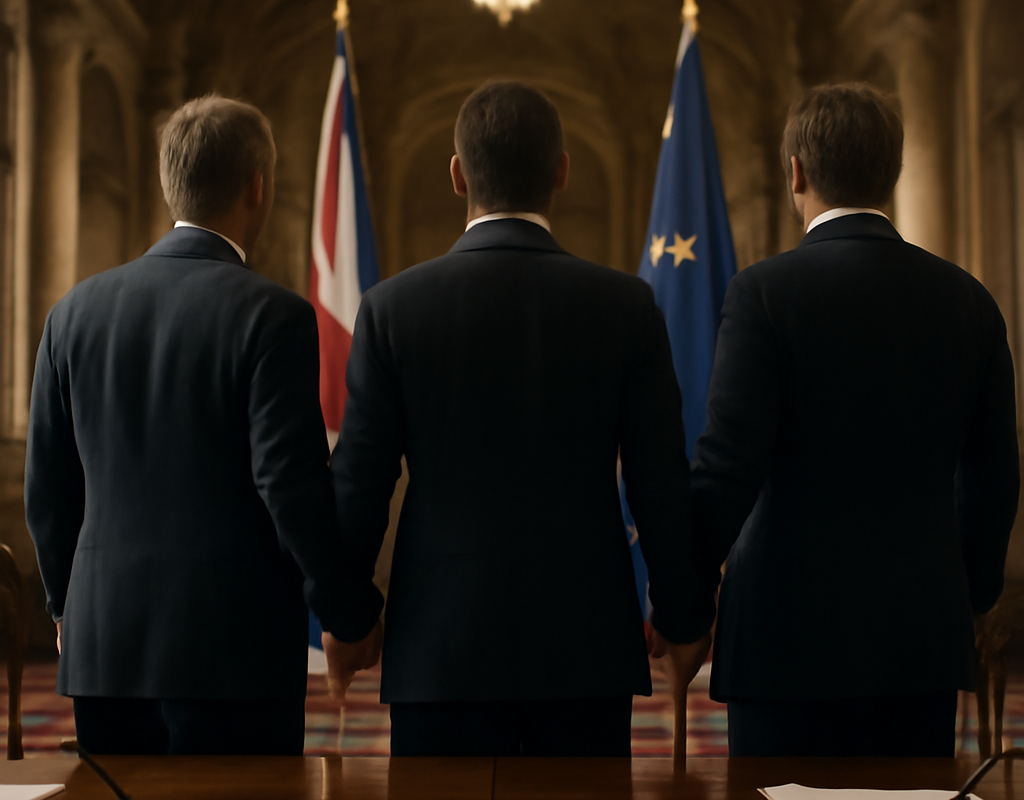
A new UK-EU agreement will reduce checks on British food exports, link emissions trading systems and create a reciprocal youth experience scheme. Prime Minister Andy Burnham said the deal could deliver a significant economic benefit, while opposition parties criticised it as an unfair return to EU rule-taking.
What the new UK-EU deal includes
The agreement marks the latest stage in the government’s effort to reset relations with the European Union after Brexit. It covers several practical areas of cooperation, with legislation to implement the arrangements expected to be introduced in the UK Parliament next week.
Under the proposed food-export agreement, most checks on British food entering the EU would be removed from 2028. In return, the UK would follow relevant EU regulations in this area. The government says the change could reduce costs for businesses and potentially help lower prices for shoppers.
The package also includes plans to link the UK and EU emissions trading systems. Both sides aim to apply that agreement from 2028, although further work will be needed before the arrangement takes effect.
Youth experience scheme
A reciprocal youth experience scheme would allow up to 100,000 people aged between 18 and 31 from the EU to travel, work and study in the UK for as long as three years. The same number of young people from the UK would be able to access opportunities in Europe.
The two sides want the scheme to be available by January 2030 at the latest. Discussions on tuition fees will continue for another six months. EU representatives have called for fees for EU students at British universities to be reduced, with any eventual arrangement expected to apply equally to UK students studying in EU countries.
Government claims economic boost
Burnham described the announcement as “a good day” for Britain and Europe. He said Treasury analysis suggested the agreement could increase the UK economy by up to 0.5%, equivalent to as much as £17bn a year.
The government’s argument is that fewer border checks and closer regulatory cooperation will make trade easier for exporters. Lower administrative costs could benefit firms that sell food and other goods across the Channel, although the final impact will depend on how the arrangements are implemented.
European Council President António Costa said the EU remained open to building the closest possible relationship with the UK. European Commission President Ursula von der Leyen described the summit as a turning point in relations and expressed confidence that the two sides could resolve outstanding issues, including student fees.
Opposition parties reject the agreement
Conservative leader Kemi Badenoch said the deal was not fair. She argued that British farmers would have to follow rules created in Brussels without having a direct role in making them. She also questioned the government’s estimate of a £17bn economic benefit, saying the figure had been overstated.
Reform UK leader Nigel Farage called the agreement a betrayal and said it represented a major gain for the EU. Liberal Democrat leader Sir Ed Davey welcomed the youth mobility plan but said the government should pursue a much broader settlement rather than what he described as limited changes.
The political disagreement reflects the continuing division over Brexit. Supporters of the deal say practical cooperation can remove unnecessary barriers while respecting the UK’s decision to leave the EU. Critics fear that closer alignment could reduce Britain’s ability to set independent rules.
Long-term relationship remains unresolved
Burnham said the government would publish a 10-year plan next month focused on reindustrialisation, economic growth across Britain and opportunities for young people. He argued that those goals were linked to the country’s relationship with its nearest major partner.
He also said the UK and EU would begin an informal process to consider longer-term options before the next summit. However, he stressed that the current government would not reverse its commitments against rejoining the single market, customs union or freedom of movement.
Cooperation on migration is another part of the agreement. The UK and EU intend to work more closely against migrant smuggling and human trafficking, including through greater data sharing between law enforcement agencies. Burnham said progress had been made towards disrupting criminal groups involved in dangerous Channel crossings.
What happens next?
- UK legislation to implement the agreement is expected in Parliament next week.
- Negotiations on tuition fees will continue for up to six months.
- The food-export and emissions-trading arrangements are targeted for 2028.
- The youth experience scheme is intended to begin no later than January 2030.
- Further discussions will examine the long-term direction of UK-EU relations.
The agreement is therefore an important practical step, but not a final settlement. Its economic value, effect on food prices and impact on young people will depend on the detailed rules still to be negotiated and approved.
Key takeaway
The UK-EU deal offers closer cooperation on food exports, carbon trading, youth travel and security while stopping short of reversing Brexit. It may reduce trade friction, but the promised economic gains and the final shape of the relationship remain subject to parliamentary scrutiny and further negotiations.