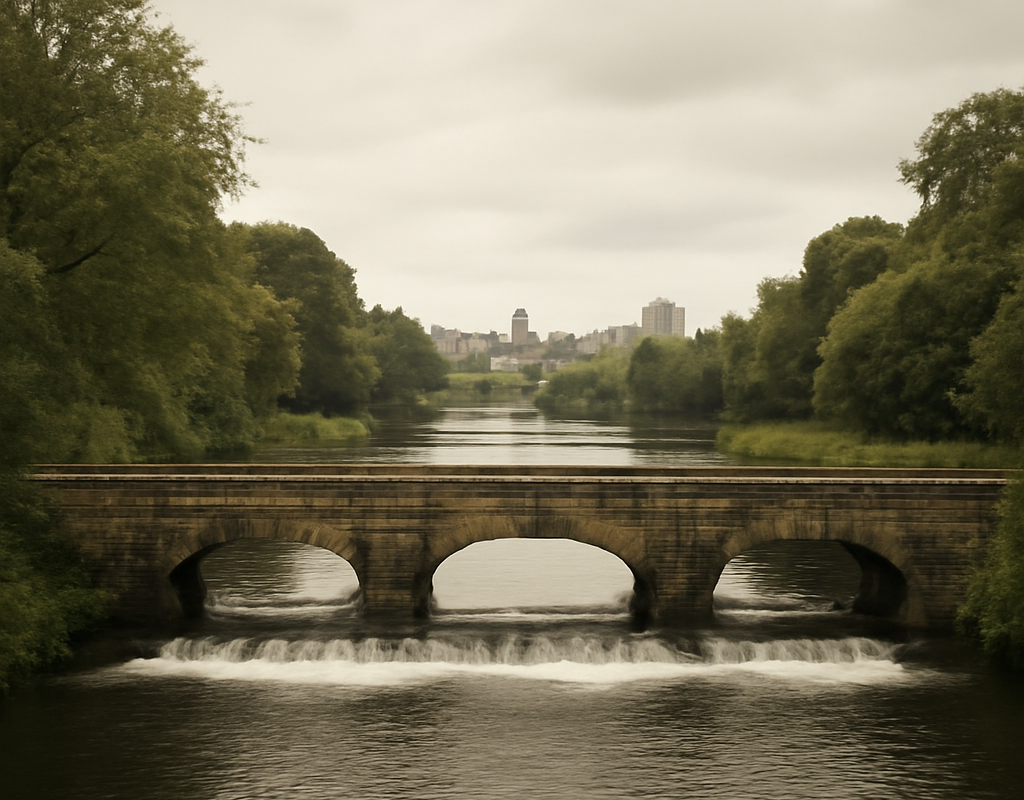
Centuries-old weirs along the River Liffey are to be examined after a steep fall in Atlantic salmon numbers left the river’s stock at risk of local extinction. The new initiative will assess how barriers, water quality and other local pressures are affecting migrating fish.
Why the Liffey salmon decline is under scrutiny
Fingal County Council, Dublin City Council and South Dublin County Council are working together on a project aimed at helping salmon and other fish species move more freely through the Liffey. The initiative comes after fish counter data from Inland Fisheries Ireland showed a collapse in Atlantic salmon numbers over the past two decades.
The Liffey is now closed as a salmon fishery, and its decline is regarded as one of the most acute examples of a wider problem affecting rivers across Ireland. Estimates from Inland Fisheries Ireland and the International Council for the Exploration of the Sea indicate that wild salmon returning to Irish waters have fallen from as many as two million in peak years during the 1970s to fewer than 200,000 in more recent times.
Seven Liffey weirs identified as barriers to fish migration
An Inland Fisheries Ireland assessment of seven weirs downstream of the dam at Leixlip found that each presented a significant obstacle to fish attempting to travel both upstream and downstream.
Atlantic salmon are not the only species affected. The barriers may also restrict the movement of sea trout, eels, lampreys and shad, all of which depend on connected river habitats during different stages of their life cycles.
For salmon returning from the sea to spawn, a blocked or difficult route can reduce access to suitable breeding areas. Barriers can also create long stretches of slow-moving water, known as impoundments. These areas may expose fish to:
- Higher water temperatures;
- Increased predation;
- Poorer water quality; and
- Greater difficulty completing migration.
Balancing heritage with environmental restoration
The weirs were built centuries ago to support mills and other industrial activity. Although those industries ended during the last century, the structures retain heritage value and continue to contribute to recreational and amenity uses along the river.
That history means any changes are likely to require careful consideration. The councils will need to examine potential solutions while taking account of communities, landowners, heritage interests and people who use the river for recreation.
EU legislation requires migrating fish to be able to move freely through Ireland’s rivers. The project will therefore consider how the Liffey’s historic infrastructure can be managed or adapted to improve fish passage while preserving important local functions.
What the new Liffey project will examine
The councils’ work will focus on issues that can be addressed at local level. These include the effect of physical barriers, water quality and the wider conditions faced by fish returning to the river.
Fingal County Council project manager Hans Visser said the initiative would examine the impact of the barriers and possible ways to enable salmon to migrate in both directions. He also warned that the species could become extinct in the Liffey in the coming years if the decline is not reversed.
Stakeholder engagement will form an important part of the project. Councils are expected to work with communities and amenity users along the Liffey, as well as relevant environmental and fisheries interests.
A wider challenge for Ireland’s rivers
The Liffey’s situation reflects a broader conservation challenge. Atlantic salmon require healthy, connected rivers, clean water and access to spawning grounds. Their life cycle takes them between freshwater and the sea, making them vulnerable to problems across several environments.
Declining salmon numbers have complex causes, and the new initiative is not presented as a single solution to the national trend. However, improving passage through rivers is one area where practical intervention may be possible.
For the Liffey, the immediate task is to establish how much the weirs contribute to the decline and which remedies could provide the greatest benefit. Options will need to be assessed against engineering, environmental, heritage and community considerations.
What happens next?
The three local authorities and their stakeholders will continue examining the Liffey’s barriers and the conditions affecting fish migration. The findings should help identify possible measures to improve upstream and downstream movement.
The project’s urgency comes from the warning that the Liffey’s salmon population may disappear locally within coming years. Whether the historic weirs can be altered, supplemented or managed differently will depend on the evidence gathered and the outcome of discussions with affected communities.
The key takeaway is clear: the River Liffey’s salmon decline is not only a fisheries issue. It is also a question of river connectivity, water quality, heritage management and the future health of one of Dublin’s most important waterways.