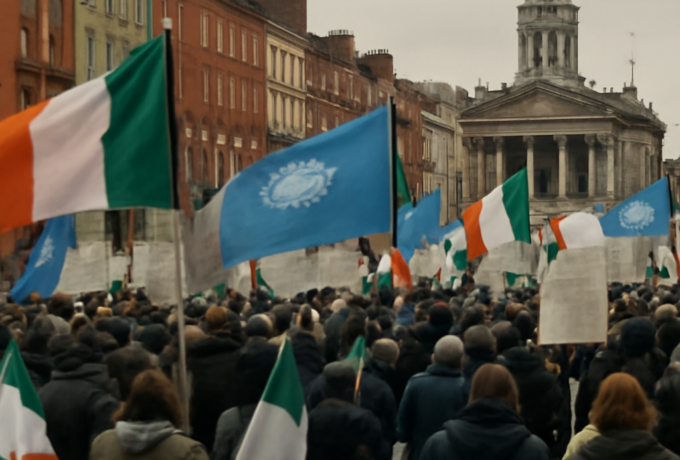
Thousands gathered in Dublin on Saturday to defend Irish neutrality, protesting against Government plans to change the rules for deploying Irish military personnel overseas. The demonstration brought together people carrying Irish Tricolours, United Nations flags and Palestinian flags as debate over the proposed reforms intensifies.
The rally took place on Molesworth Street and focused on the future of the so-called triple lock, the framework governing overseas deployments of Irish troops. Protesters argued against changing the legislation and described the current moment as an important turning point for Ireland’s foreign and defence policy.
Why the Dublin neutrality protest took place
The demonstration was organised in opposition to proposed reforms of the triple lock. The existing rules are linked to the deployment of members of the Defence Forces abroad, while the Government is seeking to alter how those decisions are made.
For supporters of Irish neutrality, the issue goes beyond a technical legal change. They say the triple lock forms part of Ireland’s wider approach to international affairs, including its military non-alignment and participation in peacekeeping operations.
Those attending the Dublin protest displayed a range of flags, reflecting the different concerns represented at the rally. Alongside the Irish flag and UN flags, Palestinian flags were also prominent among demonstrators.
Irish neutrality at the centre of the debate
Irish neutrality has long been a significant part of national political discussion. The proposed reforms have renewed attention on how Ireland should respond to international crises, participate in overseas missions and make decisions about the deployment of its military personnel.
Opponents of the Government’s plans fear that changing the triple lock could weaken safeguards around overseas deployments. They maintain that any alteration should be carefully examined and debated publicly before legislation is changed.
The protest’s size indicated the strength of feeling among those who believe neutrality should remain a central principle of Irish foreign policy. Speakers and demonstrators presented the issue as an inflection point, suggesting that decisions made now could shape Ireland’s future international role.
What is the triple lock?
The triple lock is the set of requirements associated with sending Irish troops on overseas deployments. It has been used as an important reference point in discussions about the authority needed for such missions.
The Government’s proposed reforms would change that framework. However, the source report did not provide full details of the planned legislative changes, so the precise impact on future deployments remains a matter for the political and legislative process.
Government plans face public opposition
The Dublin rally adds to the public response to the Government’s plans. Demonstrators’ objections centre on the principle that decisions involving Irish troops should continue to be subject to strong safeguards and transparent oversight.
The issue is expected to remain part of Ireland’s political agenda as the proposed reforms are discussed. Any future legislation will be closely watched by political parties, defence groups, peace campaigners and members of the public concerned about Irish neutrality.
For readers following Ireland Headlines and Breaking News Ireland, the debate is significant because it concerns both national security decisions and the country’s stated approach to international relations. It also raises broader questions about how Ireland balances military neutrality with its commitments to the United Nations and overseas peacekeeping.
What happens next?
The protest does not itself change the triple lock. Any reform would require the Government to advance its proposals through the political and legislative process. Further detail will be needed before the public can assess exactly how the rules governing overseas deployments would operate under the proposed system.
The demonstration shows that opposition to the reforms is already visible on the streets of Dublin. As the discussion continues, the central question will be whether Ireland changes its legal framework for overseas military deployments while preserving the safeguards and principles associated with neutrality.
For now, the key takeaway from Saturday’s rally is clear: Irish neutrality remains a powerful public issue, and proposed triple lock reforms are facing organised opposition in Dublin.