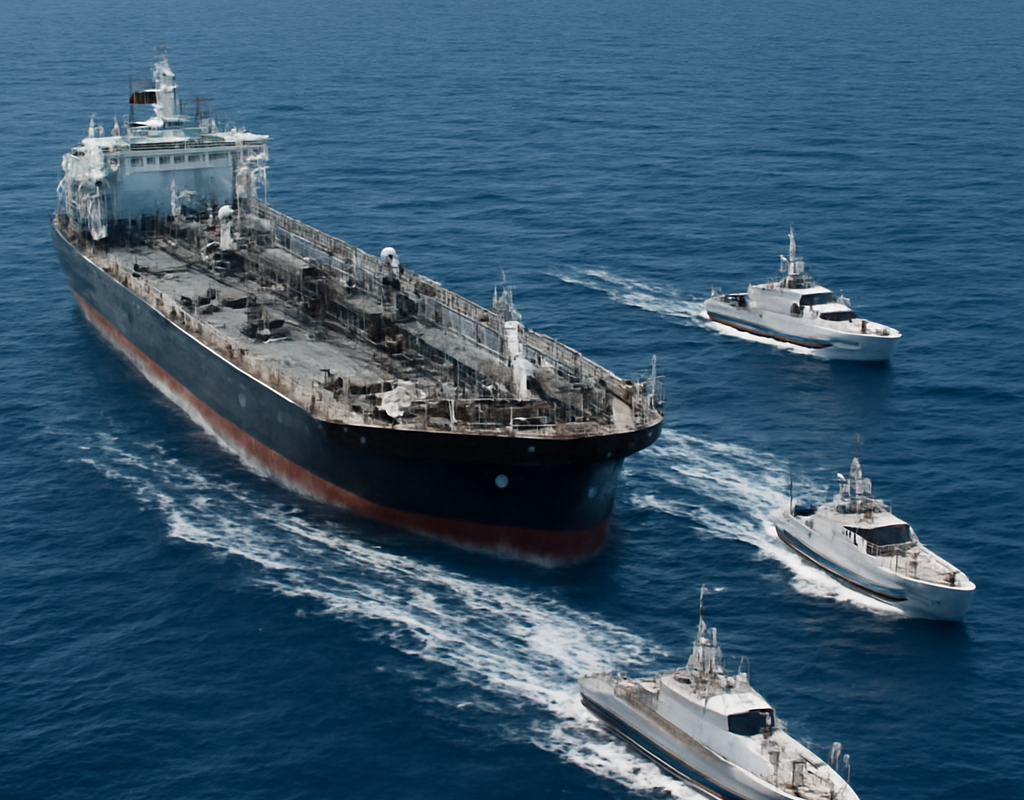
EU forces boarded a suspected Russian shadow fleet tanker in the Mediterranean earlier this week, according to EU foreign policy chief Kaja Kallas. The operation comes as the bloc prepares fresh sanctions aimed at the banks, buyers and companies helping Russia move oil despite Western restrictions.
EU forces board suspected shadow fleet vessel
Troops from the EU’s Operation Irini boarded the MV Midag on Friday. In a social media post on Sunday, Kallas said the operation confirmed that the tanker was sailing under a false flag. She also shared images that appeared to show the boarding.
“The EU will keep disrupting Russia’s shadow fleet at sea and through diplomatic means,” Kallas said. Her comments came ahead of a planned meeting of EU foreign ministers, where new sanctions against Russia were expected to be approved.
The proposed measures are due to target financial institutions, purchasers and businesses supporting the shadow fleet. The development is among the latest EU sanctions actions linked to Russia’s efforts to maintain oil exports despite restrictions imposed by Western countries.
What is Russia’s shadow fleet?
The term “shadow fleet” refers to vessels used to transport Russian oil while attempting to conceal the cargo’s origin or evade sanctions. These ships may rely on complicated ownership arrangements, flags of convenience and other tactics that make it harder to establish who controls them and where their cargo came from.
The fleet has become a focus of European sanctions policy because oil revenues remain an important source of funding for Russia. Monitoring vessels at sea, checking registration details and identifying companies involved in their operation are therefore part of wider European efforts to enforce restrictions.
The EU’s action in the Mediterranean also reflects the region’s importance to maritime trade. Operation Irini has described the Mediterranean as a key transit and transfer area for Russia’s shadow fleet.
Operation Irini’s expanding role
Operation Irini was established in March 2020 with a central role in enforcing the United Nations arms embargo on Libya during the Second Libyan Civil War. Its original responsibilities also included:
- Gathering information on suspected oil smuggling;
- Helping disrupt human smuggling networks;
- Supporting the training of Libyan law-enforcement institutions; and
- Assisting institutions responsible for search and rescue operations.
Its mandate was renewed in October until 31 March 2029. The updated mission includes safeguarding EU interests in the Mediterranean and continuing to support peace and stability in Libya. It also gives the operation a role in helping to constrain Russia’s shadow fleet.
Recent tanker boardings in the Mediterranean
The MV Midag boarding follows similar operations involving other oil tankers. In August, Operation Irini forces conducted a flag-verification boarding of the MV Sun. Earlier that month, a comparable mission targeted the MV Toa Payoh.
These operations are separate from the EU’s diplomatic sanctions process but form part of the same broader effort to identify and disrupt activity linked to sanctions evasion. At sea, that means checking a vessel’s flag and documentation. Through sanctions, the EU can target the financial and commercial networks that support shipping operations.
Why the latest EU action matters
The boarding underlines the growing connection between European security policy, maritime enforcement and EU sanctions against Russia. It also shows how an existing Mediterranean mission is being given additional responsibilities as the EU responds to changing security challenges.
For the EU, enforcement is not limited to publishing new rules. Authorities must also establish which vessels, companies and financial institutions are involved in suspected sanctions evasion. The planned package targeting banks, buyers and supporting companies is intended to address those wider networks rather than focusing only on individual ships.
The operation also comes as the EU continues to coordinate its response to Russia’s war against Ukraine. Kallas’s statement indicates that the bloc intends to combine diplomatic pressure with action at sea as it seeks to limit the shadow fleet’s ability to operate in European waters and nearby shipping routes.
Key takeaway
EU forces boarding the MV Midag marks a further step in the bloc’s efforts to disrupt Russia’s shadow fleet. With Operation Irini’s mandate now extended to 2029 and new sanctions expected to target the networks behind the vessels, maritime enforcement is becoming an increasingly visible part of EU policy towards Russia.