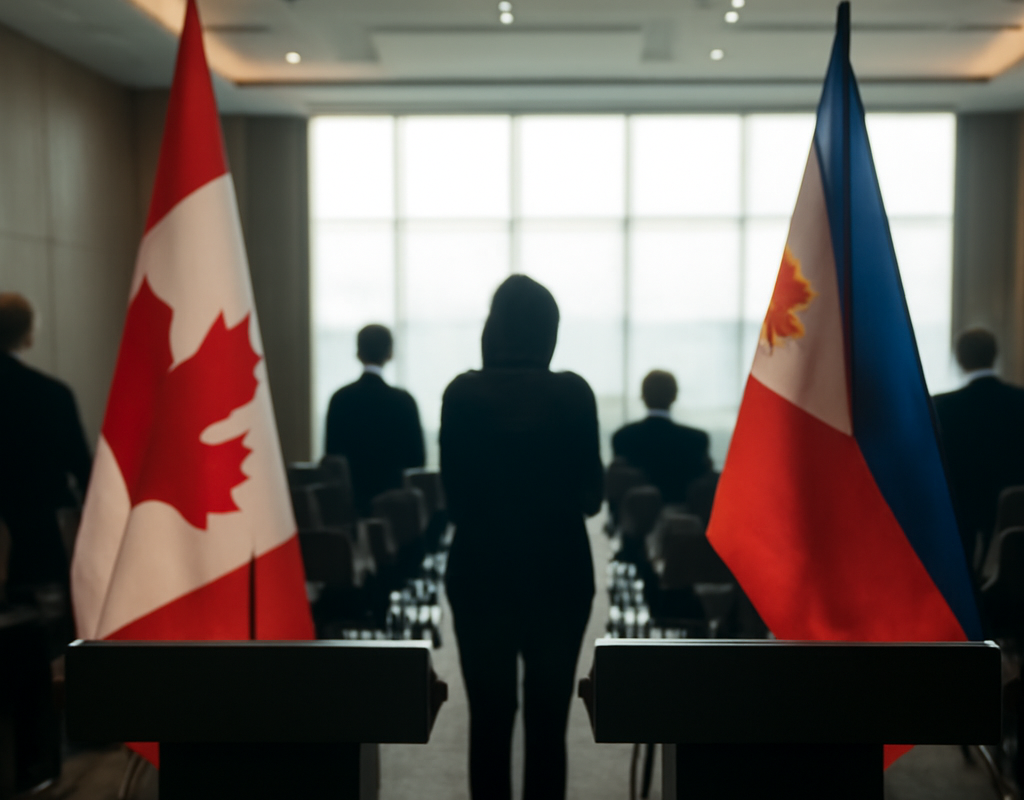
Canada and the Philippines have concluded negotiations on a bilateral free-trade agreement, Canadian Prime Minister Mark Carney said on 14 November 2026. The announcement comes as Ottawa seeks to diversify its trade relationships and reduce its dependence on the United States.
Carney made the announcement while visiting Manila for an Association of Southeast Asian Nations (ASEAN) summit. The agreement has not yet entered into force: Canada and the Philippines must still complete the signing and domestic approval processes before implementation, which Carney said is expected in 2027.
Canada-Philippines trade talks reach conclusion
Canada and the Philippines launched negotiations for a new trade agreement one year ago. Carney said the talks had now concluded and that his government would move quickly to finalise the text.
The Canadian prime minister said the agreement could take approximately six months to sign. Its practical effect will depend on the final legal text, formal approval and any procedures required in both countries.
For now, the announcement represents the end of negotiations rather than a trade deal already in force. Businesses and consumers should therefore wait for the final agreement and implementation details before assuming that tariffs, market-access rules or regulatory requirements have changed.
Sectors expected to benefit
Carney described the agreement as potentially significant for a range of Canadian industries. The areas he identified included:
- agriculture
- aerospace
- artificial intelligence
- forest products
- mining
- energy
- services
The eventual benefits will depend on the concessions agreed by both sides, including tariff schedules, rules of origin, services access, investment provisions and other trade measures. Those details were not provided in the announcement.
Why Canada is pursuing new trade partners
Ottawa is presenting the agreement as part of a wider effort to build a broader network of commercial relationships. Canada has set a goal of doubling its non-US exports by 2035, according to the source report.
The strategy has gained importance amid repeated trade tensions between Canada and the United States. The US remains Canada’s dominant trading partner, but the Canadian government is seeking more options for exporters and greater resilience if relations with Washington deteriorate.
Carney said the government wanted to create more opportunities for Canadian companies, increase consumer choice, support employment and reduce the country’s relative reliance on the US.
Canada also seeking an ASEAN-wide agreement
The bilateral agreement with the Philippines is one part of Canada’s broader engagement with Southeast Asia. Ottawa is also pursuing a trade agreement with ASEAN, the 11-member regional grouping.
Carney said negotiations on a Canada-ASEAN arrangement had been “substantially completed”. That wording indicates significant progress, but it does not necessarily mean that a final agreement has been signed, approved or brought into effect.
An agreement with ASEAN could offer Canadian businesses access to a wider regional market. However, the legal and procedural path would be separate from the bilateral Canada-Philippines deal, and further information would be needed on the remaining steps.
What the announcement means for Europe
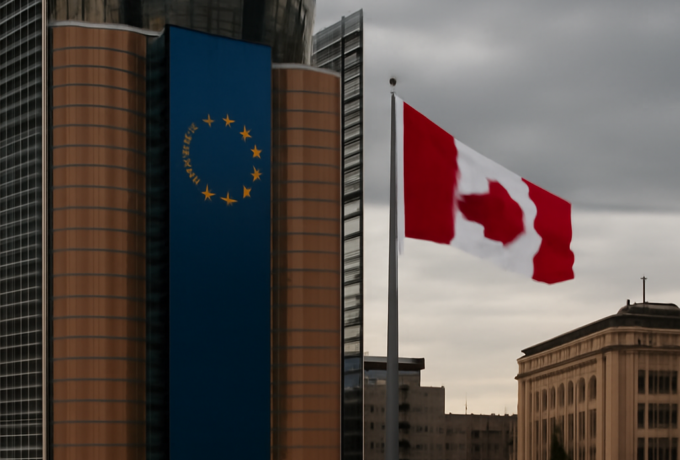
The development is not an EU decision and does not directly change European Union trade rules. It is a bilateral Canadian-Philippine initiative announced during an ASEAN summit.
It nevertheless forms part of a wider shift in international trade diplomacy that matters to European policymakers and businesses. Canada has been aligning itself more closely with Europe while seeking to diversify its economic partnerships. Stronger Canadian links with Southeast Asia could influence future discussions about supply chains, investment, energy, technology and strategic cooperation.
For the European Union, the announcement is another indication that major economies are looking beyond traditional trading relationships. It may also add context to the EU-Canada relationship, including cooperation on trade and economic resilience, although the source report does not announce any new EU measure.
What happens next?
The next stage is expected to involve finalising the agreement’s legal text, signing it and completing the necessary approval procedures. Carney said he expected the agreement to come into force in 2027, but no specific date was announced.
Key issues for businesses and policymakers will include:
- the final tariff commitments;
- the treatment of agricultural and industrial goods;
- rules governing services and investment;
- requirements for qualifying products under rules of origin;
- the domestic approval process in Canada and the Philippines; and
- the precise date on which the agreement will apply.
Until those details are published, the announcement should be understood as a completed negotiation, not as an immediately applicable free-trade regime.
Conclusion
Canada and the Philippines have concluded negotiations on a free-trade agreement, marking a significant step in Ottawa’s effort to diversify exports and strengthen commercial ties beyond the United States. The deal is still subject to signing and approval, with entry into force expected in 2027. For Europe, the announcement provides wider context on changing global trade partnerships, but it does not itself alter EU law or European trade policy.