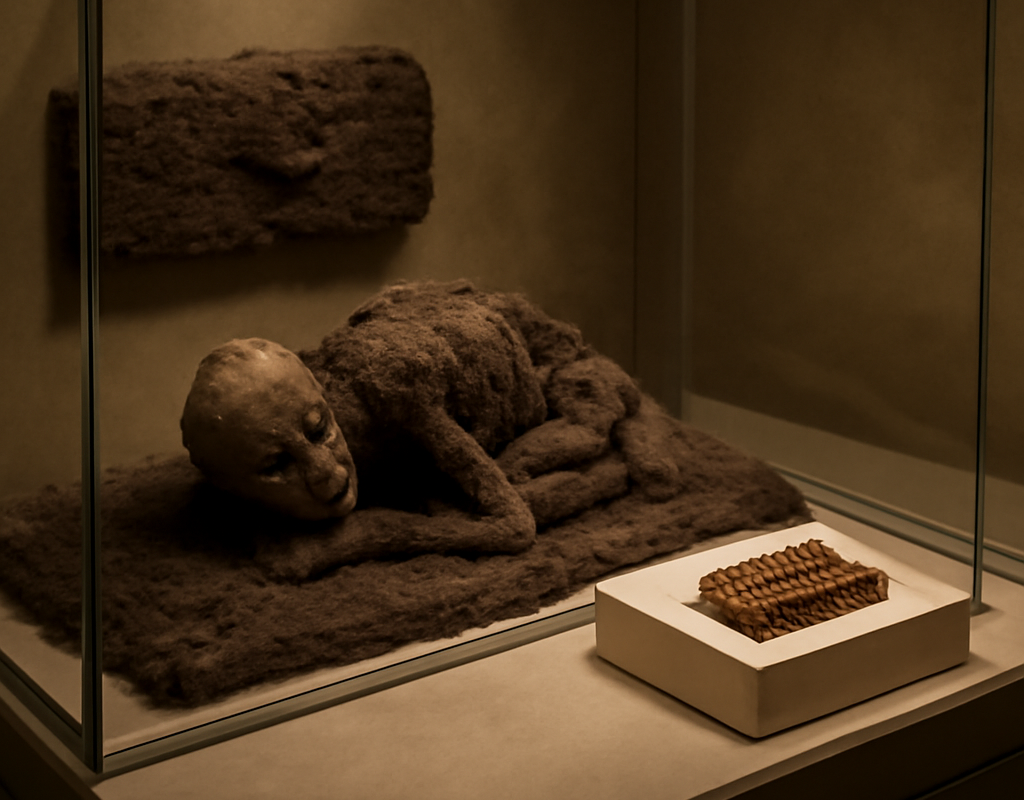
A coronial hearing has examined the remains of a young Iron Age woman discovered in bogland near Bellaghy, Co Derry, in 2023. Known as the Ballymacombs More Woman, she was found alongside a woven artefact, offering a rare opportunity to learn more about life in Northern Ireland during the Iron Age.
Coronial hearing focuses on Ballymacombs More Woman
The special investigation took place at a museum and centred on the remains recovered from the Ballymacombs More area. The discovery has drawn attention because the woman lived during the Iron Age and was preserved in bogland for centuries.
Her remains were found with a woven object, which is now part of the wider investigation into the circumstances surrounding the discovery. The artefact provides important archaeological context and may help specialists understand aspects of material culture during the period.
What was found near Bellaghy?
The Ballymacombs More Woman was discovered in Co Derry in 2023. The find included human remains and a woven artefact located nearby. Both discoveries have since been examined as part of efforts to establish more about the individual and the historical setting in which she lived.
Boglands can preserve organic materials that would normally decay, including textiles and other woven objects. That makes such discoveries particularly valuable to archaeologists, although interpretation depends on careful examination of the remains and associated artefacts.
Why the discovery matters
Iron Age human remains are an important source of evidence about communities, health, technology and cultural practices in ancient Ireland. A preserved woven artefact can add another layer to that evidence by showing how people worked with natural materials and created everyday objects.
The discovery also highlights the archaeological importance of wetlands and bogland across the island. These landscapes can retain evidence that is rarely preserved at other sites, helping researchers build a more detailed picture of the past.
Investigation held in a museum setting
The coronial process was held as a special investigation at a museum. It brought formal attention to the remains and the circumstances of their discovery while allowing the historical and archaeological significance of the find to be considered.
A coronial hearing examines relevant evidence surrounding human remains. In this case, the hearing relates to an individual who lived in the Iron Age, rather than a recent death. The proceedings form part of the official consideration of the discovery and its context.
Woven artefact found with the remains
The woven artefact discovered alongside the Ballymacombs More Woman is a notable part of the find. Organic objects are particularly vulnerable to deterioration, so their survival in bogland can provide evidence that would otherwise be lost.
Researchers can examine such an object for information about its construction and the materials used. However, the available information does not establish its precise purpose or explain how it came to be associated with the remains. Those questions require specialist analysis rather than assumption.
What happens next?
The hearing has brought the discovery into focus, but the available details do not provide a complete account of the woman’s life, identity or the circumstances in which she entered the bogland. Further archaeological and scientific work may be needed before more conclusions can be drawn.
- The remains were found near Bellaghy in Co Derry in 2023.
- The individual has been identified as the Ballymacombs More Woman.
- A woven artefact was found alongside the remains.
- A special coronial investigation was held at a museum.
The wider importance of the find
The Ballymacombs More discovery contributes to understanding Northern Ireland’s ancient past. It combines human remains with an associated artefact and a clearly identified landscape, giving specialists several forms of evidence to study together.
For the public, the case also demonstrates how museums and coronial authorities can play different but connected roles in examining archaeological human remains. The process helps ensure that significant discoveries are documented while preserving their historical importance.
Conclusion
The coronial hearing into the Ballymacombs More Woman has highlighted the significance of a young Iron Age individual discovered near Bellaghy, Co Derry. Together with the woven artefact found beside her, the remains offer a rare window into the ancient communities of Northern Ireland. As analysis continues, the discovery may provide further insight into Iron Age life, while its preservation underscores the archaeological value of Ireland’s boglands.