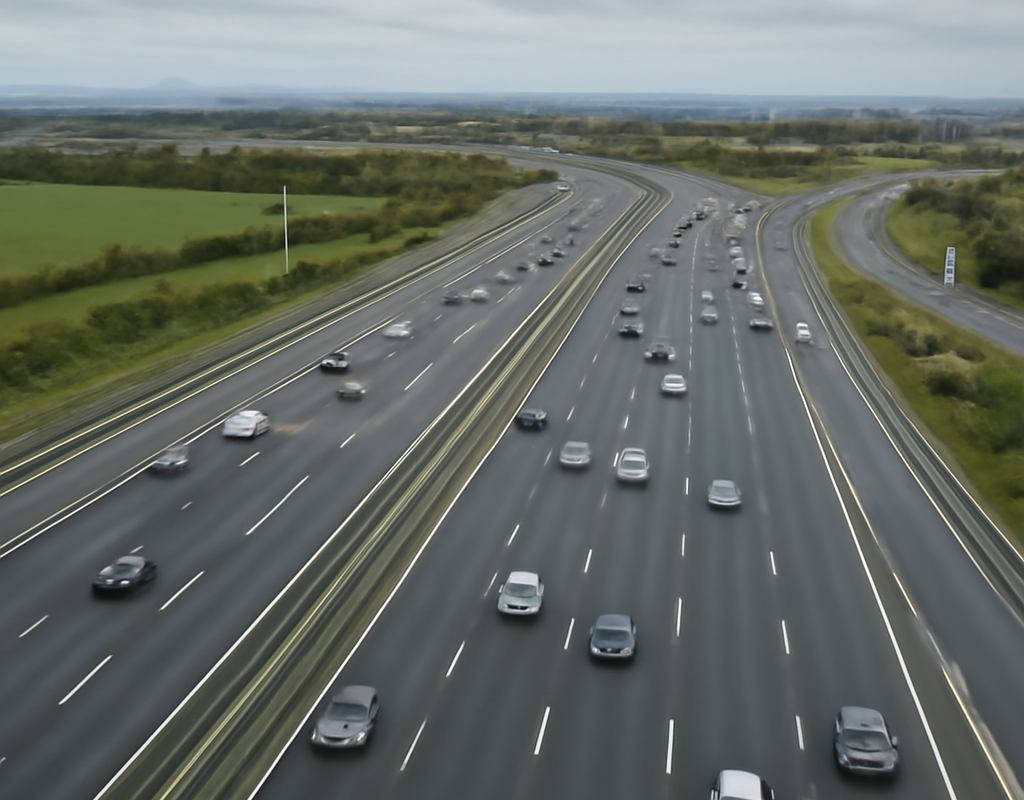
A rise in M50 crashes has prompted calls for more driving education in Irish schools, with new figures showing collisions on Dublin’s busiest motorway increased during 2026.
Transport Infrastructure Ireland (TII) recorded 652 collisions on the M50 between January and September this year, compared with 590 during the same period in 2025. That represents an increase of 62 incidents, or approximately 10 per cent.
M50 crashes increase during 2026
The figures have renewed attention on motorway driving skills, including speed management, lane discipline and awareness of changing traffic conditions. The M50 carries heavy volumes of traffic around Dublin, meaning collisions can quickly cause delays and disruption for commuters and other road users.
While the available figures show the number of recorded collisions, they do not identify the individual causes of each incident. Factors such as congestion, driver distraction, unsafe lane changes and poor awareness can only be assessed through more detailed analysis of the collision data.
Calls for greater driving education in schools
The increase in M50 crashes has led to calls for motorway driving to receive greater attention in school-based road safety education. Young drivers may learn the formal rules of the road before receiving substantial experience on high-speed, multi-lane routes.
A broader programme could help students understand practical motorway risks before they begin driving independently. Useful topics could include:
- Choosing a safe speed for traffic, weather and visibility conditions
- Maintaining a suitable gap from the vehicle ahead
- Checking mirrors and blind spots before changing lanes
- Understanding lane markings, junctions and slip roads
- Responding safely to sudden congestion or a stopped vehicle
- Knowing what to do after a breakdown or collision
Education would not replace enforcement or road engineering, but it could give learner drivers a clearer understanding of the decisions required on a busy motorway.
Why the M50 presents particular challenges
The M50 is a key part of Dublin’s road network and serves drivers travelling across the capital as well as those connecting with routes to other parts of Ireland. Traffic conditions can change rapidly, particularly near interchanges and during peak commuting periods.
Drivers entering the motorway must adjust to faster-moving traffic, while those approaching exits need to plan lane changes in advance. Last-minute manoeuvres can increase risk, especially when traffic is slow or visibility is reduced.
Weather can also affect stopping distances and visibility. During heavy rain, fog or strong winds, motorists need to reduce speed and leave more room to react. Checking Met Éireann weather information before a long journey may help drivers prepare for difficult conditions, although conditions can change during a trip.
Practical safety reminders for motorway drivers
The rise in M50 crashes is a reminder that motorway safety depends on consistent attention from every road user. Drivers should avoid distractions, including handling a mobile phone, and should remain alert even when traffic appears to be moving normally.
Before setting out, motorists can reduce risk by:
- Planning their route and identifying the correct exit in advance.
- Checking fuel, tyres, lights and windscreen visibility.
- Allowing extra travel time so that hurried decisions are less likely.
- Adjusting speed to traffic and road conditions rather than relying only on the posted limit.
- Taking a break if tiredness begins to affect concentration.
If a vehicle breaks down, the driver should try to move to a safe location where possible and follow official emergency guidance. People should not remain in a live traffic lane unless there is no alternative.
What the latest figures show
TII’s data covers the first nine months of 2026 and records 652 collisions on the M50, compared with 590 in the equivalent period a year earlier. The figures provide evidence of an increase, but further information would be needed to establish whether the rise reflects changes in traffic levels, reporting, weather, driver behaviour or particular locations on the route.
Detailed monitoring may help identify whether collisions are concentrated at specific interchanges or times of day. That information could inform future road-safety campaigns, enforcement activity and driver training.
The road-safety response
Calls for stronger school-based instruction place prevention at the centre of the response. Introducing motorway awareness before young people become full licence holders could complement learner-driver training and existing road-safety campaigns.
However, responsibility does not rest solely with inexperienced motorists. Experienced drivers also need to maintain safe distances, signal clearly and avoid aggressive or unpredictable manoeuvres. A safer M50 requires all road users to adapt to traffic, visibility and road conditions.
The central message from the new data is clear: the increase in M50 crashes has strengthened the case for practical motorway education, alongside continued attention to enforcement, infrastructure and driver behaviour. Better preparation in schools could help future motorists understand the risks before they face them on Dublin’s busiest routes.