

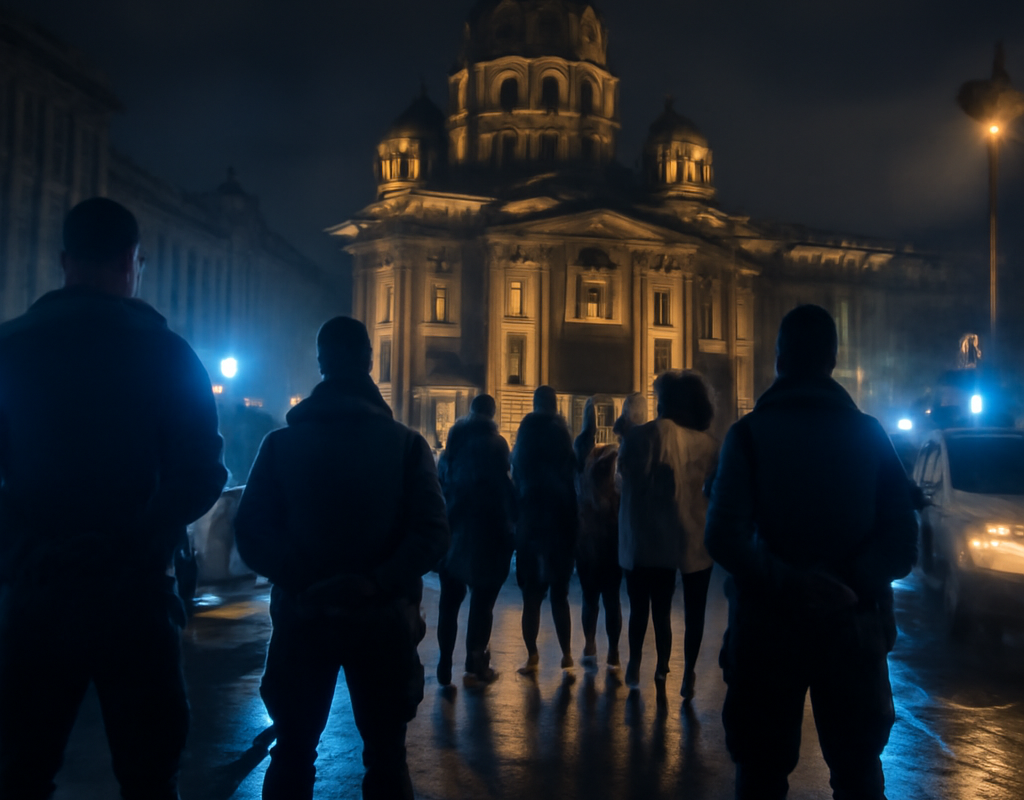
Serbian authorities have arrested nine police officers over allegations that they used excessive force and violence against student protesters during anti-government demonstrations in Belgrade in August 2025. The arrests place renewed attention on police conduct and accountability as Serbia’s student-led protest movement continues to shape the country’s political landscape.
The Interior Ministry said on Wednesday that eight serving officers and one former officer had been detained on suspicion of abuse and torture. The alleged offences reportedly took place inside a garage at a government building in the Serbian capital.
What happened in Belgrade?
According to the ministry’s statement, the suspects allegedly used force and threats to inflict serious pain and suffering on several injured people while they were on duty. Authorities said the alleged conduct was intended to obtain information, intimidate those detained and impose unlawful punishment.
The suspects have been identified publicly only by their initials and years of birth. Serbian state broadcaster RTS reported that Igor Zmiric, commander of the country’s special anti-terrorist unit, was among those arrested.
The allegations relate to events during the wider student protests that swept across Serbia. Student groups had repeatedly accused police of using excessive force during demonstrations, claims that have now become part of a formal criminal investigation.
Student activist previously alleged assault
Student activist Nikolina Sindjelic, who was detained during protests in August, had previously accused Zmiric of kicking her while she was lying on the floor of the garage. The reported arrest does not itself establish guilt, and the investigation will need to determine the individual responsibility of each suspect.
Serbia’s authorities have not announced a final court finding in the case. The suspects remain entitled to due process, including the presumption of innocence and the right to challenge the allegations through the judicial process.
Why Serbia’s protests began
The student movement emerged after a deadly disaster at a recently renovated railway station in November 2024. The tragedy prompted demonstrations across the country and intensified scrutiny of government accountability, public construction standards and alleged corruption.
Students called for greater transparency and accountability, while the authorities faced growing pressure over the handling of the disaster and the response to subsequent protests. Police conduct became a central issue as demonstrators reported arrests and alleged mistreatment.
The movement later developed beyond street demonstrations. By late October 2026, a political organisation known as the Student List had won parliamentary elections, according to the source report, defeating Serbia’s long-standing leader Aleksandar Vučić. The result marked a major transformation of a protest movement into a significant political force.
What the arrests mean for Serbia
The case is significant because it involves serving members of the police and an alleged incident inside a government building. A credible investigation could become an important test of Serbia’s ability to examine allegations of state violence independently and transparently.
The arrests may also affect public confidence in law-enforcement institutions. Key questions include:
- Whether prosecutors will bring formal charges against the suspects;
- What evidence will be presented about the alleged treatment of detainees;
- Whether senior officials or commanders face further scrutiny; and
- Whether the proceedings will be conducted openly and independently.
At this stage, the Interior Ministry’s announcement concerns arrests and suspicions rather than convictions. Any conclusions about criminal responsibility must await the outcome of the investigation and, if charges are filed, the courts.
Wider European significance
The arrests are a national Serbian development, but they have wider relevance for European affairs because they concern policing, protest rights, judicial accountability and democratic oversight. Serbia is not an EU member state, yet its political direction and institutional reforms remain important to the country’s relationship with the European Union.
Cases involving alleged police violence can also influence public debate about rule-of-law standards, freedom of assembly and the protection of protesters. European institutions and rights organisations have consistently treated these issues as important indicators of democratic governance, although no EU finding on this specific case was included in the reported announcement.
What happens next?
The next stage will depend on decisions by Serbian prosecutors and the courts. Investigators are expected to establish what happened in the government-building garage, identify the people allegedly affected and assess whether the available evidence supports criminal charges.
The outcome could determine whether the arrests lead to prosecutions or further investigative steps. It may also shape debate over police reform and accountability under Serbia’s new political circumstances.
Conclusion
Serbia’s arrest of nine current and former police officers is an important development in the continuing fallout from the country’s student protests. The allegations remain unproven, but the investigation will test whether Serbian institutions can provide a transparent and credible response to claims of police abuse. Its progress will be closely watched by protesters, political actors and observers of European democratic standards.