

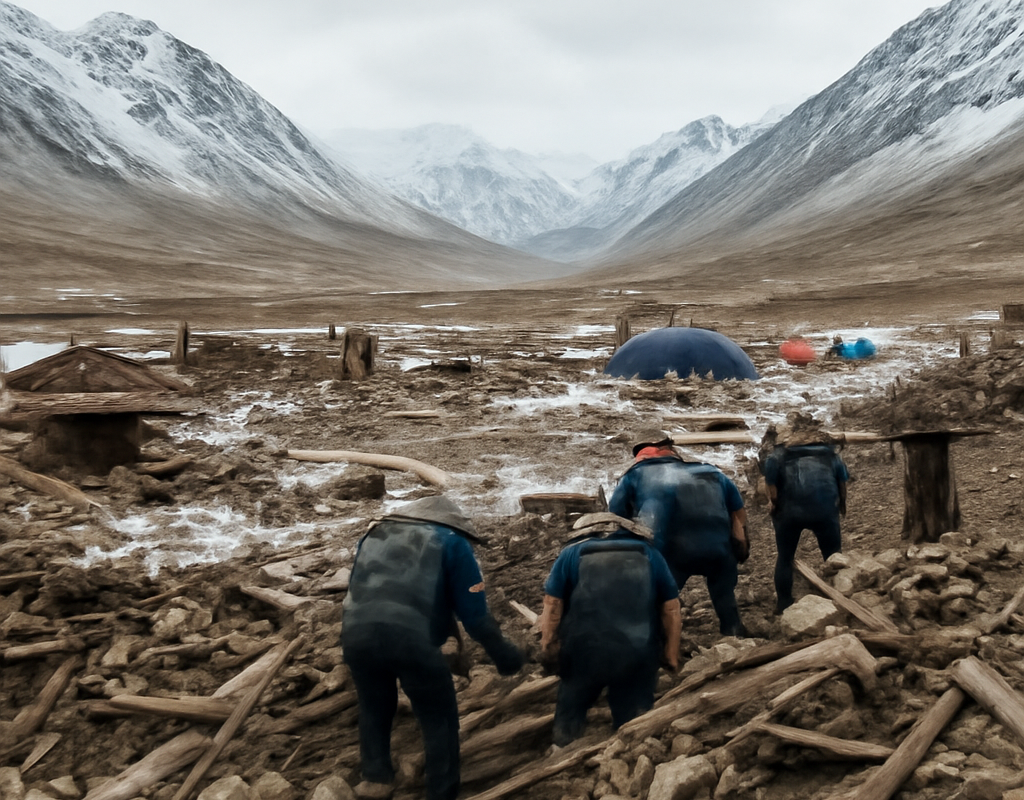
A magnitude 7 earthquake has struck China’s Tibet region, killing at least 16 people, injuring 54 and damaging hundreds of buildings near Nagqu. Rescue teams are working in difficult high-altitude conditions, with aftershocks, rockfalls, road closures and snow complicating access to affected communities.
The earthquake hit at 10:33 p.m. local time on Thursday, according to information reported by Chinese official media and the United States Geological Survey. Its epicentre was located 191 kilometres east-northeast of Nagqu, in a sparsely populated area of northern Tibet.
Rescue effort expands after Tibet earthquake
Officials in Nagqu reported that at least 339 homes and 20 livestock sheds had collapsed. The number of casualties and extent of structural damage could change as rescue workers reach more remote locations and communications are restored.
Chinese President Xi Jinping called for comprehensive rescue and medical relief operations. More than 1,600 people have been deployed, while emergency supplies sent to the region include:
- 1,000 prefabricated housing units
- 3,000 tents
- Folding beds and flashlights
- Winter clothing and other emergency equipment
The response is taking place in a remote, high-altitude environment where transport and communications can be difficult even without a major disaster. Intermittent snow is forecast in the earthquake zone over the next three days, adding further pressure on emergency teams and people whose homes have been damaged.
Aftershocks and rockfalls affect transport
The USGS recorded at least seven aftershocks, ranging from magnitude 4.3 to 5.2. Each was recorded at a depth of 10 kilometres, while the main earthquake occurred at a depth of 18 kilometres.
Rockfalls triggered by the earthquake forced authorities to restrict traffic on part of National Highway 317. Only emergency, rescue and official vehicles were allowed through while crews cleared debris from the route.
Rail services in the affected area were also suspended as a precaution. China’s state news agency Xinhua reported that communications had been cut in some locations, making it harder for authorities to assess damage and coordinate assistance.
Why the location presents a challenge
Nagqu is more than 300 kilometres north of Lhasa, the capital of Tibet. The affected area is sparsely populated and lies at high altitude, factors that can slow the delivery of medical care, shelter and food.
Access restrictions caused by unstable slopes and falling rocks are an immediate concern for rescue planners. Emergency authorities must also monitor damaged buildings and infrastructure before allowing residents or responders to enter potentially unsafe areas.
The earthquake was described by Chinese state broadcaster CCTV as the most powerful to strike the region in five years. However, the final impact will depend on detailed assessments of buildings, roads, rail links and public services in surrounding communities.
What happens next?
Search and rescue operations are expected to continue as teams inspect collapsed structures and isolated settlements. Authorities will also need to provide temporary accommodation for displaced residents, assess the safety of damaged homes and restore communications where networks have been interrupted.
Further aftershocks remain a risk, while snow and freezing conditions could increase the need for shelter, warm clothing and medical support. Transport restrictions may remain in place until roads and railway infrastructure have been checked.
For Europe, this is primarily a major international disaster rather than an EU policy development. The immediate response is being led by Chinese authorities, with the situation likely to remain focused on casualty assessments, rescue access and humanitarian needs.
Conclusion
The Tibet earthquake has caused confirmed deaths, injuries and extensive damage near Nagqu, while difficult terrain and worsening weather are hindering the emergency response. The priority now is to reach isolated communities, treat the injured, provide safe shelter and determine the full scale of the destruction as aftershocks continue.