

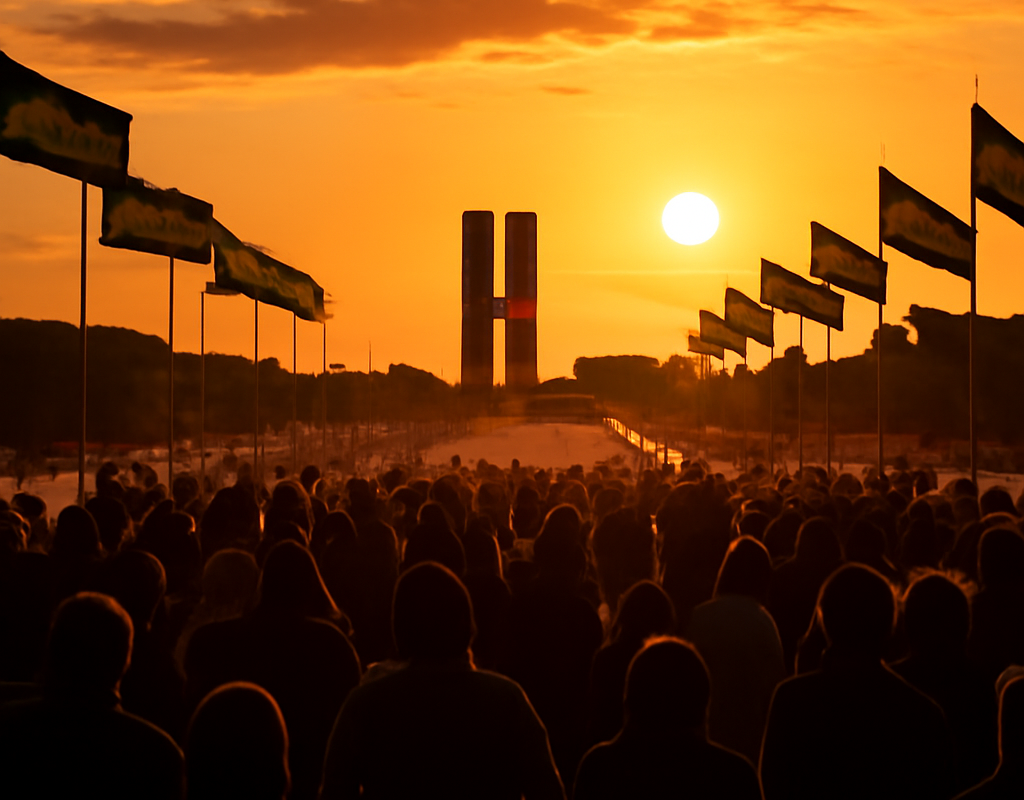
Brazil’s presidential election is heading to a second round on 25 October 2026, with President Luiz Inácio Lula da Silva facing Senator Flávio Bolsonaro after a closely watched first-round contest. The result will shape Brazil’s domestic direction, economic outlook and relationships across Latin America and beyond.
The runoff has also drawn international attention. Security concerns have affected consular services, while diplomatic tensions involving Argentina and outside political endorsements have added to an already polarised campaign.
What happened in Brazil’s presidential election?
Flávio Bolsonaro, the son of former president Jair Bolsonaro, emerged from the first round as the leading candidate, according to the source report. He will now challenge incumbent President Lula in the runoff vote scheduled for 25 October.
Neither candidate secured enough support to win outright in the first round. Brazil’s electoral system therefore requires the two leading contenders to compete again, giving voters a final choice between two sharply different political directions.
Flávio Bolsonaro said he was pleased with his first-round performance. Lula, meanwhile, acknowledged disappointment at what he described as unexpected results. The campaign is expected to focus heavily on the economy, public security, democratic institutions, social policy and Brazil’s international position.
Why the runoff matters beyond Brazil
Brazil is Latin America’s largest economy and one of the world’s most influential democracies. A change in government could affect investment expectations, environmental policy, regional diplomacy and Brazil’s approach to international partnerships.
The election is also significant because it brings the Bolsonaro political movement back into direct competition with Lula. The contest is not simply a choice between two candidates; it reflects a broader struggle over Brazil’s political identity and the role of the state.
Key issues likely to influence voters include:
- Economic management and the country’s growth outlook
- Public security and the powers of law-enforcement agencies
- Social programmes and inequality
- Protection of the Amazon and Indigenous land rights
- Relations with neighbouring governments and global partners
- Confidence in democratic institutions after the country’s recent political tensions
Security concerns affect consular services
The United States and Australia suspended consular services in Brazil on 2 October over security concerns, according to the supplied report. The development came during the final phase of campaigning, when political activity and public gatherings were intensifying.
Consular suspensions can affect routine services such as appointments, documentation and assistance for citizens abroad. The precise arrangements depend on each government’s official notice, so travellers and residents should consult the relevant embassy or consulate before attending an appointment.
The move adds an international dimension to Brazil’s election coverage. It does not, by itself, determine the result or indicate that voting has been halted. Brazil’s presidential election remains a national electoral process conducted under the country’s own constitutional and electoral rules.
Diplomatic tensions and foreign political support
The campaign has also been accompanied by diplomatic friction. Brazil requested the recall of Argentina’s ambassador and reduced diplomatic representation to chargé d’affaires level after Argentine President Javier Milei called Lula a thief, according to the source material.
Flávio Bolsonaro has received support from Milei and a message from Israeli Prime Minister Benjamin Netanyahu. He has also sought backing from allies of US President Donald Trump. These endorsements underline the election’s regional and international significance, although foreign support does not replace Brazil’s domestic voting process.
Brazilian authorities are also investigating alleged plans involving US funding for far-right causes in the country. The supplied report does not establish the outcome of that investigation. Any claims connected with it should therefore be treated as allegations under examination rather than proven facts.
Environmental and Indigenous issues remain central
The election is taking place against a backdrop of continuing debate over the Amazon, land rights and development. Indigenous communities held marches in Brasília in April, calling for recognition of ancestral lands and stronger protection against land grabs, mining and logging.
The Amazon’s future matters internationally because of its environmental importance, but responsibility for land policy and enforcement rests primarily with Brazilian institutions. The next government will face pressure to balance economic development with conservation and the rights of Indigenous peoples.
Brazil’s environmental choices also affect trade and diplomacy. European governments, businesses and consumers have closely followed issues involving deforestation, agricultural supply chains and sustainability standards. Any major policy shift could therefore influence Brazil’s relationship with international markets.
What happens next?
The immediate next step is the 25 October runoff. The two campaigns will seek to consolidate support from candidates and voters eliminated in the first round, while intensifying efforts to mobilise turnout.
After polling closes, Brazil’s electoral authorities will count and certify the result in accordance with national procedures. Until that process is complete, projections, campaign claims and partial counts should not be treated as a final outcome.
For international observers, the key indicators will include the official result, the response of both campaigns, the formation of any governing coalition and the incoming administration’s approach to democratic institutions, economic policy and foreign relations.
Conclusion
Brazil’s presidential election has entered its decisive stage, with Lula and Flávio Bolsonaro set to compete in the 25 October runoff. The vote will determine Brazil’s next political direction while influencing debates on the economy, the Amazon, regional diplomacy and democratic stability.
Until Brazil’s electoral authorities confirm the final result, the most important fact is that the contest remains open. The runoff will provide the country’s voters with the final say.