

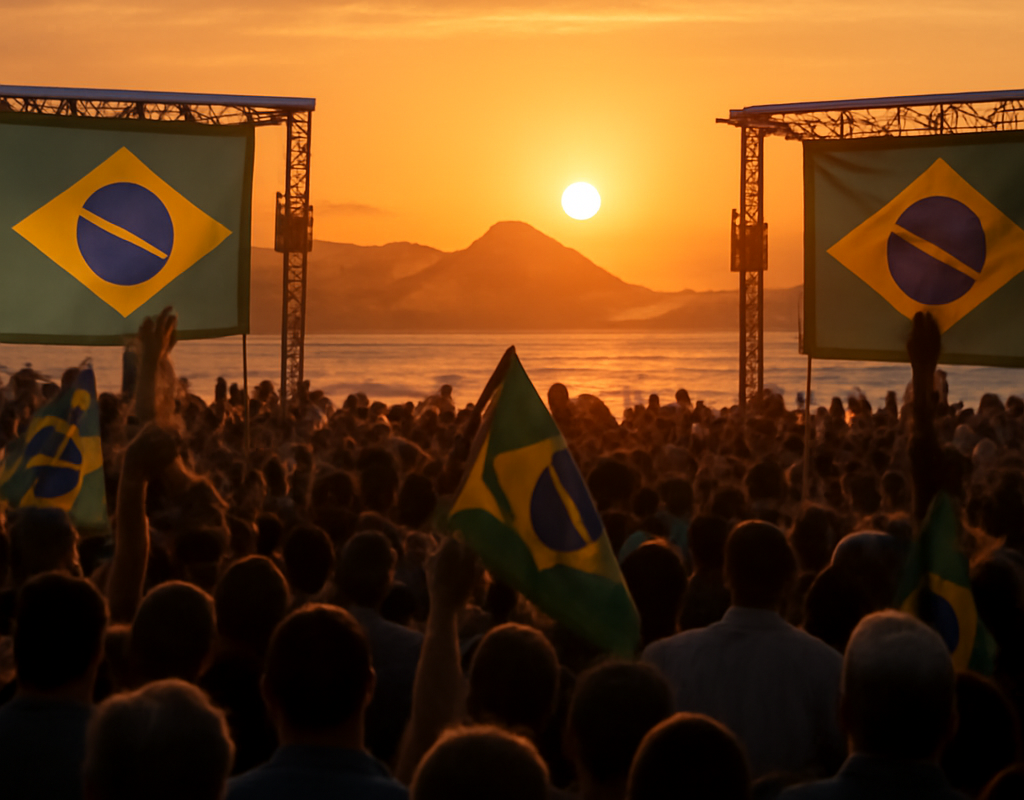
Brazil’s presidential election is heading into a closely contested second round, with Luiz Inácio Lula da Silva and Flavio Bolsonaro making their final campaign appearances before Sunday’s vote. The result could shape Brazil’s domestic direction, environmental policy and relations with the United States and wider Latin America.
The incumbent president and the right-wing senator held rallies in major cities on Saturday, the final day of campaigning. Opinion polls have put the candidates almost level, while turnout will be crucial after about one-fifth of voters abstained in the first round.
A close race enters its final hours
Flavio Bolsonaro finished ahead of Lula in the first round, receiving 47% of the vote compared with Lula’s 45%. Brazil’s electoral system requires a runoff when no candidate secures an outright majority, leaving both contenders with three weeks to court undecided voters and those who did not participate initially.
The final campaign events were held after a televised debate on Friday. The exchange was described as calmer than the candidates’ earlier confrontation, which was marked by personal attacks and limited discussion of policy. Lula questioned Bolsonaro’s experience, while Bolsonaro argued that the incumbent was leaving Brazil in poor condition.
The key issues for voters include crime, the cost of living, government spending, social policy and Brazil’s place in international affairs. The successful candidate will need to build support beyond the core electorate that backed them in the first round.
Lula seeks a fourth, non-consecutive term
At 80, Lula is seeking an unprecedented fourth non-consecutive presidential term. A former metalworkers’ union leader, he first became president after a political career rooted in organised labour and working-class activism.
His earlier administrations benefited from strong commodity revenues and expanded social programmes, including direct cash assistance. Supporters credit those policies with helping reduce poverty, while critics have focused on economic pressures, crime and the cost of living during his current term.
Lula returned to the presidency in 2022 after corruption convictions against him were annulled. His campaign has presented the election as a choice between continuing his government’s social and environmental agenda or returning Brazil to a more conservative political direction.
Flavio Bolsonaro offers a continuation of his father’s politics
Flavio Bolsonaro, a senator and the eldest son of former president Jair Bolsonaro, is seeking to extend his family’s political influence. His father is barred from running after receiving a 27-year sentence under house detention for attempting to overturn his defeat by Lula in 2022, according to the source report.
The senator has largely maintained his father’s socially conservative and right-wing platform while adopting a more measured communication style aimed at attracting centrist voters. Public security is central to his campaign, with proposals including expanded prison capacity and reductions in government spending.
Bolsonaro’s supporters argue that tougher policies are needed to address crime. Lula’s campaign has questioned whether the senator has the experience required to lead the country and manage its complex economic and social challenges.
Why the election matters beyond Brazil
The presidential runoff has implications well beyond domestic politics. Brazil is a major force in efforts to protect the Amazon rainforest and reduce global greenhouse-gas emissions. Deforestation reached record levels during Jair Bolsonaro’s presidency, while Lula’s administration expanded satellite monitoring and enforcement against illegal clearing.
Flavio Bolsonaro has denied human-caused climate change and committed to stopping illegal deforestation. A change of government could therefore affect Brazil’s environmental enforcement, its international climate commitments and negotiations involving the Amazon.
The election also comes amid tensions with Washington. Lula has criticised foreign involvement in Brazil’s political affairs and raised concerns about interference by overseas social-media companies. The United States has imposed tariffs on Brazilian goods and classified major Brazilian drug-trafficking groups as foreign terrorist organisations, measures opposed by Lula’s administration.
A Bolsonaro victory would place Brazil among a group of Latin American countries governed by leaders viewed as politically close to US President Donald Trump. That could influence regional diplomacy, trade relations and debates about sovereignty and external intervention.
What happens next?
Brazilian voters will decide the presidency in Sunday’s runoff. With the first-round margin narrow and polling showing a highly competitive contest, turnout and the ability of each campaign to mobilise supporters may determine the result.
- The election is a second-round presidential vote.
- Lula is seeking a fourth non-consecutive term.
- Flavio Bolsonaro is campaigning on security, conservative policies and lower public spending.
- The result could affect Amazon protection, climate policy and relations with the United States.
The central question is whether voters will retain Lula’s left-wing government or choose a conservative administration linked to the Bolsonaro political movement. The outcome will determine Brazil’s domestic priorities and its role in regional and global affairs.
Conclusion
Brazil’s presidential runoff is finely balanced after a campaign focused on crime, living costs, social policy, climate and national sovereignty. Lula and Flavio Bolsonaro have made their final appeals, but the result will depend on turnout and undecided voters. The vote is therefore significant not only for Brazil, but also for Amazon protection, Latin American politics and US-Brazil relations.