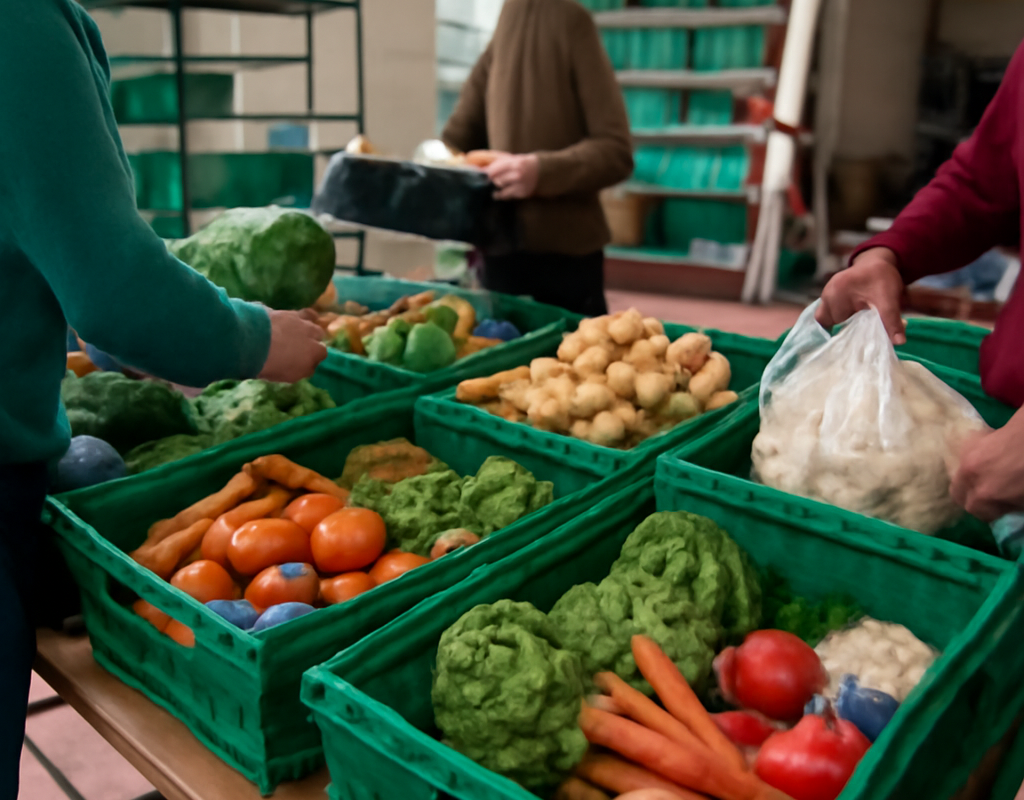
Ireland is calling on national governments to support a new international Declaration on Surplus Food Sharing and Redistribution, linking food donation with food security, climate action and the circular economy.
Published by the Department of Climate, Energy and the Environment, the declaration invites governments to recognise that safe, nutritious surplus food should be redirected to people wherever possible, rather than becoming waste.
What Ireland’s surplus food declaration proposes
The initiative addresses a persistent challenge across food systems: edible food can be lost while households and communities experience food insecurity. Redistributing suitable surplus food helps retain the value of the land, water, energy, labour and transport used to produce it.
The declaration identifies several potential benefits of coordinated surplus food redistribution:
- Improving access to safe and nutritious food
- Reducing greenhouse gas emissions linked to avoidable food waste
- Supporting charities, communities and redistribution partnerships
- Creating efficiencies across the food supply chain
- Advancing circular economy principles in everyday food systems
How surplus food sharing supports climate action
Food redistribution is not presented as a substitute for preventing surplus food in the first place. Instead, it forms part of a wider food-waste hierarchy: prevention should come first, followed by the redistribution of safe and suitable food for human consumption wherever practicable.
The declaration connects this approach with the United Nations Sustainable Development Goals, including Zero Hunger, Responsible Consumption and Production, and Climate Action. Keeping edible food in use can reduce the environmental impact associated with producing food that is ultimately discarded.
What signing governments would commit to
Governments that sign the declaration will recognise surplus food redistribution as a practical food-system and circular-economy intervention. They will be encouraged to share experience, identify opportunities for cooperation and promote policies that support redistribution in ways suited to their own national circumstances.
The document acknowledges that countries differ in their regulations, institutions, economies and food systems. It therefore encourages collaboration without prescribing one model for every country.
Ireland plans to champion the declaration at COP31
Ireland plans to promote the declaration at COP31 in Türkiye. A signing ceremony is planned, alongside a dedicated panel discussion on 11 November focused on food redistribution, emissions reduction, food security and circular-economy objectives.
The declaration was developed by the Department of Climate, Energy and the Environment in consultation with the Department of Agriculture, Food and the Marine and FoodCloud. National governments can register interest or submit confirmation of their commitment by contacting foodwaste@dcee.gov.ie. Other organisations, including local authorities, businesses, charities and research bodies, are also encouraged to support its aims.
The wider significance of surplus food redistribution
Ireland’s proposal places practical cooperation at the centre of the response to food waste. Its central message is straightforward: food that is safe and suitable for people should remain a resource for as long as possible.
The surplus food declaration offers governments a framework for sharing solutions, strengthening partnerships and making better use of food already produced.