

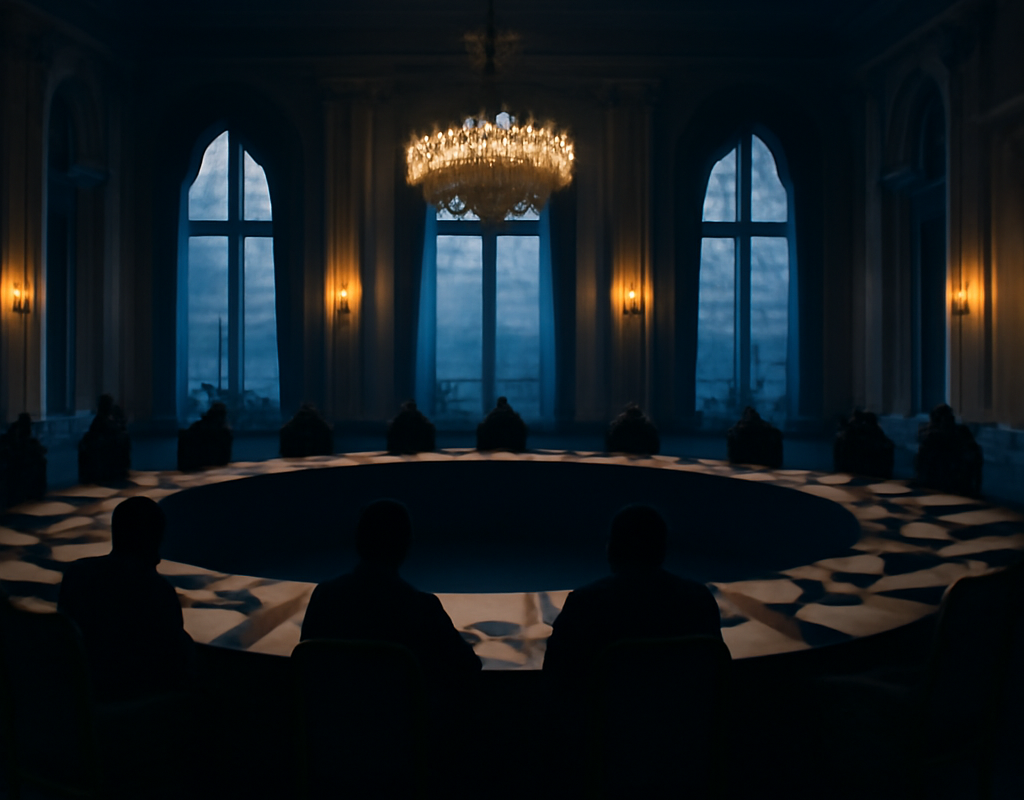
European leaders have rejected Russia’s effort to broaden Ukraine peace talks into negotiations over the continent’s entire security architecture without European participation. Speaking at a summit in Dublin, leaders stressed that Ukraine and European countries must be directly involved in decisions affecting their security, while diplomats continue to debate the correct order for ceasefire and peace negotiations.
The confrontation highlights a central issue in current European affairs: whether the future security order should be discussed as part of a settlement to the war in Ukraine, or only after fighting has stopped and a peace agreement has been reached.
European leaders demand a seat at the table
French President Emmanuel Macron said Europeans would ultimately decide their own future security arrangements. He argued that Europe must first establish a clear position on support for Ukraine and then develop a concrete vision for a peace plan and the wider security architecture.
German Chancellor Friedrich Merz made a similar call for direct engagement between Russia and European representatives. He said that any credible diplomatic process should include Ukraine, European countries, the United States and Russia.
The latest discussions in Abu Dhabi included senior officials from France, Germany, Italy, the United Kingdom, the European Commission, the European Council and NATO. However, the European and Russian delegations did not hold direct talks during that round.
Why the security architecture debate matters
Russia has placed the question of Europe’s security architecture high on its negotiating agenda. European governments, however, view the focus with caution. They believe Moscow may be attempting to shift attention away from the war in Ukraine and reopen long-standing demands concerning NATO’s presence and enlargement.
Before Russia’s full-scale invasion of Ukraine, Moscow demanded that NATO halt further eastward expansion and withdraw military forces from members that joined the alliance after 1997. Those demands were rejected. Finland and Sweden subsequently applied to join NATO after abandoning their long-standing military non-alignment in response to the changed security environment.
Estonian Prime Minister Kristen Michal described the renewed emphasis on security architecture as a possible negotiating trap. His concern reflects the view held by several European governments that discussions about the continent’s future should not be used to legitimise demands that would limit the sovereignty of European states or determine alliance membership from outside.
Kallas calls for a staged diplomatic process
Kaja Kallas, the European Union’s High Representative for Foreign Affairs and Security Policy, argued that the diplomatic process should follow a clear sequence:
- A ceasefire in Ukraine should come first.
- A broader peace settlement should follow.
- Only then should negotiators address the wider European security architecture.
Kallas also pointed to existing European security commitments, including the 1975 Helsinki Final Act, the 1990 Charter of Paris and the 1994 Budapest Memorandum. Her argument was that the problem is not the absence of a framework, but the failure to uphold commitments already made.
This distinction is important for understanding the current EU policy debate. European governments are not necessarily rejecting future discussions about continental security. Instead, they are resisting an approach that could place a redesign of the security order ahead of ending the war and restoring respect for existing agreements.
European involvement remains a central demand
Lithuanian President Gitanas Nausėda said negotiations should take place under fair conditions and should not happen behind Ukraine’s back. He also called for the European Union to be involved in discussions about Europe’s future security arrangements.
The demand for European participation reflects the practical consequences of any eventual settlement. A peace agreement could affect sanctions, defence planning, NATO-EU cooperation, military deployments, borders, reconstruction and the security of countries across the region. European governments therefore argue that they cannot be expected to implement or support an agreement negotiated without them.
Ukraine’s involvement is equally significant. President Volodymyr Zelenskyy described the wider approach to the talks as unusual and urged European governments to examine it carefully. Kyiv has consistently opposed arrangements that would determine Ukraine’s future without Ukrainian participation.
US role adds another layer to the talks
The debate has also been shaped by the involvement of US President Donald Trump and special envoy Jared Kushner. Kushner has outlined principles for a possible post-war framework and called on Russia to prepare proposals for discussion with European representatives.
His reported engagement with Moscow is intended to explore a broader multilateral format. Yet the initiative has unsettled some European governments because the proposed process could alter the order and composition of negotiations before the terms of a ceasefire or peace agreement have been settled.
Russia’s chief negotiator, Vladimir Medinsky, has argued that Ukraine is only one part of a much wider security problem. Moscow has also refused to engage directly with European officials in the talks, citing European military and financial support for Ukraine. That position has not prevented all high-level contact between Russia and individual European countries, but it has complicated efforts to establish a collective negotiating format.
What happens next?
The immediate challenge is to determine whether the parties can agree on the structure of future talks. European governments are likely to continue insisting on three principles:
- Ukraine must participate in negotiations about its future.
- European states must be directly represented in discussions about their security.
- A ceasefire and peace settlement should precede a wider debate about security architecture.
Whether Russia accepts that format remains unresolved. Any eventual agreement would also require careful consideration of existing international commitments and the roles of the EU, NATO, the United States and national governments.
For Ireland, the discussions matter because they concern the wider European security environment and the role of EU institutions in responding to conflict on the continent. Ireland’s military neutrality does not remove its interest in decisions involving European diplomacy, sanctions, humanitarian support and the future stability of the European security order.
Conclusion
The latest EU news from Dublin shows European governments drawing a firm line around their participation in any future security settlement. They are not rejecting dialogue about Europe’s security architecture, but they insist that it must not replace a ceasefire process or take place without Ukraine and European representatives. The next major test will be whether Russia accepts a genuinely multilateral negotiating format.