

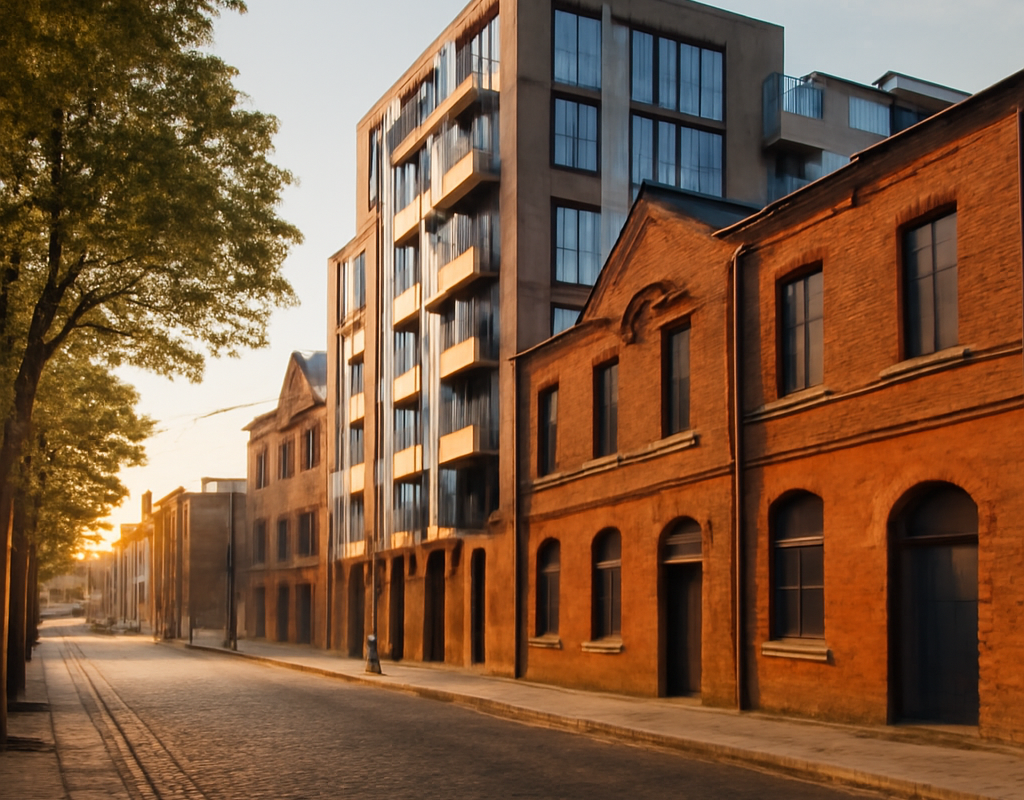
More than 700 homes are planned for the former Digital Hub lands in Dublin 8, in a major proposed expansion of the Pear Tree Crossing development. The Land Development Agency (LDA) expects to lodge a planning application with An Coimisiún Pleanála in the coming weeks, with construction scheduled to begin in 2028 if permission is granted.
The proposal would deliver 716 apartments near Thomas Street, up from the 550 social and affordable homes outlined in plans published in 2022. The revised scheme includes buildings of up to 13 storeys, alongside the restoration and reuse of historic structures across the site.
Breaking News: What is planned for the Digital Hub site?
The Pear Tree Crossing scheme will combine new apartment blocks with the adaptive reuse of vacant and derelict buildings on Thomas Street, Rainsford Street and surrounding streets in Dublin 8.
The proposed homes will include:
- Studio, one-bedroom and two-bedroom apartments
- A small number of larger three-bedroom homes
- Social and affordable housing
- Homes within reused historic and industrial buildings
- New active ground-floor spaces and improved public areas
The LDA said the revised design places Thomas Street at the centre of the development. The objective is to create a more active local main street, with housing, community uses and better public realm integrated into the existing neighbourhood.
Why has the number of apartments increased?
The number of planned apartments has risen by roughly 30 per cent compared with the original proposal. The LDA attributed the increase to design changes and the incorporation of the Government’s updated apartment standards.
The revised national planning statement allows certain apartment minimums and design requirements to be adjusted. Among the changes are:
- A reduction in the minimum apartment size from 37 square metres to 32 square metres
- Greater flexibility around the number of multi-bedroom apartments
- Updated requirements for dual-aspect homes
- Changes relating to ceiling heights, storage and external space
The LDA said more than a quarter of the apartments will remain larger than the minimum size, while just over 40 per cent will be dual aspect, meaning they have windows on more than one side.
The changes have been politically and legally contentious. Similar standards issued as planning guidelines last year were challenged in the courts, with the matter referred to the European Court of Justice. A decision remains pending.
Read More
Explore further housing and planning coverage at DailyDigest.
Historic buildings to be restored and reused
The development is not limited to new construction. The plans include the reinstatement of 14 buildings along Thomas Street, as well as the reuse of several structures linked to Dublin’s industrial heritage.
Buildings named by the LDA include Vat House 7, which was associated with the area’s brewing industry, Watling Warehouse, a former storehouse dating from 1866, and Millar’s House on Rainsford Street.
The approach reflects a wider effort to combine new housing with conservation. Rather than treating the site as a standalone apartment scheme, the proposal aims to reconnect vacant buildings, historic streets and existing community activity.
What is happening to the Digital Hub?
The Digital Hub lands were previously managed by the Digital Hub Development Agency, which operated a technology and innovation campus in the area.
The Government announced in 2021 that the agency would be dissolved over time, with its activities gradually wound down and its land transferred to the LDA. A strategic plan developed earlier this year proposed retaining viable businesses, social activity and community uses on the wider site.
The LDA said Pear Tree Crossing will support the continued presence of the Digital Hub Development Agency while building on established community foundations in Dublin 8.
Planning and construction timeline
The current timeline depends on the planning process and any conditions attached to a future permission.
- Planning application: Expected to be submitted by the end of 2026.
- Planning assessment: An Coimisiún Pleanála will consider the application and submissions.
- Construction: Work is expected to begin in 2028, subject to approval and delivery arrangements.
- Completion: No final delivery date has been confirmed.
Until the application is formally lodged and assessed, the design, apartment mix and timetable may still change.
Why the Dublin 8 proposal matters
The scheme comes as Dublin faces sustained pressure on housing supply, particularly for social and affordable homes close to the city centre. The location could allow residents to live near employment, public transport, schools, shops and existing community facilities.
It also raises familiar questions about apartment standards, the balance between housing numbers and unit size, and how large developments can protect historic character. The planning process will provide an opportunity for public submissions and detailed scrutiny of those issues.
Frequently asked questions
How many homes are proposed?
The LDA is proposing 716 apartments at the Digital Hub site in Dublin 8.
Will the homes be social and affordable?
The project is intended to provide social and affordable housing, with a mix of studio, one-bedroom, two-bedroom and some three-bedroom apartments.
How tall will the buildings be?
The tallest proposed blocks would reach up to 13 storeys.
When will construction begin?
Construction is expected to start in 2028, subject to planning permission and other project requirements.
Will historic buildings be retained?
Yes. The plans include the reuse of buildings on Thomas Street, Rainsford Street and former industrial structures including Vat House 7 and Watling Warehouse.
What happens next?
The immediate next step is the submission of the planning application. Once lodged, the proposal will enter the formal planning process, allowing the authority to assess the design, housing mix, transport implications, conservation measures and public-realm plans.
For Dublin residents, the key point is that 716 homes are proposed, not yet approved. The final outcome will depend on the planning assessment and any revisions required before construction can proceed.
The Digital Hub redevelopment could become one of Dublin 8’s most significant housing and regeneration projects, combining new social and affordable homes with the renewal of historic Thomas Street buildings. The planning application will determine how that vision develops and whether construction can begin in 2028.