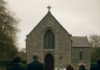
The Drumcree standoff has returned to the centre of Northern Ireland politics after a legal ruling reopened a long-running dispute over an Orange Order parade in Portadown. The confrontation has revived memories of the Troubles, placed pressure on the Parades Commission and triggered urgent court hearings and political talks.
What is happening at Drumcree?
The dispute centres on whether members of the Orange Order can march from Drumcree Church along the mainly nationalist Garvaghy Road. The route has not been used by the Orange Order since 1997, but a court ruling in August 2026 led to a new application for a limited parade.
The proposed procession involved 60 members initially. The Parades Commission later authorised a more restricted version involving 35 participants, with no bands, supporters or flags. The decision sparked opposition from residents and renewed fears that the dispute could destabilise relations across Northern Ireland.
Why the Drumcree standoff matters
Drumcree is widely regarded as the longest-running parading dispute in the North. During the most intense period between 1996 and 1999, the wider confrontation was linked to 21 sectarian killings. The dispute became one of the defining flashpoints of the peace process.
The British government established the Parades Commission in 1998 partly as a direct response to Drumcree. For almost three decades, the issue largely disappeared from daily headlines as the contested march did not take place.
Its return is significant because parade disputes can quickly become wider arguments about identity, community consent, policing and the political balance between unionist and nationalist areas.
Timeline of the latest Drumcree dispute
August 25th: High Court quashes the commission’s decision
A Portadown Orangeman challenged the Parades Commission’s decision to prohibit the proposed 2026 parade. High Court judge Gerald McAlinden found a procedural error in how the determination had been made.
Internal WhatsApp messages showed what the judge described as poor procedures and shortcuts. Not all six commissioners had signed off on the final decision before it was issued. The ruling quashed the determination, and commissioner Billy Gamble subsequently resigned.
September 3rd: Orange Order submits a fresh application
The Orange Order applied for a limited procession of 60 people on September 27th. Portadown district representatives described the proposed event as silent, dignified and non-triumphalist, with no bands.
The organisation also called for the remaining Parades Commission members to resign. They remained in their positions.
September 25th: Commission permits a restricted parade
The commission ruled that the Orange Order could use the Garvaghy Road on the return leg from Drumcree Church. It reduced participation to 35 people and imposed restrictions on supporters, flags and bands.
Residents’ representatives criticised the decision, warning that it could encourage renewed applications for other contentious parade routes across Northern Ireland.
September 26th–27th: Court battles continue overnight
The Garvaghy Road Residents’ Coalition sought to stop the procession and registered a proposed counter-protest, later withdrawn. A High Court judge temporarily suspended the parade after a five-hour hearing and urged all sides to step back from the brink.
The Orange Order appealed. Shortly before midnight, the Court of Appeal overturned the suspension, ruling that the earlier High Court decision had made an error in law. A further application was dismissed in the early hours of Sunday, leaving the commission’s decision in place.
September 27th: Police operation begins
Thousands gathered on Garvaghy Road to oppose the march. The road was blocked before midnight, while police prepared for a major security operation. More than 200 officers from Scotland were deployed under a mutual-aid arrangement.
First Minister Michelle O’Neill and Sinn Féin president Mary Lou McDonald were among those present at the protest. DUP leader Gavin Robinson called for their arrests, intensifying the political dispute.
Although Orange Order members remained at Drumcree Church, the parade did not proceed. Police said they could not ensure public safety if the procession entered the road.
- The route has not been used by the Orange Order since 1997.
- The Parades Commission was created in 1998 following the Drumcree crisis.
- The 2026 dispute has involved multiple High Court and Court of Appeal hearings.
- Political talks are continuing while the legal position remains contested.
Political talks and the latest legal challenge
The failed parade attempt led to angry exchanges at Stormont and urgent discussions at Hillsborough Castle. Northern Secretary Chris Bryant met both Orange Order representatives and the Garvaghy Road Residents’ Coalition. Talks were expected to continue on October 1st.
Residents’ lawyers also lodged a fresh appeal, listed for October 2nd. Their case focuses on how the Parades Commission interpreted the PSNI assessment of potential disorder. The residents argue that the commission misunderstood or misrepresented evidence about the security risks.
The Orange Order said on October 1st that there were no proposals on the table to resolve the dispute. A document had been given to both sides by the Northern Secretary, but no agreement had been reached. Residents’ representative Breandán Mac Cionnaith said they would accept the proposal if the Orange Order did so.
What happens next?
The immediate focus is the next Court of Appeal hearing and the outcome of political talks. Until those processes produce a settlement, the standoff remains unresolved.
The central challenge is finding a way to balance the legal right to apply for a parade with the need for community consent and public safety. Any agreement will also be watched closely in other parts of Northern Ireland where historic routes remain disputed.
For residents, the issue is about the impact of a contested procession on their neighbourhood. For the Orange Order, it concerns tradition, equality and the right to complete a route associated with its history. Those competing claims explain why Drumcree has proved so difficult to resolve.
Frequently asked questions
What is the Drumcree dispute?
It is a long-running dispute over Orange Order parades from Drumcree Church through the Garvaghy Road area of Portadown.
When did the Orange Order last march along Garvaghy Road?
The Orange Order last completed the route in 1997.
Why was the 2026 parade allowed?
The Parades Commission’s original prohibition was quashed by the High Court after a judge found a procedural error. A subsequent determination allowed a tightly restricted parade.
Did the parade take place?
No. Orange Order members gathered at Drumcree Church, but police said they could not safely protect the march, and it did not proceed along Garvaghy Road.
Conclusion
The Drumcree standoff has transformed a local parading dispute into one of the most serious pieces of Breaking News Ireland coverage in Northern Ireland. The legal challenge, police concerns and political confrontation show how quickly unresolved issues of identity and community consent can return to the centre of public life. The next court hearing and negotiations will determine whether the crisis moves towards a settlement or enters another prolonged period of tension.